

Table of Contents
- Why Wear Norse Runes on Clothing: Connection to Ancient Wisdom
- The Meaning of Norse Runes on Clothing You Wear
- Norse Runes for Protection and Inner Strength
- Ethical Wearing of Norse Symbols: Appreciation vs. Appropriation
- Modern Fashion Meets Norse Identity: Daily Reminders of Purpose
- Why Wear Norse Runes: Building a Warrior's Mindset Through Symbols
- Conclusion: Honoring Norse Values Through Intentional Clothing Choices
Why Wear Norse Runes on Clothing: History, Meaning & Purpose
Last Updated: July 27, 2026
When you ask why wear clothing with norse runes, you're tapping into something deeper than fashion. At Black Rune Works, we've spent years helping modern warriors understand the connection between ancient symbols and personal purpose. These aren't just decorative marks, they're physical reminders of timeless principles that shaped Viking culture and continue to resonate today.
According to academic research on Norse symbolism and cultural identity, individuals who intentionally wear symbolic clothing report stronger connections to their personal values and increased mindfulness about their daily choices. This article explores the historical roots, symbolic meanings, and practical reasons why wearing rune-inscribed apparel has become a meaningful practice for those seeking to embody resilience and strength.
Why Wear Norse Runes on Clothing: Connection to Ancient Wisdom
Norse runes weren't merely an alphabet, they carried spiritual weight, practical purpose, and cultural identity. When you wear a rune on your clothing, you're aligning yourself with principles that guided Vikings through harsh northern landscapes.
The Vikings believed runes held power beyond their linguistic function. Each symbol encoded wisdom about survival, honor, and self-mastery. A warrior might wear Tiwaz, the rune of courage and justice, before battle. A craftsperson might wear Fehu, representing wealth and resources, to focus intention on their work.
Modern practitioners wear Norse runes for similar reasons: as anchors for intention, symbols of identity, and reminders of principles worth living by. The physical act of wearing the symbol creates a psychological connection that abstract knowledge cannot. When you feel the weight of a hoodie bearing a rune emblem, you're engaging a tactile memory each time you put it on.
The Historical Significance of the Elder Futhark
The Elder Futhark represents the oldest known runic alphabet, used by Germanic peoples from roughly the 2nd to 8th centuries. The word "Futhark" itself comes from the first six runes: Fehu, Uruz, Thurisaz, Ansuz, Raido, and Kenaz.
Archaeological evidence shows that runes appeared on weapons, tools, and jewelry long before they became a writing system. Runestones dotted the Scandinavian landscape, marking significant events and honoring the dead. Rune placement mattered, runes carved on sword blades appeared in locations meant to catch light and blood, merging practical symbolism with spiritual intention.
Each rune connected to a specific concept in Norse cosmology: Hagalaz represented disruption and wholeness, Sowilo embodied the sun's power, Algiz symbolized protection and alignment. The Vikings understood their alphabet as a map of natural and spiritual forces. When they carved runes into objects, they were invoking specific energies and intentions.
Research from Norse historical societies documenting runic practices demonstrates that authentic rune placement and selection matter to practitioners who study the tradition seriously. The difference between wearing a rune thoughtfully and wearing one casually is the difference between a meaningful practice and a costume.
The Meaning of Norse Runes on Clothing You Wear
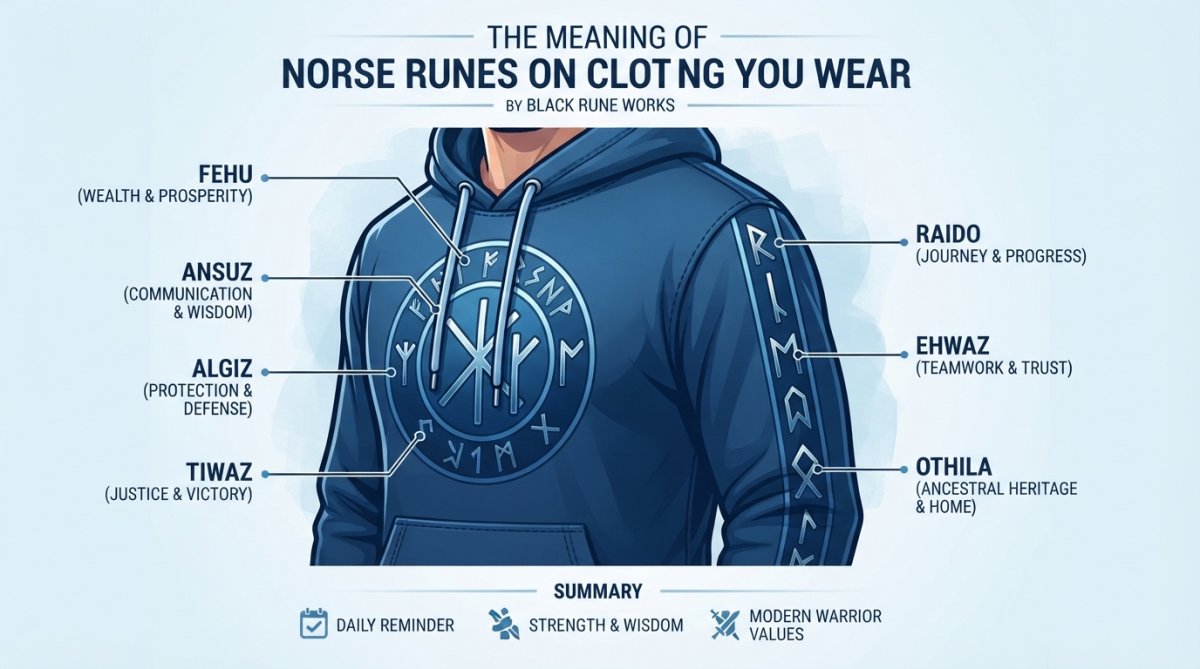
Individual runes carry distinct meanings rooted in Norse mythology and practical Viking experience. When you choose to wear a specific rune, you're selecting a symbol that resonates with your current values or aspirations.
Fehu (wealth, cattle, resources) appears on apparel worn by those focused on abundance and material security. Modern wearers interpret Fehu as abundance mindset and conscious stewardship of resources.
Uruz (strength, aurochs, primal power) appeals to those cultivating physical and mental resilience. Wearing Uruz represents tapping into raw, untamed strength within yourself.
Thurisaz (giant, chaos, protection) symbolizes the ability to face obstacles head-on, combining danger with protective qualities.
Ansuz (god, communication, breath) connects to wisdom, divine inspiration, and clear communication. Many wear this rune when pursuing leadership or teaching roles.
Raido (journey, wheel, movement) represents travel, rhythm, and life's cycles. It appeals to those embracing change or undertaking significant transitions.
Sowilo (sun, wholeness, clarity) embodies illumination and completeness, signaling commitment to clarity and authentic self-expression.
Bindrunes and Combined Rune Intent create layered meaning by combining multiple symbols. A bindrune might merge Fehu (wealth) with Uruz (strength) to represent powerful abundance. Black Rune Works' approach to bindrune design emphasizes intentional combinations that reflect personal goals rather than random pairing.
:::pro-tip When selecting a rune to wear, consider which symbol reflects your current focus or challenge, not just what sounds powerful. A rune worn with genuine intention creates a stronger psychological anchor than one chosen for appearance alone. :::
Norse Runes for Protection and Inner Strength
The Vikings didn't separate physical protection from spiritual resilience. They understood that mental fortitude often mattered more than armor. This is why runes associated with protection remain among the most popular choices for modern apparel.
Algiz (elk, protection, alignment) serves as perhaps the most recognizable protective rune. It resembles an upright figure with raised arms, signaling both defense and alignment with higher purpose.
Eihwaz (yew tree, endurance, transformation) represents the yew tree, which can live for thousands of years. This rune appeals to those facing long-term challenges requiring sustained effort, symbolizing the ability to bend without breaking.
Nauthiz (need, constraint, friction) represents using friction and difficulty as tools for growth rather than obstacles to avoid.
Othala (heritage, home, ancestral property) connects to protection through belonging, reinforcing your connection to your values and chosen principles.
The concept of inner strength in Norse tradition differs from modern fitness culture. Vikings valued discipline, honor, and the ability to endure hardship with dignity. Wearing runes associated with strength meant committing to these principles daily.
Many practitioners report that wearing protective runes creates a psychological shift. The physical reminder becomes a mental anchor. Before a difficult conversation, you feel the rune on your chest. Before a moment requiring courage, you notice the symbol on your sleeve. This tactile connection strengthens your resolve in ways that abstract affirmations cannot.
Ethical Wearing of Norse Symbols: Appreciation vs. Appropriation
Appreciation involves learning the history, understanding the meanings, and wearing symbols with intentionality and respect. Appropriation strips symbols of context, treats them as aesthetic objects, and often perpetuates distorted interpretations.
Norse symbols have been misappropriated by hate groups, creating legitimate concerns about wearing them publicly. However, this misuse doesn't invalidate the authentic spiritual and historical tradition. It means practitioners have a responsibility to wear these symbols thoughtfully.
Historical Accuracy and Respectful Representation begins with understanding what Vikings actually believed versus modern misconceptions. The Vikings weren't the savage barbarians popular media portrays. They were traders, farmers, artists, and explorers who valued craftsmanship, law, and community.
When wearing Norse runes, commit to accuracy. Research the actual historical meanings rather than relying on fantasy interpretations. Respectful representation also means being prepared to explain your choice. If someone questions why you wear a Norse rune, you should be able to articulate the historical and personal significance.
Care Instructions and Longevity of Symbolic Apparel deserve attention because meaningful clothing deserves proper maintenance. Most quality rune apparel uses embroidery, screen printing, or high-quality dyes. To preserve these:
- Wash in cold water, inside-out, to protect the design
- Use gentle detergent without bleach
- Air dry rather than using high heat
- Store away from direct sunlight to prevent fading
The longevity of your apparel reflects your commitment to the practice. Clothing that lasts becomes more meaningful over time.
Modern Fashion Meets Norse Identity: Daily Reminders of Purpose
Wearing Norse runes on everyday clothing creates a unique intersection between ancient practice and contemporary life. The Vikings integrated symbols into the objects they used constantly. Modern practitioners can do the same through intentional apparel choices.
Choosing the Right Rune Apparel for Your Personal Values requires honest self-assessment. What principle do you most need to embody right now? Are you building discipline? Choose Sowilo or Eihwaz. Are you navigating a major life transition? Raido or Nauthiz might resonate. Are you establishing boundaries? Algiz or Thurisaz serve that purpose.
The best rune apparel reflects your genuine current focus. A person wearing Fehu because they're building financial discipline gets more value than someone wearing it because it looks impressive. The psychological anchor works strongest when intention aligns with symbol.
Custom Apparel and Artisan Craftsmanship elevate rune-wearing from mass-produced fashion to intentional practice. When you select custom pieces, you're investing in quality that reflects the significance of the symbols. Artisan-crafted apparel using high-quality materials lasts longer and carries more weight than generic graphic tees.
The craftsmanship matters because it honors both the tradition and your commitment to it. A carefully embroidered rune on premium fabric demonstrates respect for the symbol and creates a more durable piece that will maintain its appearance through years of wear.
Why Wear Norse Runes: Building a Warrior's Mindset Through Symbols
The concept of a "warrior's mindset" in Norse tradition has nothing to do with aggression or domination. It means facing life's challenges with courage, maintaining discipline when motivation fades, and honoring your commitments even when circumstances become difficult.
Wearing runes supports this mindset through consistent, tangible reminders. Each morning when you put on apparel bearing a rune, you're making a micro-commitment to that symbol's principle. Over weeks and months, these micro-commitments accumulate into genuine behavioral shifts.
Research on habit formation and environmental cues shows that visible symbols significantly influence behavior and decision-making. When you wear a rune representing discipline, you're more likely to make choices aligned with that value. The symbol becomes a behavioral anchor.
Building a warrior's mindset through symbols requires consistency. Regular wearing of rune-inscribed pieces as your default casual wear creates constant reinforcement. This is why Black Rune Works emphasizes high-quality, wearable pieces designed for daily use rather than special occasions.
Conclusion: Honoring Norse Values Through Intentional Clothing Choices
The question of why wear clothing with norse runes ultimately reflects a deeper question: How do you want to live? What principles matter enough to wear literally on your body?
Wearing Norse runes is a practice, not a statement. It works best when approached with genuine respect for the tradition, honest self-awareness about your current focus, and commitment to consistent, intentional wearing. The symbol becomes meaningful through repeated engagement, not through visual impact alone.
Modern warriors face different challenges than their Viking ancestors, but the principles remain constant: discipline, honor, resilience, and clarity. Black Rune Works creates apparel that embodies these timeless values through high-quality construction, thoughtful design, and authentic connection to Norse tradition. Their Odin's Rules™ collection specifically emphasizes daily reminders of strength and purpose, pieces designed to be worn consistently as part of your regular rotation. When you choose apparel that combines meaningful symbolism with genuine quality and wearability, you're investing in a practice that supports your personal growth. Norse cultural heritage organizations documenting authentic rune traditions continue to emphasize that respectful engagement with these symbols strengthens both personal practice and cultural preservation.
Frequently Asked Questions
What does it mean to wear Norse runes on clothing?
Wearing Norse runes on clothing is a way to connect with ancient Viking wisdom and symbolism. Each rune from the Elder Futhark carries specific meanings, some represent protection, others inner strength or prosperity. When you wear these symbols, you're carrying daily reminders of the values they represent, whether that's discipline, resilience, or honor. Many people choose rune apparel to align their external presentation with their internal values and connect to Norse heritage.
Which Norse runes provide protection, and how do I choose the right one?
Several protective runes exist in the Elder Futhark. Algiz represents defense and spiritual protection, while Thurisaz offers strength against adversity. Othala connects to heritage and home protection. To choose the right rune, consider your personal intent: Are you seeking physical resilience, spiritual defense, or connection to ancestral wisdom? Research the specific meaning of each rune and select one that aligns with your current life focus. Many people also combine runes (called bindrunes) to amplify their combined intent and create more personalized symbolic meaning.
Is it culturally appropriate to wear Norse runes if I'm not of Scandinavian descent?
Wearing Norse runes is generally considered acceptable appreciation of Norse culture when done respectfully. The key distinction is intent: wearing runes to honor historical wisdom and connect with their genuine meanings is appreciation. Avoid wearing them as a trend without understanding their significance, and be aware that some rune symbols have been misappropriated by hate groups, research the specific runes you choose. Authentic engagement with Norse heritage through quality apparel and genuine interest in historical accuracy demonstrates respect for the cultural legacy these symbols represent.
How do I care for Norse rune apparel to keep it looking quality?
High-quality Norse rune clothing requires proper care to maintain its appearance and longevity. Wash in cold water, turn printed or embroidered pieces inside out to protect the rune design, and use gentle cycles. Air dry rather than machine dry to prevent fading and damage to the fabric. Avoid harsh chemicals and bleach. If your apparel features embroidery or detailed artisan work, hand washing is ideal. Proper care ensures your symbolic clothing remains a meaningful daily reminder for years, reflecting the durability and craftsmanship that quality brands prioritize.
This article was written using GrandRanker