

This one should be replaced completely. “Handcrafted Norse Goods” implies Black Rune Works is hand-making physical goods, which does not match your current apparel business. The article also risks confusing customers about how your products are produced.
I’d replace it with a topic that fits the brand much better and still gives you a strong value-focused article:
Why Original Norse-Inspired Apparel Is Worth Choosing
Norse-inspired clothing is easy to find online. Search for Viking shirts, rune apparel, Mjölnir clothing, or Nordic designs and you can scroll through thousands of products in minutes.
The problem is that many of them begin to look the same.
The same hammer appears on dozens of unrelated shirts. The same raven artwork is repeated across marketplaces. Generic rune-like symbols are given dramatic meanings without any explanation of where they came from. Designs are moved from one product to another without much thought about how the artwork actually fits the garment.
Original Norse-inspired apparel takes a different approach.
The value is not simply in putting a Viking-looking image onto a shirt. It comes from developing artwork around recognizable symbols, making decisions about composition and placement, choosing colors intentionally, and creating a garment that feels like part of a larger visual identity.
That is where a modern Norse apparel brand can offer something different.
Original Design Gives the Garment an Identity
A graphic garment is two products at the same time.
You are buying the clothing itself, but you are also buying the design.
A plain black T-shirt may be useful, comfortable, and well made. Once artwork is added, however, the reason someone chooses that particular shirt often becomes the image.
That makes originality important.
A Mjölnir design does not have to resemble every other hammer online. The basic symbol may be familiar, but knotwork, proportions, texture, color, placement, and surrounding details can create an entirely different character.
The same is true of runes.
A historical rune provides a recognizable foundation, but a designer still has decisions to make about how prominently it appears, how it interacts with other elements, and whether the result feels restrained, aggressive, modern, weathered, metallic, or minimal.
Those decisions create identity.
Without them, the garment is simply another place where an existing graphic was printed.
Norse-Inspired Does Not Mean Historical Reproduction
Modern Norse apparel does not need to pretend it came from the Viking Age.
A hoodie is modern.
Performance shirts are modern.
Leggings, basketball shorts, joggers, and contemporary pajamas are modern.
That does not prevent those garments from using older visual influences.
The stronger approach is to be clear about the difference.
Runes may come from historical writing systems.
Mjölnir comes from Norse mythology and historical symbolism.
Yggdrasil comes from Norse mythological tradition.
Ravens can reference Odin and the stories of Huginn and Muninn.
Knotwork can draw from broader northern European decorative traditions.
The clothing itself belongs to the present.
That combination allows modern designers to create something new without pretending the garment is historically authentic clothing.
Real Symbols Provide a Better Starting Point
A design becomes more interesting when the symbol already has a real history.
Runes are a good example.
There is no need to invent dozens of random angular characters and assign mysterious meanings to them when documented runic alphabets already exist.
Real symbols provide structure.
The modern designer can then decide how to present them.
A rune can be rendered in antique gold against black.
It can appear in silver on a hoodie.
It can become part of a repeating tonal pattern.
It can sit beside a vertical knotwork band.
It can be used as one strong focal point instead of being buried beneath unrelated decoration.
The creative freedom remains enormous.
Starting from something real simply gives the design a stronger foundation.
Good Apparel Design Considers the Garment
Artwork cannot be treated like a poster that happens to be printed on fabric.
Clothing moves.
It stretches.
It folds.
Different products have different usable areas.
That means the same image should not automatically be placed identically on every garment.
A large back graphic can work beautifully on a hoodie because there is enough uninterrupted space for detail.
A vertical knotwork band may work better on leggings because it follows the line of the leg.
Shorts may benefit from one primary graphic area rather than covering both sides with competing designs.
A small front emblem can balance a much larger design on the back of a T-shirt.
These decisions matter because they determine whether the artwork feels integrated into the garment.
The strongest apparel designs look like they were created for the product rather than added to it afterward.
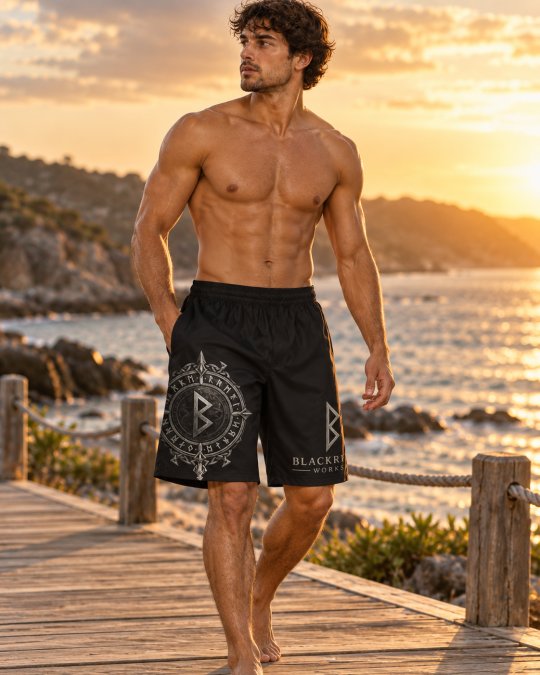
Readable Knotwork Is Better Than Detail for Detail’s Sake
Knotwork can become complicated very quickly.
That does not always make it better.
Extremely fine lines may look impressive when viewed at full resolution on a computer screen. Once the artwork is printed onto fabric and worn on a moving body, those tiny details may become difficult to read.
Wider knotwork often produces a stronger result.
The path remains visible.
The crossings are easier to follow.
The pattern keeps its identity from a normal viewing distance.
This becomes especially important on leggings, sleeves, tanks, and other garments where the artwork follows a narrow area.
A good design does not need to use every available inch.
Negative space is part of the artwork too.
Color Can Completely Change the Same Symbol
Modern apparel also gives designers freedom that historical reproduction does not require.
A rune can remain historically recognizable while being presented in a completely modern palette.
Gold creates warmth and contrast against black.
Silver creates a colder and more restrained appearance.
Bronze can give a Mjölnir design a weathered metal character.
Blue and pink can move Freyja-inspired artwork in entirely different directions.
Teal can make Nordic imagery feel almost futuristic while the underlying symbol remains recognizable.
These colors are not claims about how people in the Viking Age displayed the symbol.
They are contemporary design decisions.
That is the point.
Modern Norse-inspired apparel should have room to be modern.
Repeating the Same Graphic Everywhere Weakens a Collection
A recognizable brand does not require every product to use the same artwork.
In fact, repeating one design too many times can make a collection feel smaller.
A stronger collection shares a visual language instead.
Several garments may use black as a foundation.
Gold and silver may appear repeatedly.
Knotwork may remain wide and readable.
Runes may be historically recognizable.
Back artwork may be larger while front branding stays restrained.
Those choices create consistency even when individual products are completely different.
One shirt can feature Mjölnir.
Another can focus on a rune.
A hoodie can use Yggdrasil.
Leggings can rely primarily on knotwork.
They still belong together because the underlying design philosophy is consistent.
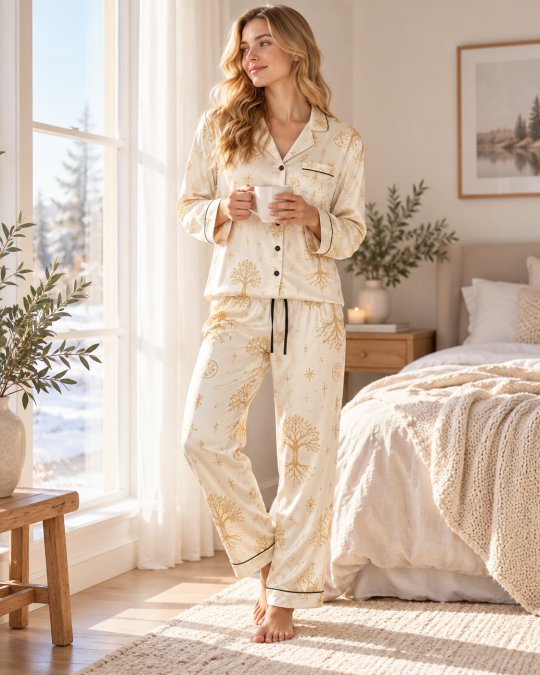
Original Apparel Gives Customers More Than a Generic Graphic
The internet has made it extremely easy to reproduce imagery.
That makes original design more valuable, not less.
When someone chooses apparel from a smaller brand, part of what they are buying is the design perspective behind it.
They are choosing the way that brand interprets Mjölnir rather than simply buying any hammer shirt.
They may prefer a particular knotwork layout.
They may like the placement of the artwork.
They may prefer bronze over silver.
They may connect with a specific rune design.
Those differences are difficult to express if every store sells essentially the same graphic.
Original design gives customers an actual choice.
Production Method and Design Ownership Are Different Things
Modern apparel brands use many different production methods.
Some manufacture thousands of pieces in advance.
Others work with production partners.
Some use print-on-demand systems that create the garment after the customer orders it.
Those methods do not determine whether the artwork is original.
A brand can work with a production partner while still developing its own designs, product layouts, collections, visual identity, and creative direction.
That distinction is important.
Black Rune Works is not valuable because someone claims every garment was physically made by hand.
The value is in the design direction, the symbolism, the artwork choices, the product selection, and the identity being built across the collection.
The garment production and the creative work are different parts of the product.
Small Brands Can Take Design Risks Larger Brands Often Avoid
A smaller apparel brand does not have to appeal to everyone.
That can be an advantage.
A major clothing company may need designs broad enough to sell to millions of people.
A smaller Norse-inspired brand can make something much more specific.
It can produce a bronze Mjölnir piece because some customers strongly prefer that look.
It can create rune-focused apparel without trying to explain the design to everyone.
It can experiment with Nordic-pattern pajamas, athletic clothing, tanks, leggings, and unusual combinations that might not make sense for a mass-market retailer.
Not every design has to appeal to every customer.
It only needs to strongly connect with the right customer.
That creates room for personality.
Symbolic Clothing Becomes More Personal Through Wear
Original artwork gives a garment its starting identity.
The wearer eventually adds another one.
A shirt may initially be chosen because someone likes the rune.
Months later, it may become associated with a trip.
A hoodie may become the piece someone wears constantly through winter.
Athletic apparel may become connected with a period of training or physical change.
Pajamas may simply become a favorite item at home.
Eventually the original product description matters less.
The garment has collected the wearer’s own history.
Symbolic clothing is particularly suited to that process because the design already begins with an idea.
Life adds another layer.
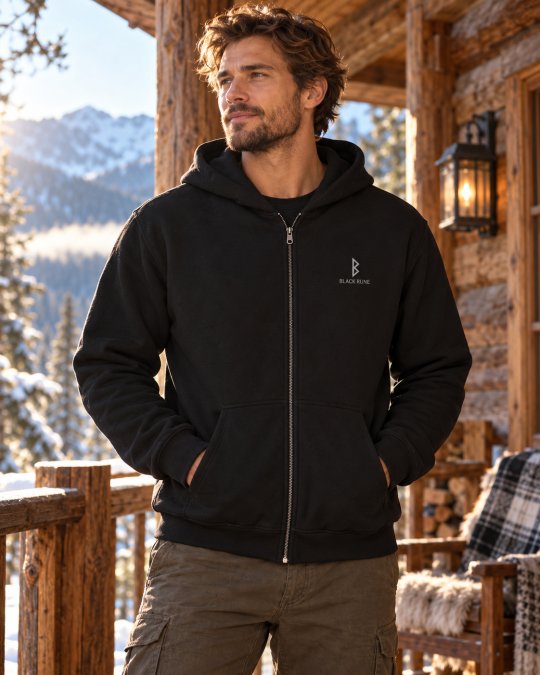
Supporting Original Design Helps Keep the Category Interesting
If every Norse-inspired garment used the same handful of graphics, there would be little reason for different brands to exist.
Original design keeps the category moving.
One designer may interpret Yggdrasil through intricate gold artwork.
Another may use it as a subtle repeating pattern.
Mjölnir can be heavy and weathered or clean and geometric.
Runes can dominate a garment or remain almost hidden as tonal texture.
Freyja-inspired clothing can move toward completely different colors and silhouettes.
That variety gives customers more choices.
It also means Norse-inspired fashion does not have to become trapped in one stereotypical image of a Viking warrior.
There is much more visual material available than that.
What Black Rune Works Is Building
Black Rune Works is increasingly centered around modern apparel influenced by real runes, Mjölnir, Yggdrasil, knotwork, Nordic patterns, Freyja, and other elements connected with Norse-inspired visual culture.
The goal is not historical reproduction.
It is also not simply filling products with as many Viking symbols as possible.
The stronger direction is more deliberate.
Start with recognizable imagery.
Keep the important symbols readable.
Use modern color freely.
Design around the shape of the garment.
Allow negative space.
Create multiple products that share a visual language without becoming copies of one another.
That approach gives the brand room to grow while maintaining an identity.
Original Norse Apparel Should Feel Like Something You Chose
The best graphic clothing creates a reaction beyond “that is a Viking shirt.”
A customer sees a specific design and prefers it over the alternatives.
Maybe it is the shape of the hammer.
Maybe it is the gold knotwork.
Maybe it is the restraint of the front design.
Maybe it is the color.
Maybe it is the rune.
That preference is the value of original design.
The garment does not need to be handmade to be meaningful.
It needs to give the customer a reason to choose that particular piece.
When the design feels intentional, the symbolism is treated with care, and the clothing works in everyday life, Norse-inspired apparel becomes more than another generic graphic.
It becomes something identifiable.
Frequently Asked Questions
What makes Norse-inspired apparel original?
Original Norse apparel uses a brand’s own composition, artwork, color choices, placement, and interpretation rather than simply repeating an identical graphic found across many unrelated stores.
Does original Norse clothing have to use completely new symbols?
No. Historical runes, Mjölnir, Yggdrasil, ravens, and other familiar imagery can still form the foundation of original artwork. Originality comes from how those elements are interpreted and combined.
Does Norse-inspired apparel need to be handmade?
No. A garment can be produced using modern manufacturing or print-on-demand methods while still featuring original artwork and intentional product design.
Why does artwork placement matter?
Placement affects how a design looks when the garment is actually worn. Clothing folds, stretches, and moves, so successful artwork needs to work with the product rather than being treated like a flat poster.
Can modern colors be used with historical runes?
Yes. The rune can remain historically recognizable while being rendered in modern colors such as gold, silver, bronze, blue, pink, or teal.
Is print-on-demand apparel less original?
Not necessarily. Print-on-demand describes a method of production. Originality depends on the artwork, design decisions, product development, and creative direction.
Why are real runes preferable to invented rune-like symbols?
Real runes already have documented historical forms and provide a stronger foundation for Norse-inspired artwork. Invented symbols can still be decorative, but they should not be presented as authentic historical runes.
What should I look for when choosing Norse-inspired clothing?
Look for artwork you genuinely like, clear product information, thoughtful placement, readable design, and a garment type you will actually wear.
Frequently Asked Questions
What defines high-quality handcrafted apparel?
High-quality handcrafted apparel starts with materials that hold up over time and construction that shows attention to detail. Look for sturdy stitching, fabric that keeps its shape after washing, and designs that are printed or woven to last rather than applied cheaply. Handcrafted norse goods often reflect this standard because the maker's reputation depends on the work holding up.
How can I tell if a Norse-inspired shirt or tapestry is well-made?
Check the seams, the weight of the fabric, and how the design is applied. Durable norse apparel construction uses reinforced stitching and quality inks or weaves that resist fading and cracking. For tapestries, look at the density of the material and whether edges are finished cleanly. These details separate pieces built to last from those that wear out after a few washes.
Why choose artisan-made goods over mass-produced alternatives?
Artisan-made goods carry a level of care that mass production often skips. When someone crafts a piece by hand, they choose materials deliberately and check their work. That means the item lasts longer and often carries meaning beyond its function. For handcrafted norse goods, that difference shows in both durability and the sense of purpose the piece brings to your daily life.
Handcrafted goods ask something of the buyer: patience, attention, and a willingness to pay for work done right. That standard is what Black Rune Works builds around, from Norse-inspired apparel to wall art and scroll tapestries. Browse the Black Rune Works apparel collection and find a piece that reflects the values you already live by.