

What Makes Norse-Inspired Clothing Authentic?
Modern Norse-inspired clothing lives in an unusual space between history and contemporary design. The garments themselves are modern. T-shirts, hoodies, leggings, shorts, joggers, pajamas, and athletic clothing were obviously not part of Viking Age wardrobes, yet they can still carry imagery rooted in genuine Norse and Germanic traditions.
The difference between meaningful Norse-inspired apparel and generic “Viking-looking” graphics usually comes down to what the design is built from.
A garment does not become authentic simply because it is black, covered in angular symbols, or decorated with knotwork. Authenticity begins with understanding the source material. Real runes should actually belong to documented runic alphabets. Mjölnir should remain recognizable as Thor’s hammer rather than becoming a random fantasy weapon. Yggdrasil should be treated as a mythological image rather than an excuse for unsupported historical claims.
Modern design has enormous freedom once that foundation is respected.
Black Rune Works does not need to reproduce Viking Age clothing to make Norse-inspired apparel with substance. The goal is different. Historical and mythological imagery provides the foundation, while modern garments, colors, layouts, and materials bring those ideas into everyday life.
That distinction allows the clothing to feel connected to the past without pretending to come from it.
Authenticity Starts With Knowing What the Symbol Actually Is
A symbol should have an identity before it becomes decoration.
This matters especially with runes because modern design is filled with characters that look runic without belonging to any historical rune row. Sharp lines, angled branches, and geometric forms are enough to make something feel ancient to the casual viewer, which means invented symbols can easily be presented as though they have a thousand-year history.
Real runes already offer enough visual variety that this is unnecessary.
The Elder Futhark, Younger Futhark, and other historical rune rows provide documented forms that can be used responsibly in modern artwork. A designer can change texture, scale, color, surrounding knotwork, or placement while still keeping the underlying rune recognizable.
That creates a stronger design because the symbol does not depend on invented mythology to seem important.
The same principle applies outside runes.
If a design uses Mjölnir, Yggdrasil, ravens, or another recognizable Norse element, the artwork becomes more meaningful when the designer understands what the image is before deciding how to reinterpret it.
The modern presentation can be original.
The foundation should not be fabricated.
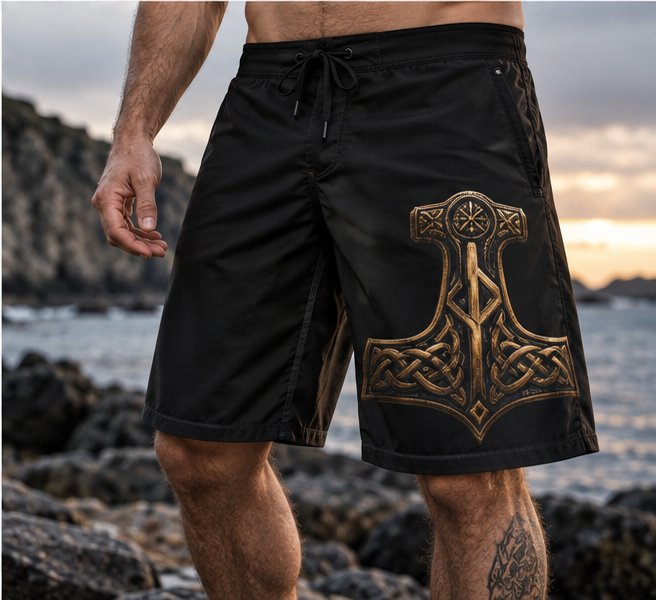
Historical Inspiration Is Different From Historical Reproduction
This distinction is important because modern Norse fashion often gets judged by the wrong standard.
A black athletic shirt with rune patterns is not historical clothing.
Neither is a sherpa-lined hoodie, a pair of leggings, or basketball shorts decorated with Yggdrasil.
That does not make them inauthentic as modern Norse-inspired apparel.
Historical reproduction attempts to recreate clothing from a specific period using evidence about construction, materials, shape, and technique. Modern inspired apparel does something else. It takes visual ideas, symbols, mythology, or decorative influences from older traditions and applies them to contemporary garments.
The two categories can both be legitimate as long as they are not confused.
Black Rune Works belongs firmly in the modern category.
A customer should be able to wear a rune tank top with normal shorts, a Yggdrasil hoodie with jeans, or Nordic-pattern leggings with an ordinary athletic top without looking like they are wearing a costume.
That is part of what makes the designs useful.
The inspiration comes from older traditions.
The clothing belongs to the present.
Real Runes Give Modern Design a Stronger Foundation
Rune-inspired apparel works best when the rune remains clear enough to recognize.
There is often a temptation to add so much detail around a rune that the character disappears completely. Knotwork, circles, additional symbols, texture, metallic effects, and background patterns can all compete for attention.
A stronger composition usually establishes a clear hierarchy.
The rune should still look like the rune.
Everything else can support it.
This is especially important when a design is intended to communicate a specific rune rather than a general Nordic mood. If the customer chooses Berkano, for example, the central character should not be altered so heavily that it becomes something else.
The artwork can still be bold.
A real rune can be rendered in antique gold, weathered bronze, silver, chrome, teal, or another modern treatment. It can become part of a large back piece or appear quietly on the front of a garment.
Modern creativity does not require changing the rune into something fictitious.
It requires deciding how to present it.
Knotwork Should Support the Design Instead of Taking It Over
Knotwork is one of the most effective ways to give modern apparel a Nordic character, but it works best when the pattern remains readable.
Extremely narrow or excessively complicated strands may look impressive when enlarged on a design screen. Once printed on fabric, the detail can collapse into a dark mass, especially when the garment folds or stretches.
Wider knotwork gives the pattern room to breathe.
The crossings remain visible. The eye can follow the path. The artwork continues to make sense when placed vertically along a shirt, down the side of leggings, across a sleeve, or around a larger central symbol.
That balance is particularly useful for Black Rune Works because it creates detail without turning every garment into visual noise.
The knotwork can frame a rune.
It can guide the eye toward a Mjölnir.
It can create a vertical stripe through a Nordic-pattern tank.
It can move naturally along a leg.
The pattern becomes part of the structure of the garment rather than something added simply to fill empty space.
Mjölnir Does Not Need Extra Fantasy to Be Powerful
Thor’s hammer is already one of the most recognizable symbols connected with Norse mythology.
It does not need dragons, flames, fictional runes, or a dozen unrelated symbols to become strong artwork.
A clean Mjölnir design can carry an entire shirt by itself.
Knotwork can add character to the hammer without changing its identity. Bronze can make the image feel heavier and more weathered. Silver can create a colder visual direction. Gold can make the same general form feel more ornamental.
The symbol remains recognizable while the presentation changes.
That is exactly the kind of freedom modern Norse design should use.
Instead of inventing history, the designer creates personality.
Yggdrasil Works Because the Form Is Already Rich With Meaning
Yggdrasil is another example of a symbol that does not need much help.
The great tree already provides a complex visual structure.
Roots, trunk, branches, circles, surrounding knotwork, and other geometric elements can be combined around it without losing the central image.
That makes Yggdrasil particularly useful on larger garments.
A hoodie back can carry a detailed tree composition. Shorts can use smaller repeated tree imagery. Leggings can turn the branches or surrounding pattern into a vertical design.
The same concept can therefore move across multiple types of clothing without requiring identical artwork.
That is useful for building a collection because the products can feel related without becoming copies of one another.
The symbol provides continuity.
The garments provide variation.
Color Does Not Have to Be Historically Accurate
One of the biggest advantages of modern inspired apparel is freedom with color.
A historical rune does not stop being real because it is printed in metallic gold.
Mjölnir does not become less recognizable because a design uses bronze.
Yggdrasil can appear in cream and gold, black and silver, or almost any other modern palette.
Color affects mood more than historical legitimacy.
Gold against black tends to feel warm, bold, and ornamental. Silver feels colder and more restrained. Bronze can suggest aged metal and heavier visual weight. Cream and gold produce a much lighter presentation while preserving the underlying Nordic imagery.
Modern colors can even move well beyond traditional-looking palettes.
Teal, blue, pink, or other contemporary colors can work as long as the underlying design remains coherent.
Black Rune Works does not need every product to look like an archaeological object.
The symbol creates the connection.
The color creates the personality.
Authentic Apparel Should Still Function as Apparel
A strong design cannot rescue a garment that people do not enjoy wearing.
This may be the most important modern part of Norse-inspired clothing.
A hoodie still has to work as a hoodie.
A tank top should be comfortable enough to wear in the situations where someone would normally choose a tank top.
Leggings need to accommodate movement.
Basketball shorts should still feel like athletic shorts.
Pajamas need to function as sleepwear.
The imagery adds identity, but it does not replace basic function.
That practical side is what separates lifestyle apparel from costume clothing.
Someone should be able to choose a Black Rune Works garment because they like the product itself and then appreciate the symbolism as another layer.
The customer should not have to sacrifice comfort or usefulness just to wear Nordic imagery.
Authenticity Also Means Not Claiming More Than the Evidence Supports
Historical respect includes being careful with language.
A design can be inspired by a real rune without claiming that every modern interpretation attached to that rune was believed exactly the same way a thousand years ago.
A modern symbol can carry personal meaning without needing a fabricated ancient story.
That distinction is particularly important online because historical imagery is often mixed with modern spirituality, fantasy, mythology, reenactment, and popular culture until the boundaries become difficult to see.
Black Rune Works can take a cleaner approach.
When something is historical, treat it as historical.
When a meaning is a modern interpretation, call it a modern interpretation.
When artwork is original, let it be original.
None of those categories need to be disguised as another one.
That honesty gives the brand more credibility.
Nordic Design Does Not Need to Look Aggressive
Another common misconception is that authentic Norse-inspired apparel needs to look violent, intimidating, or battle-focused.
Norse mythology and historical symbolism offer much more than weapons.
Yggdrasil provides imagery involving connection and continuity.
Berkano provides a foundation for modern interpretations involving growth and renewal.
Ravens can bring ideas involving thought and memory.
Knotwork can create visual continuity.
Freyja can inspire completely different emotional and aesthetic directions.
A brand becomes more interesting when it can explore several moods rather than repeating the same aggressive warrior image across every product.
That variety also gives customers more ways to connect with the clothing.
Someone may love Nordic design while having no interest in battle imagery at all.
There should still be something for them.
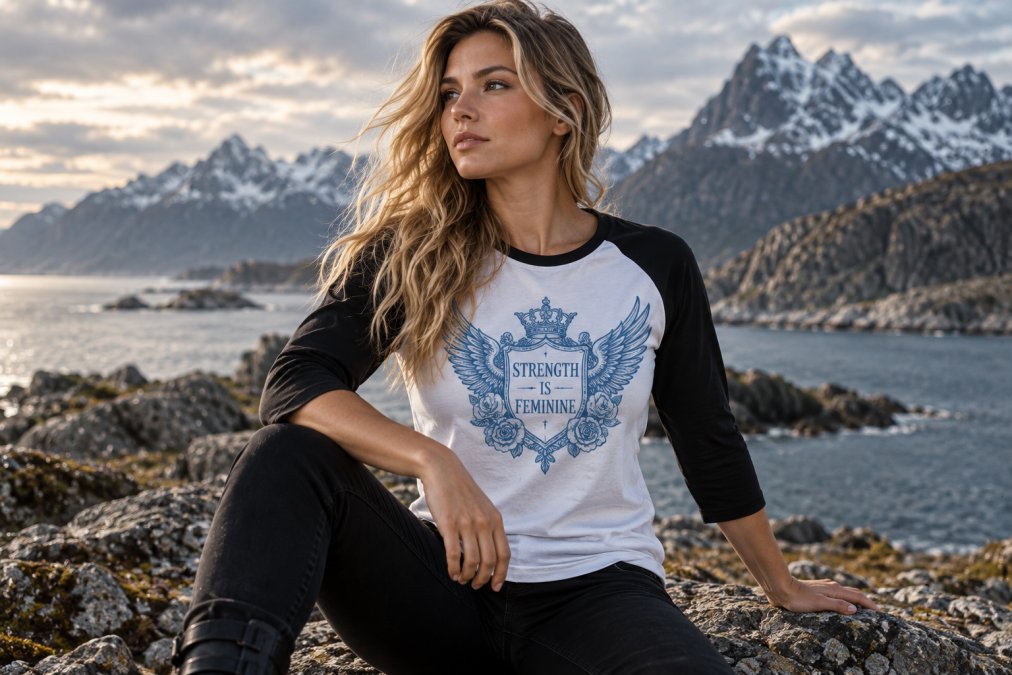
Modern Placement Makes the Garment Feel Designed Instead of Printed
Where artwork appears can matter as much as the artwork itself.
A large design placed automatically in the center of every garment can make the product feel like a blank item with an image added afterward.
More thoughtful placement lets the garment participate in the design.
A knotwork band can follow the side of a leg.
Sleeve artwork can create a vertical line.
A small front chest logo can balance a large back graphic.
A subtle tonal rune field can cover an entire garment while one stronger metallic element provides the focal point.
This approach creates a more complete piece.
The garment and artwork begin to feel like one design instead of two separate things.
That is particularly important with all-over-print clothing because the panel layout gives the designer much more control over how the imagery moves across the body.
The Best Norse-Inspired Clothing Leaves Room for the Wearer
A garment should not tell the customer everything they are supposed to believe.
The wearer brings their own context.
Someone may choose a Mjölnir shirt because of historical interest. Another customer may connect with modern ideas of strength and protection. Someone may simply love the way bronze artwork looks against black fabric.
All of those reasons can be legitimate.
A Yggdrasil design may represent family to one person and personal growth to another.
A rune may carry a deeply personal interpretation for someone while another customer appreciates it mainly because they studied historical writing systems.
The design provides a starting point.
The wearer adds the personal story.
That flexibility is one of the reasons symbolic apparel can stay relevant long after a trend disappears.
Why This Matters for Black Rune Works
Black Rune Works has increasingly moved toward real runes, readable knotwork, Mjölnir, Yggdrasil, Nordic patterns, and modern garments rather than costume-style Viking clothing.
That creates a clear direction.
The brand does not need to claim historical reproduction.
It does not need fictional runes presented as ancient symbols.
It does not need every design covered in as many Norse references as possible.
The stronger direction is more deliberate.
Real symbols provide the foundation.
Modern artwork gives them a new setting.
The garments stay functional.
The customer decides what the final meaning becomes.
That combination gives Black Rune Works room to expand into new apparel while keeping the brand recognizable.
A tank top, pair of shorts, hoodie, leggings, or pajama set can look completely different while still sharing the same design philosophy.
That is how a visual identity becomes larger than one product.
Authenticity Is About Respecting the Source and Owning the Modern Design
Modern Norse-inspired clothing does not have to pretend to be ancient.
It becomes stronger when it does the opposite.
A modern garment can openly be modern.
The designer can use contemporary color, athletic cuts, all-over printing, sherpa lining, modern stitching, and new product types without weakening the historical inspiration.
What matters is knowing which part comes from where.
The rune comes from a documented writing tradition.
Mjölnir comes from Norse mythology and historical symbolism.
Yggdrasil comes from mythological tradition.
The garment comes from modern clothing.
The artwork comes from a modern designer.
The personal meaning eventually comes from the wearer.
When all of those pieces are treated honestly, Norse-inspired apparel does not need to pretend.
It already has enough substance.
Frequently Asked Questions
What makes Norse-inspired clothing authentic?
Authenticity comes from using historically or mythologically grounded source material honestly while acknowledging that the garment itself is modern. Real runes, recognizable Norse symbols, thoughtful knotwork, and accurate descriptions create a stronger foundation than generic fantasy artwork presented as history.
Does authentic Norse clothing have to look historical?
No. Historical reproduction clothing and modern Norse-inspired apparel are different things. Contemporary shirts, hoodies, leggings, shorts, and other garments can use real Norse-inspired symbolism without pretending to be Viking Age clothing.
Are all rune designs authentic?
No. Many modern symbols are designed to resemble runes without belonging to a documented runic alphabet. A historically grounded rune design should begin with a real rune form.
Can real runes be used in modern colors?
Yes. A historical rune can be rendered in gold, silver, bronze, teal, pink, blue, or other modern treatments without changing the underlying rune itself.
Is Mjölnir only appropriate for historically styled clothing?
No. Mjölnir can be incorporated into completely contemporary clothing. The historical and mythological connection comes from the symbol rather than the type of modern garment carrying it.
Can Yggdrasil be used on athletic apparel?
Yes. Modern Nordic-inspired design can adapt Yggdrasil imagery to shorts, leggings, shirts, hoodies, and other contemporary garments while keeping the tree recognizable.
Does authentic Nordic design need a lot of symbols?
No. One clear rune, hammer, tree, or knotwork element can often create a stronger design than several unrelated symbols competing for attention.
Can modern Norse clothing still be original?
Absolutely. Historical source material provides a foundation rather than a finished design. Composition, color, texture, garment placement, knotwork, and overall presentation can all be original while the underlying symbol remains historically grounded.
Frequently Asked Questions
What Norse symbols represent wisdom and personal sacrifice?
Odin's ravens, Huginn and Muninn, represent thought and memory, the two faculties wisdom demands. Odin's sacrifice of an eye at Mimir's well is the mythic model for trading something you want now for something you need later. On a practical level, wisdom costs time, comfort, and ego. Anyone chasing growth should expect the same exchange: give up the easy habit, keep the hard lesson.
How can Norse mythology be applied to modern self-improvement?
Treat the stories as a code rather than entertainment. The Hávamál lays out conduct for guests, friends, and leaders in plain terms. Wyrd says your past choices shape your present, so accountability starts with you. Use Norse mythology symbols as daily reminders: a rune on your desk, a Valknut on a wall piece, a line from the Hávamál taped inside a planner. The symbol only matters if it changes what you do next.
Which Norse symbols are associated with resilience and strength?
The Valknut, tied to Odin and to those who fall in battle, points to courage under pressure rather than physical force. Gungnir, Odin's spear, stands for aim and commitment: once thrown, it does not turn back. Runes carry the same idea through cosmic law and fate, reminding you that some outcomes are fixed and your response is not. Pick one that fits the season you are in.