

What Makes Norse-Inspired Apparel Worth Wearing: Design, Fit, and Everyday Style
Norse-inspired apparel stands out because it gives ordinary modern clothing a stronger visual identity. A black T-shirt is familiar. A full-zip hoodie is familiar. Athletic shorts, leggings, raglans, and joggers are all familiar garments. What changes them is the artwork placed on them and the way that artwork connects with runes, Mjölnir, knotwork, Yggdrasil, Nordic patterning, Freyja-inspired themes, and other elements drawn from Norse and northern European visual traditions.
That combination is what makes modern Norse apparel interesting. The garment does not need to imitate something worn during the Viking Age. It can remain completely contemporary while the artwork provides a connection to older symbols, mythology, and design language.
Black Rune Works approaches apparel from that direction. The clothing is meant for modern wardrobes. The Norse influence gives it personality.
The strongest pieces are not simply the ones with the largest graphic. Good Norse-inspired apparel balances design, placement, color, garment type, and wearability so the finished piece looks intentional rather than like artwork was added at the last minute.
Strong Norse Apparel Starts With a Clear Visual Idea
A successful garment usually has one main visual idea.
That may be a large bronze Mjölnir. It may be a silver rune composition across the back of a hoodie. It may be gold knotwork running down one leg of a pair of leggings. It may be a darker tonal rune pattern across athletic shorts.
The design becomes easier to understand when the viewer immediately knows where to look.
Trying to place every Norse symbol into one garment can have the opposite effect. Mjölnir, ravens, Yggdrasil, knotwork, several runes, weapons, and text can all compete until none of them feels important.
A cleaner composition gives the main symbol room to work.
That does not mean the artwork has to be simple. A detailed design can still have a clear hierarchy.
The strongest Black Rune Works pieces often use one dominant element with smaller supporting details rather than treating every part of the garment equally.
Mjölnir Works Because the Shape Is Immediately Recognizable
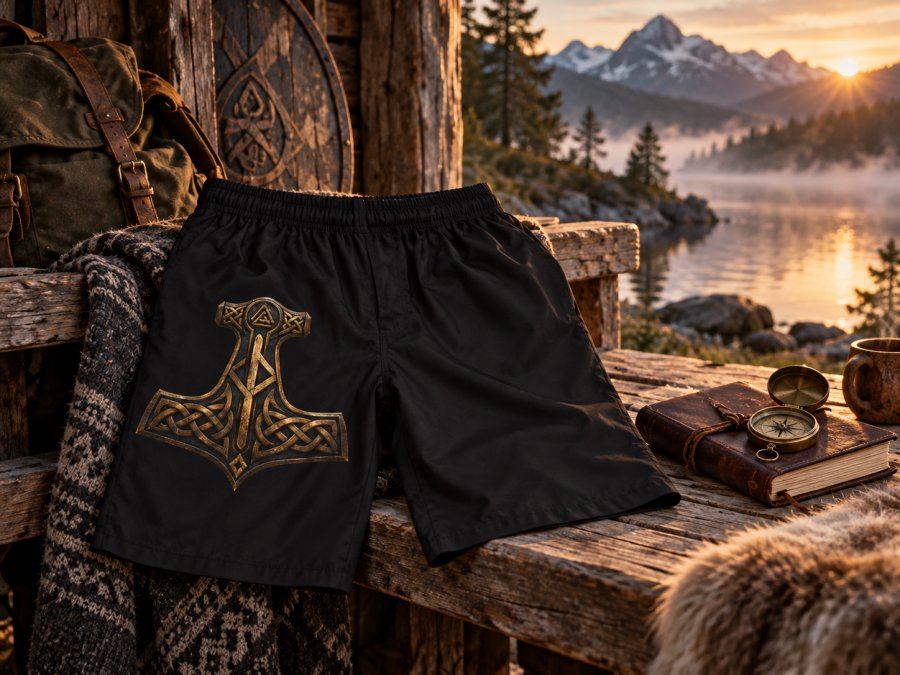
Mjölnir is particularly effective in graphic apparel because the hammer has a strong overall silhouette.
The interior can contain knotwork, metallic textures, runes, or decorative detail without destroying the basic form.
This gives designers room to create different interpretations.
A bronze Mjölnir can feel warmer and more weathered. Silver can create a colder, cleaner appearance. Gold can make the design feel more ornamental.
The underlying symbol remains recognizable even though the treatment changes.
That makes Mjölnir useful across several garment types.
A large hammer can dominate the back of a shirt or hoodie, while a smaller version can work on shorts or another limited design area.
The artwork should change according to the garment rather than forcing the same layout onto everything.
Runes Can Be Bold or Subtle
Runes offer a different kind of flexibility.
A single rune can become the focal point of a garment, but runes can also work as background texture.
This makes them especially useful for someone who wants Norse-inspired clothing that does not immediately look like a traditional graphic tee.
Dark tonal runes on black athletic shorts, for example, can remain subtle from a distance while becoming more visible up close.
A rune can also be placed vertically down a leg or sleeve because the angular forms work naturally within narrow spaces.
That allows the same visual language to appear across very different products.
The important thing is keeping the rune recognizable instead of modifying it so heavily that it becomes a generic fantasy symbol.
Modern styling does not require erasing the original form.
Knotwork Adds Movement to a Garment
Knotwork works especially well when it follows the shape of the clothing.
A long knotwork panel can run down the side of leggings. A narrower pattern can follow a sleeve. Larger knotwork can fill the interior of a Mjölnir without becoming the entire composition.
The lines create visual movement because the eye naturally follows the crossings.
That makes knotwork particularly useful on garments that are themselves long or directional.
The challenge is keeping it readable.
Extremely thin and complicated knotwork can look impressive in a large digital file but lose clarity when printed onto fabric that bends, stretches, and folds.
Wider lines often work better in apparel because the path remains visible during normal movement.
The result feels detailed without becoming fragile-looking.
Placement Can Change the Entire Character of a Design
The same artwork can feel completely different depending on where it appears.
A large design on the back of a hoodie can create a dramatic focal point while the front remains nearly plain.
Move that same design to the center of the chest and the garment becomes much more visually aggressive from the front.
Place a smaller version on one leg of a pair of shorts and it becomes an accent rather than the entire identity of the outfit.
That is why good apparel design begins with the garment rather than treating every product as a blank rectangle.
Full-zip hoodies have zippers and pockets to work around. Leggings stretch heavily. Shorts move constantly through the hips and legs. Raglans have sleeve seams that naturally frame the center of the shirt.
The artwork should respect those structures.
When it does, the finished product looks designed rather than decorated.
Black Gives Norse Artwork a Flexible Foundation
Black appears frequently in Norse-inspired apparel for good reason.
It works with almost every metallic treatment and makes stronger artwork easier to coordinate with an existing wardrobe.
Bronze stands out warmly against black. Silver becomes crisp and restrained. Gold becomes highly visible. Teal and blue can create a contemporary contrast that moves away from the traditional black-and-metallic combination.
Black also works with ordinary jeans, joggers, cargos, shorts, jackets, sneakers, and boots.
That matters because distinctive clothing becomes more useful when the rest of the outfit does not require special planning.
A strong black graphic shirt can become the interesting element in an otherwise ordinary outfit.
The symbolism does the work without forcing the entire wardrobe into one theme.
Norse Apparel Does Not Have to Be Dark
Black may be useful, but it is not a requirement.
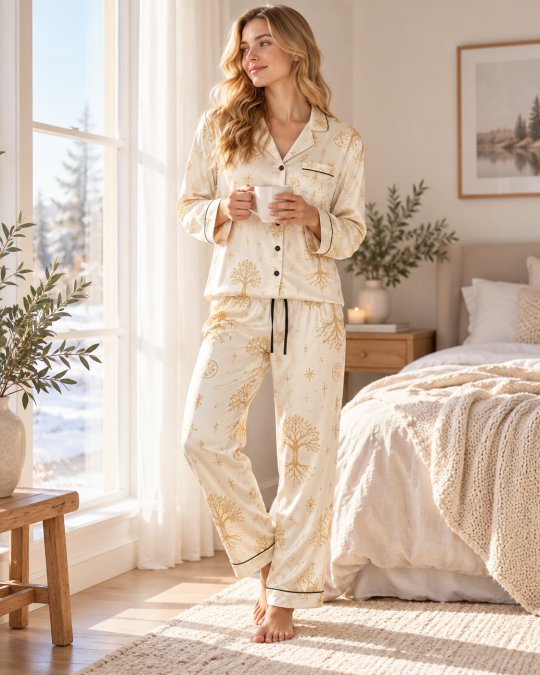
Modern Norse-inspired apparel can work with white, cream, blue, pink, burgundy, orange, gray, and other colors.
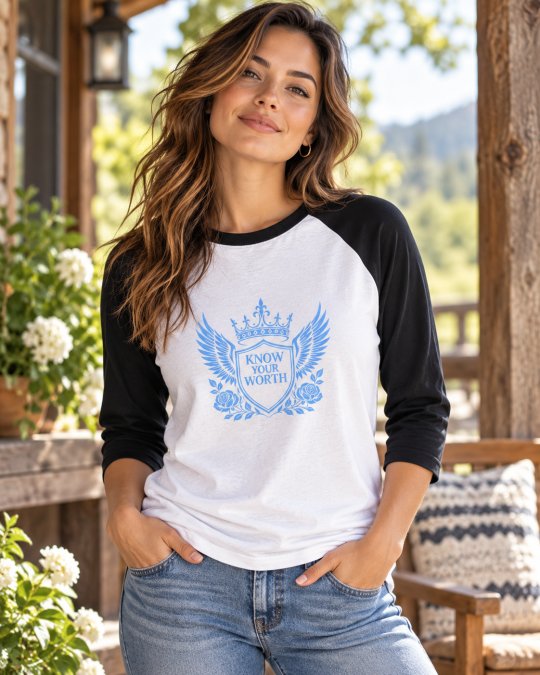
A lighter raglan can make a Norse graphic feel more casual.
A cream-and-gold pattern creates a very different mood from silver on black.
A bright branded shirt can make the Black Rune Works identity itself the focal point.
Women’s apparel in particular benefits from having more than one visual direction.
Freyja-inspired pieces can use softer or brighter palettes without losing their connection to Norse mythology.
The symbol creates the connection.
The color creates the personality.
Fit Determines Whether the Artwork Actually Looks Right
Graphic apparel is not viewed on a perfectly flat product template once someone buys it.
The garment moves with the body.
If the shirt is significantly too tight, the artwork may stretch and its proportions can change. If it is extremely oversized, the graphic may disappear into folds.
Leggings create another challenge because the design has to remain visually balanced while the fabric stretches.
Shorts shift as the wearer moves.
Hoodies bunch and fold naturally.
This is why fit is part of design.
The garment does not need to fit one specific way, but the wearer should choose the silhouette they actually prefer.
Sizing information and garment measurements can help make that decision more predictable.
A strong design becomes much more useful when the clothing itself feels comfortable enough to wear regularly.
Everyday Wearability Matters More Than Looking Dramatic Online
Some garments look spectacular in isolated product imagery but become difficult to wear with anything else.
That may be fine for someone specifically looking for a statement piece.
For everyday apparel, however, versatility matters.
A bronze Mjölnir tee can work with jeans.
A silver rune hoodie can work with black cargos.
Nordic athletic shorts can be paired with a plain top.
Black-and-gold leggings can work with a simple hoodie or solid shirt.
The strongest outfit often uses one Black Rune Works garment as the focal point while everything around it stays quieter.
That gives the artwork room to stand out.
It also makes the garment easier to wear repeatedly rather than saving it for rare occasions.
Norse-Inspired Apparel Can Be Athletic
Norse design does not need to stay confined to traditional graphic T-shirts and hoodies.
Athletic clothing creates different opportunities for artwork.
Basketball shorts can use tonal runes across the fabric with one stronger gold detail.
Board shorts can use a large emblem on one leg.
Leggings can use knotwork or rune panels running vertically.
Performance apparel can use smaller branding and more restrained graphics.
The design strategy changes because the clothing serves a different purpose.
The garment should still look like athletic clothing first.
The Norse influence adds character without preventing it from functioning visually as activewear.
That broader approach allows a brand to build a real apparel collection rather than simply putting one graphic onto several identical shirts.
Women’s Norse Apparel Can Have Its Own Identity
Women’s Norse-inspired clothing does not need to be a copy of men’s designs.
Different garment shapes create different opportunities.
Leggings provide long design areas for knotwork.
Raglans create a natural frame around central artwork.
Joggers provide vertical leg space.
Lighter colors can change the mood of the same broader Norse visual language.
Freyja-inspired artwork provides another direction that does not have to rely on traditional warrior imagery.
This gives women more options while allowing the collection to remain recognizably Black Rune Works.
The connection comes through the artwork, symbolism, and overall design approach rather than requiring every garment to look identical.
A Brand Becomes Recognizable Through Repeated Design Choices
A recognizable apparel brand does not need one logo printed in exactly the same place on every product.
Identity can come from repeated design decisions.
Black foundations can appear across several collections.
Bronze, gold, silver, and other metallic-looking treatments can connect products.
Wide readable knotwork can become a recurring design characteristic.
Runes can appear as focal elements or subtle patterns.
Smaller front branding can balance larger back artwork.
These repeated choices create a visual language.
That allows one product to focus on Mjölnir, another on Yggdrasil, another on runes, and another on Freyja without making the store feel like several unrelated brands.
Consistency comes from the approach rather than from copying the same artwork repeatedly.
Norse Clothing Works Best When It Still Feels Modern
There is an important difference between Norse-inspired apparel and historical reproduction clothing.
Black Rune Works belongs firmly in the first category.
The garments are modern.
The cuts are modern.
The printing and production are modern.
The way customers style them is modern.
The influence comes from older symbols, mythology, knotwork, and Nordic design language.
That combination allows someone to appreciate Norse imagery without dressing as though they are recreating another century.
A Mjölnir tee with jeans still looks like a modern outfit.
A rune hoodie beneath a winter jacket still looks contemporary.
Nordic athletic shorts with sneakers still belong in the present.
That is where this style becomes practical.
The Best Norse Apparel Becomes Part of Someone’s Normal Wardrobe
A garment proves its usefulness when someone keeps reaching for it.
The shirt worn repeatedly with jeans eventually becomes familiar.
The hoodie becomes part of cold-weather rotation.
The shorts become part of summer.
The leggings become part of casual or active wear.
That repeated use is far more meaningful than describing a garment as “premium” simply because of its price or marketing language.
A piece succeeds when the customer likes the artwork, likes the fit, and finds enough ways to wear it that it becomes part of ordinary life.
Black Rune Works can provide the design.
The wearer determines what happens next.
Frequently Asked Questions
What is Norse-inspired apparel?
Norse-inspired apparel is contemporary clothing that uses visual influences such as runes, Mjölnir, Yggdrasil, knotwork, mythology, and Nordic patterns. It is different from historical Viking Age reproduction clothing.
Does Norse-inspired apparel have to be black?
No. Black works especially well with metallic and high-contrast artwork, but modern Norse designs can use virtually any color.
Can Norse clothing be worn every day?
Yes. T-shirts, hoodies, shorts, leggings, raglans, and other contemporary garments can be styled with ordinary clothing for everyday use.
Why is Mjölnir common in Norse apparel?
Mjölnir has a strong recognizable shape and an established connection with Thor in Norse mythology. Its silhouette also translates particularly well into graphic design.
Why are runes useful in clothing design?
Runes are naturally geometric and can be used at several scales. They can function as large focal elements, small emblems, vertical accents, or repeating patterns.
Does more detailed artwork mean a better garment?
Not necessarily. Strong composition, readable artwork, good placement, and balance are often more important than simply adding more detail.
Can athletic apparel still look Norse-inspired?
Yes. Runes, knotwork, metallic accents, and Nordic graphics can be integrated into shorts, leggings, performance shirts, and other athletic garments while keeping the clothing modern.
What makes a Norse-inspired garment easy to wear?
A familiar garment type, comfortable fit, thoughtful artwork placement, versatile colors, and a design that works with ordinary clothing all make the piece easier to incorporate into a regular wardrobe.