

Norse-Inspired Clothing With Meaning: Symbols, Style, and Personal Expression
Norse-inspired clothing can mean different things to different people. One person may be drawn to a particular rune because of its history, another may appreciate the visual strength of Mjölnir or Yggdrasil, and someone else may simply enjoy the combination of dark clothing, knotwork, metallic artwork, and Nordic design.
That variety is part of what makes modern Norse apparel interesting.
The clothing does not have to become a statement about someone’s entire identity. A shirt, hoodie, pair of leggings, or shorts can simply carry artwork that has more character than ordinary clothing while still fitting naturally into everyday life.
Black Rune Works approaches Norse-inspired apparel from that modern perspective. The garments are contemporary, while the artwork draws from runes, mythology, knotwork, and broader Nordic visual influences.
The meaning starts with the design, but the person wearing it ultimately decides what the garment becomes to them.
Norse-Inspired Clothing Can Be Personal Without Becoming Costume
Modern Norse clothing does not need to resemble historical Viking Age garments.
A hoodie is modern. Leggings are modern. Athletic shorts, raglans, graphic T-shirts, and performance clothing are modern as well.
What connects them with Norse-inspired style is the artwork.
A historical rune can become the focal point of a contemporary shirt. Mjölnir can appear in bronze knotwork across the back of a hoodie. Nordic patterns can run down the side of leggings. Freyja-inspired artwork can appear on a casual raglan.
None of those garments pretend to be historical reproductions.
They use older influences within clothing made for modern life.
That distinction makes the style much easier to wear because someone does not have to dress as though they are attending a themed event simply because they like Norse imagery.
Symbols Can Mean Different Things to Different Wearers
A symbol has a historical or mythological context, but a modern wearer may develop an additional personal connection with it.
Mjölnir may appeal to someone because of an interest in Thor and Norse mythology. Another person may simply appreciate the hammer as a powerful graphic shape.
Yggdrasil can be recognized through Norse mythology while also appealing to someone who likes tree imagery or interconnected designs.
Runes provide another layer because the historical characters already have a real linguistic background while also functioning extremely well as visual forms.
Modern personal meaning does not need to replace historical context.
The two can exist together.
A wearer can understand where a symbol comes from and still allow it to take on a new association through their own experiences.
Runes Give Modern Apparel a Strong Graphic Foundation
Runes work particularly well in clothing because their shapes are clear and geometric.
They can become small chest emblems, larger back graphics, vertical sleeve details, repeating patterns, or accents within a broader design.
This allows rune apparel to range from extremely subtle to visually bold.
Someone who prefers understated clothing may like a garment where the rune only becomes obvious at closer distance. Someone else may prefer a large central design that immediately becomes the focal point.
The rune itself does not need to be altered beyond recognition to make either approach work.
Historical forms already provide enough visual character for modern design.
Color, texture, scale, placement, and surrounding artwork can create variety without inventing a completely new symbol.
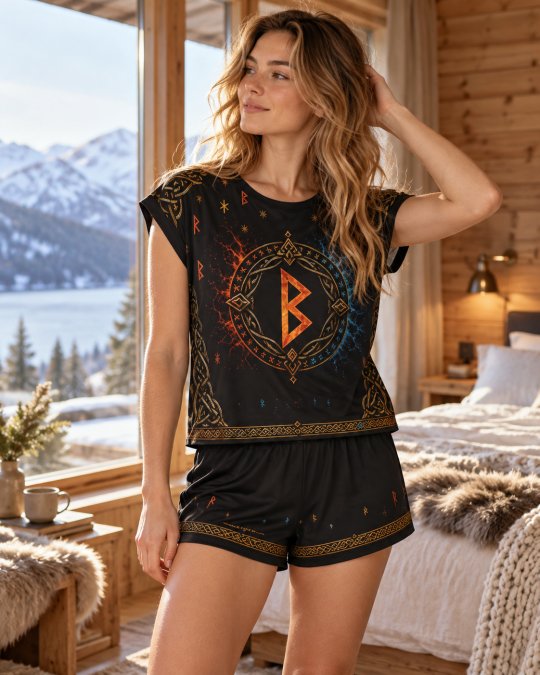
Mjölnir Creates a Strong Focal Point
Mjölnir has a very different visual effect from a repeating rune pattern.
The hammer naturally creates a strong central shape, making it particularly effective on T-shirts, hoodies, and shorts.
Knotwork can be incorporated into the form without hiding the hammer itself. Bronze can give the artwork a warmer forged-metal appearance, while silver can create a colder and more restrained look.
The same basic symbol can therefore support very different garments.
A large hammer across the back of a black shirt creates one type of statement. A smaller Mjölnir on athletic shorts creates another.
The best placement depends on the garment rather than assuming the artwork should always appear in the same location.
Knotwork Adds Movement Instead of One Central Image
Knotwork is useful because it can guide the eye along a garment rather than concentrating everything into a single graphic.
A vertical knotwork panel can follow the leg of a pair of leggings. A narrower design can work along a sleeve. Wider knotwork can become part of a Mjölnir or rune composition without overwhelming the main symbol.
The most effective knotwork for apparel is usually easy to follow.
Extremely thin strands and dozens of tiny crossings may look impressive when enlarged on a computer screen, but those details can disappear once the garment stretches, folds, and moves.
Wider knotwork keeps the pattern readable.
That allows the design to remain decorative without turning into visual noise.
Clothing Becomes More Personal Through Use
A garment can begin with symbolism, but its strongest associations often develop after purchase.
A hoodie may become the layer someone wears through an entire winter.
A shirt may become connected with a trip.
Athletic shorts may be worn through months of training.
A pair of leggings may simply become one of the pieces someone reaches for repeatedly because they like how they look and feel.
Those experiences eventually become part of the garment.
The original artwork remains, but the clothing now carries memories that the designer could never have predicted.
That is one reason apparel can become surprisingly personal.
It participates in everyday life.
Freyja-Inspired Apparel Offers a Different Visual Direction
Norse-inspired clothing does not have to rely entirely on dark warrior imagery.
Freyja-inspired apparel creates room for different colors, shapes, and messages while remaining connected with Norse mythology.
Pink, blue, white, and lighter color combinations can work just as naturally as black, gold, silver, and bronze when the design is handled intentionally.
A raglan shirt can use softer colors while still carrying a strong central graphic.
That gives women more choices than simply wearing the same designs originally created for men.
A strong collection benefits from that variety because Norse-inspired style should not be limited to one visual stereotype.
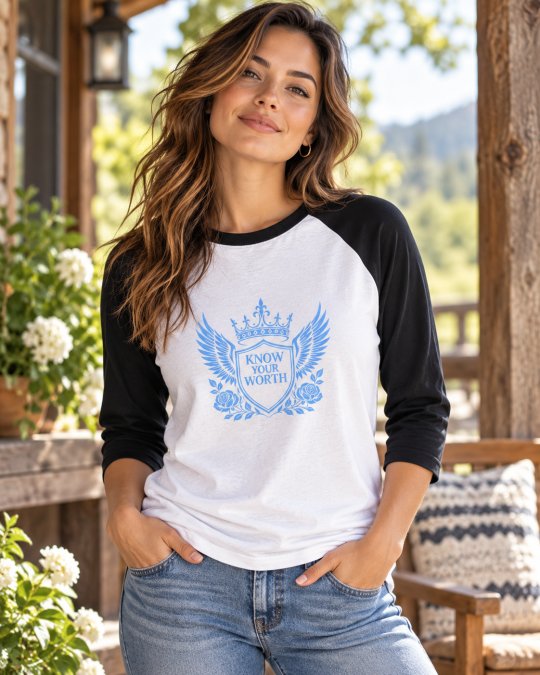
Everyday Clothing Usually Works Better Than Themed Outfits
A symbolic garment becomes much easier to wear when the rest of the outfit stays familiar.
A rune shirt can be paired with ordinary jeans.
A Norse hoodie can be worn over a basic T-shirt.
Patterned leggings can work with a solid black top.
Athletic shorts can be worn with a plain performance shirt.
There is no requirement for every piece of the outfit to carry Norse imagery.
In fact, one distinctive garment often has more visual impact when everything around it is quieter.
That keeps the clothing from feeling like costume while allowing the artwork to remain noticeable.
Black Works Well, but Norse Style Does Not Require It
Black is extremely useful in Norse-inspired apparel because it provides strong contrast and works naturally with metallic colors.
Gold stands out clearly against it.
Silver produces a colder look.
Bronze can create an aged or forged-metal appearance.
Teal can make the design feel much more contemporary.
Black is also easy to combine with an existing wardrobe.
That practicality is one reason it appears so often in Black Rune Works collections.
It is not the only option, though.
White, cream, pink, blue, burgundy, and other colors can create completely different moods while still supporting Norse-inspired artwork.
The symbol provides the connection.
The color determines much of the personality.
Personal Expression Does Not Require a Universal Meaning
One of the mistakes often made with symbolic clothing is assuming every design has to communicate one exact message.
That is rarely how people actually wear clothes.
Someone may choose a shirt because they understand the mythology.
Someone else may be interested in Nordic history.
Another person may simply think the design looks good.
All three can enjoy the same garment for completely different reasons.
The artwork does not become less meaningful because the wearer’s reason is personal.
The important distinction is being honest about what comes from historical tradition and what comes from modern interpretation.
That leaves room for both accuracy and individuality.
Original Artwork Gives the Clothing Its Own Identity
Many Norse-inspired symbols are familiar, which makes the way they are designed especially important.
Two shirts can both feature Mjölnir and still look completely different.
One may use wide bronze knotwork and an aged-metal texture, while another uses a cleaner silver treatment.
Rune designs can range from one large focal character to subtle tonal backgrounds.
Yggdrasil can appear as detailed central artwork or as part of a repeating pattern.
The symbol provides the starting point.
The composition, color, scale, placement, and surrounding details make the garment distinctive.
That is where a brand develops its own identity rather than simply repeating generic Viking imagery.
Black Rune Works Is About Modern Apparel With Norse Influence
Black Rune Works is not trying to recreate historical Viking clothing.
The brand uses contemporary garments and applies a modern interpretation of Norse-inspired artwork to them.
Runes, Mjölnir, knotwork, Yggdrasil, Freyja-inspired artwork, metallic finishes, Nordic patterns, and darker visual themes provide the connection.
T-shirts, hoodies, leggings, shorts, raglans, and other modern garments provide the foundation.
The strongest designs happen when those two sides work together.
The symbolism should not make the clothing difficult to wear.
The clothing should not make the artwork feel like an afterthought.
When both parts are balanced, Norse-inspired apparel can feel distinctive without becoming costume and personal without needing an exaggerated explanation.
Frequently Asked Questions
Does Norse-inspired clothing have to represent a specific belief?
No. People wear Norse-inspired apparel for many reasons, including an interest in mythology, history, symbols, Nordic design, or simply the appearance of the artwork.
Can modern clothing use historical runes?
Yes. Historical rune forms can be incorporated into contemporary clothing. The garment, colors, placement, and surrounding artwork can all be modern while the rune itself remains recognizable.
Is Norse-inspired clothing historically accurate?
Modern Norse apparel is generally inspired by historical and mythological sources rather than being a reproduction of Viking Age clothing.
Can Norse-inspired clothing use bright colors?
Yes. Black, bronze, silver, and gold are common, but blue, pink, cream, teal, burgundy, and many other colors can work effectively with Norse-inspired artwork.
Does every Norse outfit need multiple symbols?
No. One strong symbolic garment is often enough. Simpler surrounding clothing can make the main design easier to see and easier to wear.
Why is Mjölnir common in Norse apparel?
Mjölnir is visually recognizable and strongly associated with Thor in Norse mythology. Its shape also works particularly well as a central graphic on modern clothing.
Can women’s Norse clothing look different from men’s designs?
Yes. Women’s Norse apparel can use different colors, silhouettes, Freyja-inspired themes, leggings, raglans, and other approaches without losing its connection to the broader design style.
What makes Norse apparel feel personal?
The initial symbolism may attract someone to a garment, but repeated use often gives it additional meaning through experiences, memories, and personal associations.