

Table of Contents
- What Defines the Modern Viking Aesthetic?
- Modern Viking Style: Breaking Down the Visual Identity
- Historical Accuracy vs. Pop Culture Myths About Viking Appearance
- Viking Culture Appropriation vs. Appreciation: Where's the Line?
- Historical Viking Clothing and Its Modern Interpretation
- Viking Symbols and Their Meanings: What You Should Know
- Is Viking Aesthetic for Everyone? Inclusivity and Accessibility
- Ethical Sourcing and Quality: Making the Viking Aesthetic Sustainable
Is Viking Aesthetic for Everyone? A Modern Guide
Last Updated: August 2, 2026
The Viking aesthetic has moved from niche hobbyist circles into mainstream fashion and home décor. Modern interpretations often diverge dramatically from archaeological reality. Understanding the distinction between authentic cultural engagement and appropriation requires examining both historical evidence and contemporary inclusivity questions.
This guide breaks down what the modern Viking aesthetic actually is, addresses persistent myths about historical accuracy, explores the tension between appreciation and appropriation, and examines whether the aesthetic can authentically include people from all backgrounds, body types, and cultural identities.
What Defines the Modern Viking Aesthetic?
The modern Viking aesthetic blends historical Norse symbolism, warrior-inspired design elements, and contemporary fashion sensibilities. It emphasizes strength, resilience, and personal discipline, values that resonate across demographic lines.
The visual identity typically includes leather, bronze, natural fibers, and earth-tone color palettes. Runic symbols appear frequently on apparel and accessories. The aesthetic celebrates a "warrior mindset", disciplined pursuit of personal mastery and honor in daily life. This framing makes the aesthetic accessible to people far removed from Scandinavian heritage.
What distinguishes modern Viking aesthetic from generic medieval fashion is its intentionality. Wearing a Viking-inspired piece signals alignment with specific values: strength, wisdom, self-mastery, and resilience.
Modern Viking Style: Breaking Down the Visual Identity
Origins in Historical Reenactment and Pop Culture
The contemporary Viking aesthetic emerged from historical reenactment communities and popular entertainment. Reenactors researched Norse material culture through archaeological artifacts, while television and film introduced stylized interpretations to mainstream audiences. The modern aesthetic draws from both but belongs fully to neither, prioritizing visual appeal and symbolic meaning over strict historical accuracy.
Key Visual Elements: Runes, Warrior Aesthetics, and Norse Symbolism
Runic symbols form the backbone of modern Viking visual identity. The Elder Futhark alphabet, a 24-character system used in ancient Norse cultures, appears on apparel and wall art. Each rune carries symbolic meaning: Fehu represents wealth and abundance, Ansuz symbolizes communication and wisdom, Tiwaz embodies justice and warrior strength.
The warrior aesthetic extends beyond clothing into grooming and personal styling. Braided hair, beard grooming, and tribal-inspired face paint became associated with the aesthetic through pop culture. The "shieldmaiden" archetype emerged as a counterpoint to masculine warrior imagery, expanding the aesthetic's appeal to women seeking representations of strength and agency.
Norse symbolism encompasses runes, knotwork patterns, animal motifs (ravens, wolves, serpents), and geometric designs derived from Viking Age art.
Historical Accuracy vs. Pop Culture Myths About Viking Appearance
What Archaeological Artifacts Actually Tell Us
Archaeological evidence reveals that Vikings prioritized grooming, personal adornment, and status signaling through appearance. They were not the unkempt, brutish figures depicted in popular media.
Historical Vikings wore fitted clothing in earth tones and bright colors achieved through plant and mineral dyes. Wealthy Vikings displayed status through jewelry, silver and bronze arm rings, brooches, and pendants. Both men and women wore eyeliner made from kohl or soot. Hair was braided, styled, and sometimes dyed or bleached. Archaeological evidence suggests Vikings valued cleanliness and personal grooming as markers of social standing.
Common Misconceptions About Viking Grooming and Makeup
One persistent myth claims Vikings were uniformly large, muscular, and intimidating. Skeletal evidence indicates Vikings ranged from slight to strong, with average height varying by region and time period.
Another misconception suggests Vikings were universally male and combat-focused. While Viking Age society was patriarchal, women held property rights, could divorce, and participated in trade and governance.
The heavy tattoos and face paint associated with modern Viking aesthetics lack strong historical evidence. The extensive, intricate designs popular today are modern inventions. The dramatic tribal makeup seen in entertainment is theatrical interpretation, not historical practice.
Viking Culture Appropriation vs. Appreciation: Where's the Line?
Understanding Cultural Legacy and Respectful Engagement
The distinction between appropriation and appreciation hinges on knowledge, respect, and intent. Cultural appreciation involves learning about a tradition, understanding its context and significance, and engaging respectfully. Appropriation typically involves taking elements without understanding their meaning or divorcing them from context.
For Norse culture specifically, most Scandinavians don't experience Viking aesthetic adoption as inherently offensive. However, meaning-making matters. Wearing a piece incorporating runic symbols while understanding what those symbols represent differs from wearing the same piece as a generic aesthetic choice with no knowledge of their origins.
Respectful engagement typically includes: learning basic historical facts, understanding what specific symbols mean, acknowledging that the modern aesthetic is interpretation rather than recreation, and being honest about your own relationship to Norse heritage. You don't need Scandinavian ancestry to engage authentically. You do need genuine interest rather than treating it as a costume or trend.
How Heathenry and Modern Subculture Complicate the Conversation
Heathenry, modern religious and spiritual movements based on Norse mythology and pre-Christian Germanic traditions, adds another layer. Heathen practitioners often view Norse symbolism as spiritually significant rather than merely aesthetic. For some heathens, seeing sacred symbols used as fashion accessories feels appropriative or disrespectful.
This tension is real and worth acknowledging. A rune holding spiritual meaning for a practicing heathen may be purely decorative for someone else wearing the same symbol. Both perspectives are valid.
The problematic version emerges when Viking aesthetics become entangled with white supremacist movements. Some extremist groups have appropriated Norse symbols and mythology to support racist ideologies. This misuse is deeply offensive to both heathens and Norse culture enthusiasts, as it corrupts authentic traditions for hateful purposes. Understanding this context is essential, it means being thoughtful about which symbols you use and aware of how they're perceived.
Historical Viking Clothing and Its Modern Interpretation
Material Culture and Textile History from the Viking Age
Viking Age textiles reveal sophisticated understanding of fiber preparation, dyeing, and weaving. Archaeological finds preserve actual clothing fragments, providing direct evidence of construction techniques and design preferences. Vikings created fitted garments using natural fibers, wool, linen, and possibly hemp, in intentional patterns and colors.
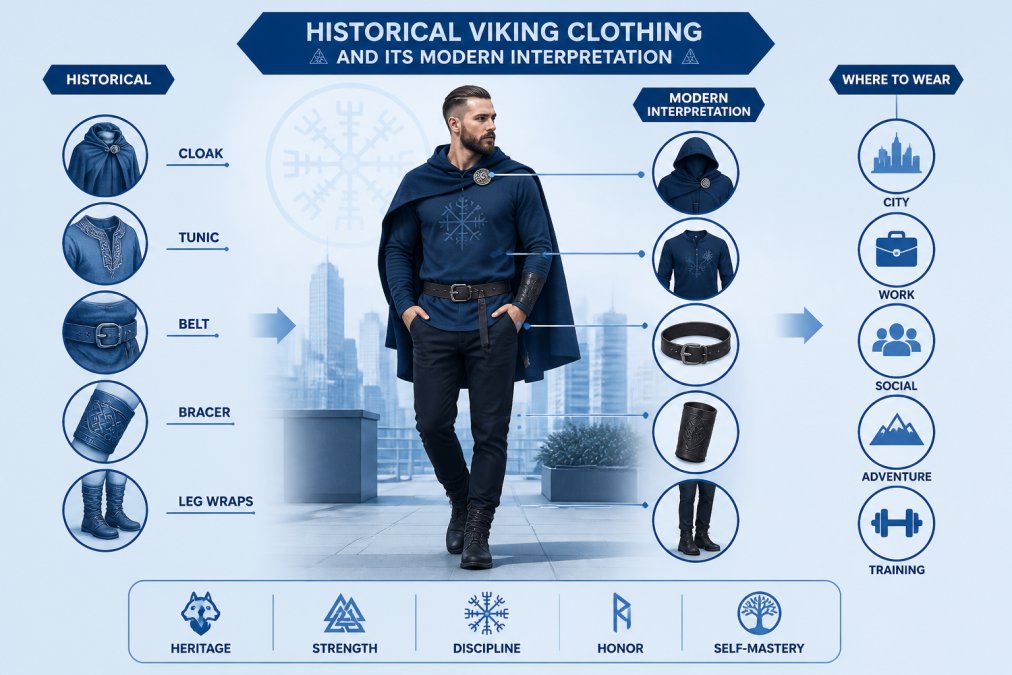
Wool was the primary fabric for outerwear and everyday clothing, valued for warmth and water resistance. Linen appeared in undergarments and fine clothing, prized for breathability and prestige. Dyes came from plants and minerals, creating earth tones and jewel tones depending on resources and trade access.
Period Costume vs. Everyday Wearable Pieces
A critical distinction exists between period costume, designed for historical reenactment, and modern everyday pieces inspired by Viking aesthetic. Period costume aims for accuracy within a specific time frame and region. Modern Viking-inspired apparel uses contemporary construction methods and materials while incorporating historical design elements.
This approach makes the aesthetic accessible and wearable in contemporary daily life. A modern piece uses contemporary construction while drawing visual inspiration from historical Norse design. You can wear a Viking-inspired tunic to the grocery store without the discomfort and impracticality of authentic period costume.
| Aspect | Historical Period Costume | Modern Viking-Inspired Apparel |
|---|---|---|
| Construction | Hand-sewn, historically accurate techniques | Machine-sewn, modern methods |
| Materials | Period-appropriate fibers (wool, linen, hemp) | Modern fabrics (cotton blends, performance materials) |
| Fit | Historically accurate silhouettes | Contemporary tailoring for modern body standards |
| Care | Hand washing, specialized maintenance | Machine washable, low-maintenance |
| Use Case | Historical reenactment, theatrical production | Daily wear, fashion, personal expression |
Viking Symbols and Their Meanings: What You Should Know
Runic Symbols, Artistic Motifs, and Authentic Norse Iconography
The Elder Futhark alphabet consists of 24 runes, each with a name, phonetic value, and associated meaning. Fehu represents wealth, Uruz represents strength, Ansuz represents communication, Raido represents journey, each carries layers of cultural and spiritual significance.
Artistic motifs from Viking Age material culture include knotwork patterns creating intricate interlocking designs without beginning or end, symbols of eternity and interconnection. Animal motifs, ravens (associated with Odin), wolves (representing wildness and strength), serpents (symbolizing wisdom and transformation), appear throughout Viking artistic traditions.
The challenge with modern Viking aesthetic lies in distinguishing authentic historical symbolism from modern invention. Some symbols marketed as "ancient Viking" are actually modern creations. Engaging authentically means learning to distinguish genuine historical traditions from modern reimaginings.
Avoiding Symbols Tied to Controversial Groups
Certain symbols associated with Viking aesthetics have been appropriated by white supremacist and extremist groups. The runes Tiwaz and Othala, for instance, have been misused by hate groups to represent racist ideologies. This misappropriation is deeply offensive to authentic heathens and Norse culture enthusiasts.
The solution isn't avoiding Viking aesthetics entirely, but being informed and intentional about symbol use. Educate yourself about which symbols have been appropriated and understand the context. If wearing a piece with runes or other Norse symbols, know what they mean and why you're wearing them.
Is Viking Aesthetic for Everyone? Inclusivity and Accessibility
Gender Representation: Beyond the Warrior Archetype
The modern Viking aesthetic has historically skewed masculine, emphasizing male warriors and strength. However, this narrow representation doesn't reflect historical reality. Viking Age women held significant social power, they managed households and property, participated in trade, and in some cases engaged in warfare.
The "shieldmaiden" archetype has gained traction as a counterbalance, though it's important recognizing this as a modern interpretation rather than a documented historical role. Goddesses like Freyja (associated with strength, love, and magic) and Hel (representing transformation and the underworld) offer additional feminine representations within Norse mythology.
Modern brands increasingly recognize this gap. Collections designed specifically for women, with tailored fits and imagery including female warriors and goddesses, make the aesthetic genuinely accessible to women.
Body Diversity and Sizing in Norse-Inspired Apparel
Another accessibility barrier has been sizing. Traditional Viking-inspired apparel often came in limited sizes, typically skewing toward smaller frames or standard masculine cuts. This exclusion meant people with larger bodies, curved figures, or non-standard proportions couldn't authentically engage with the aesthetic.
The solution involves expanded sizing and thoughtful design. Pieces accommodating diverse body types, extended size ranges, varied cuts, and adjustable elements make the aesthetic genuinely inclusive. High-quality construction matters here; pieces designed for durability and comfort across size ranges signal that the brand values all wearers equally.
Cultural Background and Who Belongs in This Space
Does someone need Scandinavian or Norse heritage to authentically engage with Viking aesthetic? No, you don't need ancestral connection to wear Viking-inspired apparel or appreciate Norse design. Yes, you do need to approach it with respect and genuine interest rather than treating it as a costume or trend.
A person of any background can authentically wear Viking-inspired pieces if they understand what they're wearing and why. The barrier to entry isn't ancestry; it's knowledge and intention.
The most inclusive version of this space welcomes people from all backgrounds while maintaining standards for respectful engagement: learn about what you're wearing, understand the symbols and their meanings, acknowledge that modern interpretations are creative reinterpretations rather than historical recreations, and be honest about your own relationship to Norse heritage.
Ethical Sourcing and Quality: Making the Viking Aesthetic Sustainable
Craftsmanship Standards and Material Durability
The Viking aesthetic emphasizes values like honor, discipline, and quality, principles that should extend to how pieces are made and sourced. Ethical production means fair wages for workers, safe working conditions, and transparent supply chains. Materials should be sourced responsibly and production methods should minimize environmental impact.
Quality construction directly impacts durability. A piece made with attention to detail, reinforced seams, quality fasteners, and proper finishing will outlast cheaper alternatives by years. This longevity reduces waste and represents genuine value.
Material choice matters significantly. Natural fibers like wool and linen, when sourced responsibly, offer durability and environmental benefits. High-quality blends combining natural and performance fibers offer the best of both worlds.
Avoiding Fast Fashion Knockoffs and Cheap Alternatives
The explosion of Viking aesthetic popularity has created opportunities for fast fashion brands to capitalize on trends with cheap knockoffs. These pieces feature thin materials, poor construction, and minimal durability. They fall apart after a few washes, creating waste and frustration.
Quality pieces use substantial materials, thick, tightly woven fabrics that feel substantial in hand. Seams are reinforced and properly finished. Hardware is durable and functional. These pieces cost more upfront but deliver genuine value through durability and performance.
Frequently Asked Questions
What exactly is the modern Viking aesthetic, and how does it differ from historical Viking Age clothing?
The modern Viking aesthetic blends historical inspiration with contemporary style. While Viking Age material culture featured wool, linen, and bronze, today's interpretation includes artistic motifs, runic symbols, and warrior aesthetics adapted for everyday wear. Historical reenactment focuses on period accuracy, whereas modern Viking style prioritizes visual identity and personal expression while honoring Norse symbolism and craftsmanship values.
Is wearing Viking-inspired fashion cultural appropriation or appreciation?
The distinction lies in respect and understanding. Appreciation involves learning about Norse mythology, Scandinavian heritage, and the historical context behind symbols you wear. Appropriation occurs when you strip symbols of meaning or ignore their cultural legacy. Engaging thoughtfully with Viking symbols, avoiding controversial iconography, and understanding the Viking Age helps ensure your style choices reflect genuine interest rather than superficial trend-following.
Can I wear Viking aesthetic pieces if I'm not Scandinavian or interested in heathenry?
Yes. The Viking aesthetic is accessible to anyone who appreciates Norse history, art, or values like discipline and strength. You don't need Scandinavian ancestry or religious affiliation to wear quality apparel featuring runic symbols or Norse-inspired design. What matters is approaching the aesthetic respectfully, understanding the symbolism you choose, and selecting pieces from brands that prioritize authentic craftsmanship over cheap imitations.
How do I know if Viking-inspired apparel is actually high-quality, or just another cheap dropshipped product?
Look for brands emphasizing material durability, detailed craftsmanship, and customer reviews showing how pieces hold up after repeated wear and washing. Quality Viking-inspired apparel uses durable fabrics, reinforced stitching, and thoughtful design. Avoid ultra-thin polyester or suspiciously low prices. Reputable brands offer free U.S. shipping, showcase customer photos, provide detailed product information, and stand behind their work with transparent sourcing practices.
This article was written using GrandRanker