

How to Choose Quality Norse-Inspired Apparel Online
Buying Norse-inspired clothing online can be difficult because product photos do not always tell the whole story. Two shirts may both feature runes, knotwork, Mjölnir, or Yggdrasil, yet the actual garments can be very different in fit, fabric, construction, artwork quality, and how well the design holds up over time.
The best way to shop is not to assume that one manufacturing or fulfillment method automatically produces good or bad clothing.
Instead, look at the garment itself.
A strong Norse-inspired piece should combine wearable modern clothing with artwork that has been designed specifically for the product. The runes should remain readable, knotwork should not disappear into a mass of tiny lines, product photos should clearly show what you are buying, and the garment should make sense for how you intend to wear it.
That is what matters most.
Start With the Garment, Not Just the Artwork
A dramatic graphic can make it easy to forget that you are still buying clothing.
The shirt, hoodie, leggings, shorts, or other garment has to fit comfortably and perform the job it was designed to do.
A T-shirt should feel appropriate for everyday wear. Athletic shorts need enough freedom of movement. Leggings should stretch without distorting the artwork beyond recognition. A hoodie should work as an actual layer rather than simply providing a large surface for a graphic.
This is why the garment type should be considered before the symbol.
Someone may love a particular Mjölnir design but dislike the cut of the shirt carrying it. Another person may prefer a Yggdrasil hoodie because they already wear hoodies constantly.
The artwork attracts attention.
The garment determines whether it gets worn.
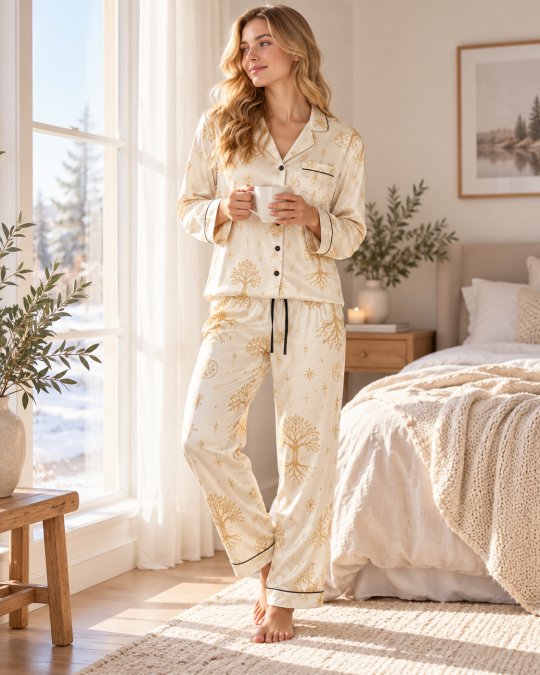
Product Photos Should Show What You Are Actually Buying
Clear product photography is one of the strongest indicators that a store is trying to show customers what they will receive.
A useful listing should make the garment visible from enough angles to understand the design.
If artwork appears on the back, there should be a back view.
If sleeve details are important, they should be visible.
If the product uses an all-over print, photographs should show how the pattern moves across the different garment panels.
The same applies to leggings and shorts. A design can look very different once seams, pockets, waistbands, and side panels are involved.
Good product images should help answer those questions before purchase.
Lifestyle images can make a product easier to imagine wearing, but they should support the product mockups rather than hide the actual garment.
The customer should still be able to see what they are buying.
Rune Artwork Should Stay Recognizable
Rune-inspired clothing is everywhere now, but not every angular symbol is a historical rune.
A design can look Nordic without using real runes at all.
That is not automatically a problem if the artwork is presented as decorative design. The issue comes when invented symbols are described as authentic historical runes.
If historical symbolism matters to you, look for brands that distinguish between actual runes and modern rune-inspired artwork.
Real runes already provide a strong visual foundation.
They can be rendered in gold, silver, bronze, black, teal, or almost any modern color. They can be combined with knotwork, used as subtle background patterns, or made into the primary focal point of a garment.
The modern presentation can change without changing the underlying rune.
That is a much stronger approach than inventing a symbol and attaching an ancient-sounding meaning to it.
Knotwork Needs Enough Space to Remain Readable
Knotwork is another place where design quality becomes obvious.
Extremely thin, complicated knotwork may look impressive when viewed as a large digital illustration, but apparel creates different challenges.
Fabric folds.
Bodies move.
Leggings stretch.
Sleeves bend.
Shirts wrinkle.
If the knotwork contains dozens of tiny crossings and narrow strands, much of that detail can disappear once the garment is being worn.
Wider knotwork usually survives better.
The paths remain visible, the crossings are easier to follow, and the artwork continues to look intentional from a normal viewing distance.
That does not mean every design has to be simple.
It means complexity should serve the garment rather than fight against it.
Look at Where the Artwork Is Placed
Artwork placement can tell you a great deal about how much thought went into a garment.
Simply dropping a rectangular graphic onto the center of every product is easy.
Designing around the garment takes more planning.
A large back graphic can allow the front of a shirt to remain cleaner.
Sleeve artwork can create a vertical element.
Knotwork can follow the outside of leggings.
A rune can be positioned as a focal point while a tonal pattern provides quieter detail around it.
Shorts can use one leg as the main graphic area while leaving the other less busy.
The most successful Norse-inspired garments feel like the artwork belongs on that specific product.
The design and garment work together.
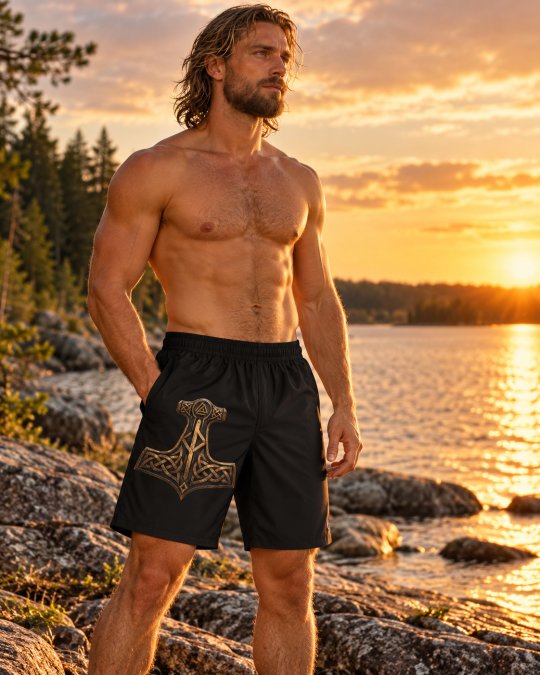
Print-on-Demand Does Not Automatically Mean Low Quality
Print-on-demand is often discussed online as though it describes a specific level of quality.
It does not.
Print-on-demand describes a production and fulfillment model.
Instead of manufacturing hundreds of identical garments in advance, a product can be produced after a customer orders it.
The quality still depends on the underlying garment, the printing method, the artwork file, the placement, the production provider, and quality control.
A poorly prepared design can produce disappointing results regardless of the business model.
A carefully designed print-on-demand garment can look excellent.
This production model is also useful for smaller independent brands because it allows them to offer more designs and product types without manufacturing thousands of pieces that may never sell.
The important question is not simply whether something was produced on demand.
The important question is whether the finished product is good.
Fabric Specifications Help You Compare Products
Online shoppers cannot touch the fabric before ordering, so product information becomes more important.
Look for descriptions that identify the garment material and, when available, fabric weight or construction.
Different products are supposed to feel different.
A soft everyday T-shirt may intentionally use lighter fabric than a heavyweight shirt.
Performance apparel may use synthetic materials because moisture management and stretch matter more than the feel of cotton.
Leggings need elasticity.
Satin pajamas are supposed to feel different from fleece or jersey sleepwear.
Sherpa-lined clothing has an entirely different purpose again.
There is no single fabric specification that defines quality across every type of apparel.
The material should make sense for the garment.
Fit Information Is More Useful Than the Size Letter
Sizing can vary significantly between different garment manufacturers.
That makes relying entirely on S, M, L, or XL risky.
When possible, compare the listed measurements with a garment you already own.
Lay your existing shirt, hoodie, or other item flat and compare width and length.
For leggings or pants, look at waist, hip, inseam, and stretch information when available.
This gives you a much better reference than assuming every medium fits the same.
A quality product can still feel disappointing if the wrong size was ordered.
Sizing information helps prevent that problem before it happens.
Consider How the Artwork Will Look After the Garment Moves
One of the easiest things to miss when shopping online is that clothing is never perfectly flat during actual use.
A design on leggings stretches.
A large back graphic folds when the wearer sits down.
A sleeve pattern changes shape when the arm bends.
A shirt graphic moves as someone walks.
Good apparel artwork anticipates this.
Large focal symbols tend to work better when they have enough open space around them.
Vertical patterns can follow the body naturally.
Highly detailed areas should not be positioned where they will constantly fold into themselves.
This is especially important with all-over-print garments because the design has to work across several panels rather than one flat surface.
Care Instructions Matter
Good clothing still requires reasonable care.
Graphic apparel is exposed to friction, detergent, heat, stretching, and repeated washing.
Turning garments inside out can help reduce direct abrasion against printed surfaces. Cooler washing temperatures are often easier on both fabric and artwork. Excessive drying heat can shorten the life of many garments.
The exact care routine depends on the specific product.
That is why following the garment’s own care instructions is more useful than assuming every graphic shirt or pair of leggings should be treated identically.
Durability is a combination of how the garment is made and how it is maintained.
Original Design Adds Value
When you buy a graphic garment, you are purchasing more than fabric.
You are also purchasing the artwork.
That is why design originality matters.
There is a major difference between a garment using artwork developed specifically for a brand and another listing using the same generic Viking graphic that appears across dozens of unrelated stores.
Original artwork gives a product identity.
For Norse-inspired apparel, this can mean a custom Mjölnir treatment, a particular knotwork structure, a recognizable rune composition, a unique color palette, or careful placement across an all-over-print garment.
The garment may be manufactured by a production partner.
The creative identity still comes from the design.
That distinction is especially important for independent apparel brands.
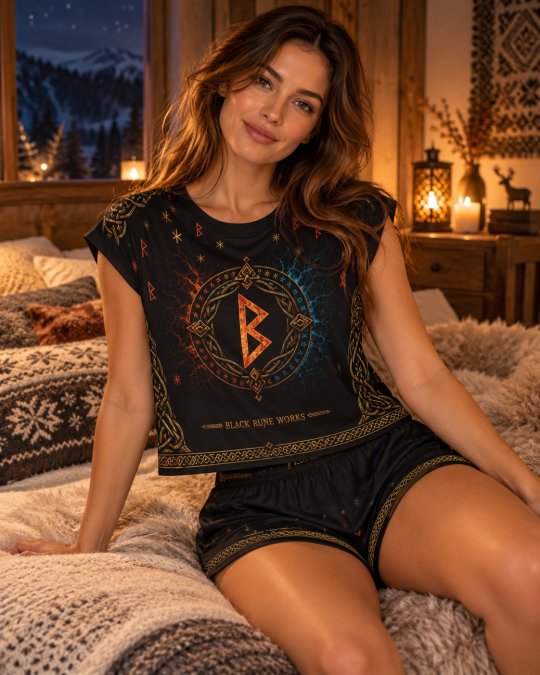
A Good Store Should Be Clear About What It Is Selling
Trust comes from clarity.
A customer should be able to understand whether they are buying a T-shirt, athletic garment, hoodie, leggings, pajamas, or another type of product without searching through vague marketing language.
The design should be shown clearly.
Sizing should be available.
Materials should be described when possible.
Care instructions should be accessible.
Shipping expectations should not be hidden.
No online store can eliminate every uncertainty involved in purchasing clothing without trying it on, but clear information makes the decision easier.
Transparency is more useful than trying to convince customers that one particular production model automatically guarantees quality.
Quality Norse Apparel Should Still Feel Modern
Norse-inspired clothing does not have to look like historical costume.
Modern apparel can use runes, knotwork, Mjölnir, Yggdrasil, ravens, or other Nordic visual influences while remaining completely contemporary.
A rune T-shirt can still be an ordinary T-shirt.
Nordic leggings can still be used for casual or active wear.
A Mjölnir design can appear on modern shorts.
A Yggdrasil pattern can work on pajamas.
The historical or mythological influence comes from the artwork.
The garment belongs to the present.
That makes the clothing much easier to incorporate into everyday life.
Buy the Piece You Will Actually Wear
The final test is surprisingly simple.
Would you actually wear it?
A product can have beautiful artwork, detailed mythology, and excellent photographs but still be wrong for your wardrobe.
Choose garments that match how you already dress.
If you wear black graphic shirts constantly, a rune or Mjölnir shirt may fit naturally.
If you prefer athletic clothing, Nordic shorts or leggings may make more sense.
If you live in hoodies during winter, put the artwork there.
A good purchase is not simply a product that looks impressive online.
It is something that becomes part of your normal rotation.
That is where the design has the opportunity to become personal.
Frequently Asked Questions
Is print-on-demand clothing automatically low quality?
No. Print-on-demand describes how and when a product is produced, not a guaranteed level of quality. Fabric, garment construction, artwork preparation, printing, placement, and the production provider all influence the final product.
How can I judge Norse clothing quality online?
Look at the garment material, sizing information, multiple product views, artwork placement, print clarity, construction details, and care instructions. Clear product information generally gives you a better basis for judging the item than marketing language alone.
How can I tell whether a rune is real?
Compare the character with documented historical rune rows such as Elder Futhark or Younger Futhark. Many modern graphics use rune-like symbols that are decorative rather than historical characters.
Does heavier fabric always mean better quality?
No. Fabric weight should match the garment's purpose. A lightweight everyday shirt, performance tee, leggings, satin pajamas, and sherpa-lined hoodie all require different materials.
Why does artwork placement matter?
Garments move and bend, so artwork has to work with the shape of the clothing. Good placement keeps important symbols readable and allows the design to remain balanced when worn.
Can all-over-print clothing still be high quality?
Yes. All-over printing can produce strong results when the artwork has been designed specifically for the garment panels and important details are placed carefully.
Should I avoid clothing made by a production partner?
No. Many independent apparel brands use specialized production partners. The more useful question is whether the brand provides good designs, accurate product information, reliable fulfillment, and a finished garment that meets expectations.
What makes Norse-inspired clothing worth buying?
The strongest pieces combine wearable garments, clear and intentional artwork, good product information, proper sizing, and symbols or designs the customer genuinely wants to wear.
Frequently Asked Questions
How can you tell if a brand designs their own products?
Look for consistent design language across the whole catalog: recurring motifs, a named collection, and product photos shot on real people rather than the same mockup used everywhere. Check whether the brand shows close-ups of stitching, tags, and fabric texture. A brand that designs its own Norse-inspired apparel will explain its symbols and materials, while a dropshipper usually lists generic titles and stock images.
Does price point indicate the quality of Norse-inspired clothing?
Not reliably. Extremely low prices often signal thin fabric and heat-pressed prints, but a high price alone proves nothing. Use physical cues instead: check the fabric weight in GSM, confirm combed or ring-spun cotton, look for double-needle stitching and neck tape, and inspect how the print sits in the weave. Those details tell you far more than the number on the tag.
What should you look for in high-quality graphic apparel?
Start with fabric weight, fiber content, and construction. Heavier cotton holds its shape and resists shrinkage. Combed or ring-spun yarns feel smoother. Double-needle stitching, shoulder-to-shoulder taping, and side seams add durability. Then check the print: water-based inks soak into the fabric and will not crack like thick plastisol layers. A brand that lists these details is usually proud of what it makes.
Cheap Norse merchandise is easy to find and easy to regret. Check the label, weigh the fabric, and inspect the stitching before you buy. Black Rune Works builds apparel, wall art, and scroll tapestries meant to hold up and carry a message. Explore the collection and choose pieces built to last.