

How to Choose Norse-Inspired Apparel That Works in Everyday Life
Norse-inspired clothing works best when it feels like something you would wear anyway. The symbolism should add meaning to the garment, not make the garment feel like a costume. A shirt, hoodie, pair of leggings, or other piece can carry runes, knotwork, or mythological imagery and still fit naturally into modern life when the design, fit, color, and purpose all work together.
That is the difference between clothing that becomes part of your regular wardrobe and clothing that only looks interesting in a product photo. If something is difficult to style, uncomfortable to wear, or too theatrical for normal situations, it usually ends up sitting unused. Meaningful apparel should be the opposite. It should be easy to reach for, easy to combine with what you already own, and strong enough visually to remind you why you chose it in the first place.
For Black Rune Works, that means building around modern clothing first. The Norse influence comes through symbolism, artwork, pattern, and intent. The wearer should never have to dress like a historical character just to carry those ideas into everyday life.
Start With the Way You Actually Dress
The most useful place to begin is not with a symbol. It is with your normal routine.
Think about what you already wear during a typical week. If most of your time is spent in T-shirts, jeans, hoodies, joggers, leggings, or athletic clothing, then Norse-inspired pieces should fit into those categories naturally. The goal is to strengthen the wardrobe you already use rather than creating a second wardrobe that only works on special occasions.
Someone who wears black or neutral colors most of the time may find that a Nordic-pattern shirt fits easily into their existing rotation. Someone who spends time outdoors may get more use from a sherpa-lined hoodie than from a lightweight decorative piece. Someone who trains regularly may want leggings or shorts that carry meaningful artwork while still functioning like actual performance apparel.
This approach also makes symbolic clothing more personal. A rune or pattern seen once a year has a different role than one worn every week. When a garment becomes part of ordinary life, the meaning becomes part of ordinary life too.
That is where symbolic clothing becomes useful rather than theatrical.
Meaning Should Come Before Novelty
Norse symbolism has visual power, but that does not mean every rune or design belongs on every garment.
The strongest pieces usually begin with a clear idea. A person may connect with protection, resilience, growth, love, discipline, independence, or courage. The symbol matters because it supports something the wearer already values or is trying to build.
That connection is more important than whether a design is instantly recognizable to everyone else.
A rune can be subtle and still carry weight. Knotwork can be complex without being loud. A Freyja-inspired design can represent confidence and independence without needing to turn the garment into a costume. An Eternal Love design can remain personal to the wearer even when someone else simply sees an attractive pattern.
The point is not to explain the garment every time you wear it. The point is to know why it matters to you.
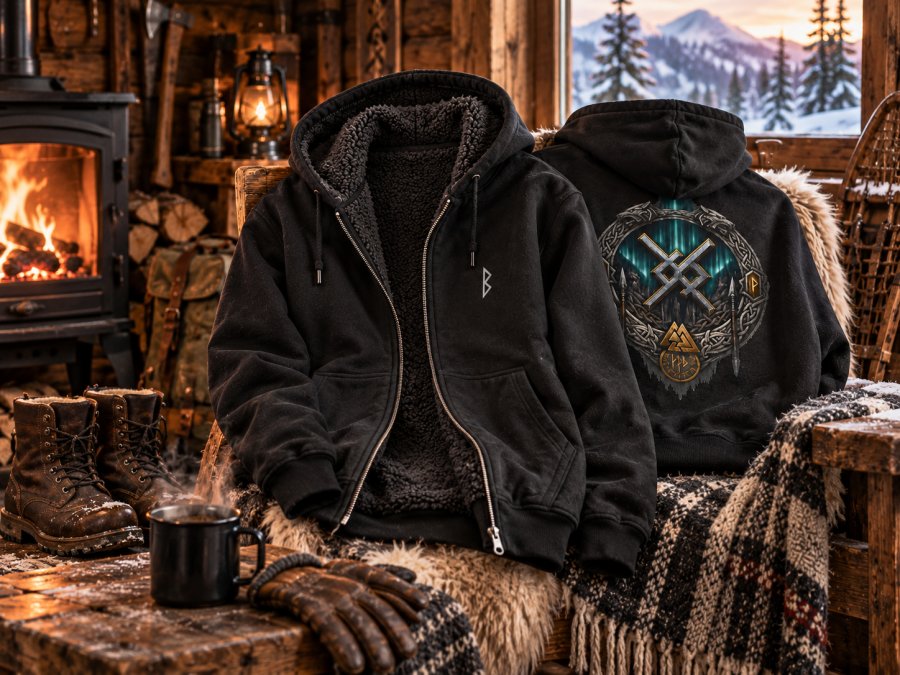
Black Rune Works is strongest when that principle stays visible. The Aurora pieces have a different energy from the darker rune designs. The Freyja collection communicates something different from the Nordic Pattern line. A sherpa hoodie designed around a strong back graphic serves a different purpose from a simple logo tee. None of those need to look identical because they are carrying different ideas.
What matters is that each one feels intentional.
Let the Design Fit the Garment
Good artwork should feel like it belongs on the piece it is printed on.
That sounds simple, but it is one of the biggest differences between thoughtful apparel and generic merchandise. A design made for the back of a hoodie should take advantage of the width and shape of that space. Sleeve artwork should follow the natural line of the arm. Legging artwork should work around pockets, seams, and movement. A shirt graphic should sit at a scale that feels balanced when the garment is actually being worn.
When the design ignores the garment, it can feel pasted on. When the design works with the garment, it feels integrated.
This is especially important with detailed Nordic knotwork. Knotwork already contains movement, repetition, and structure. Packing too much into one small area can make the design visually muddy. Giving the artwork room to breathe usually makes it stronger.
The same principle applies to runes. A single well-placed rune can often have more impact than a field of symbols competing for attention.
There is no rule that every piece must be subtle. Some garments are meant to be visually dominant. The difference is whether the boldness has structure.
Modern Norse Apparel Should Still Look Modern
Norse-inspired does not have to mean historical reproduction.
There is nothing wrong with historically accurate clothing when that is what someone wants, but everyday apparel has a different purpose. Modern shirts, hoodies, joggers, leggings, and performance pieces can use Norse visual language without pretending to be Viking Age garments.
That distinction is important because many people are drawn to Norse imagery for what it represents rather than because they want to recreate the past. Discipline, endurance, courage, independence, loyalty, and self-mastery are ideas that still make sense in modern life.
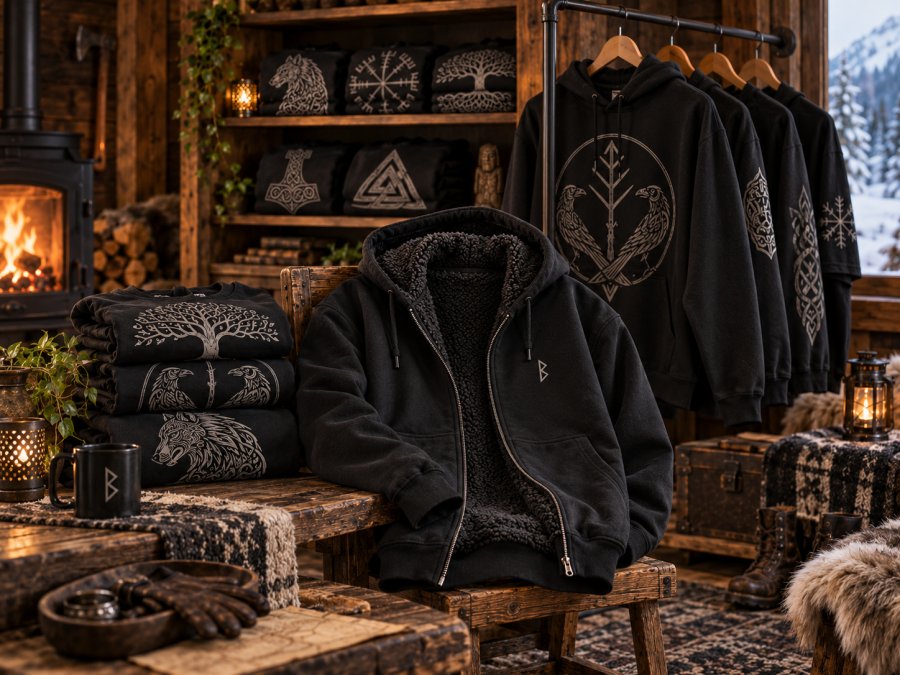
A well-designed black hoodie with runic details can carry those ideas while still looking completely natural with jeans or joggers. A pair of leggings with Nordic knotwork can work at the gym or during everyday wear. A fitted shirt with a strong back graphic can feel modern even when the inspiration behind it is ancient.
The garment does not need to look old to carry old ideas forward.
Color Can Make Detailed Artwork Easier to Wear
Color plays a major role in whether a bold Norse-inspired piece feels versatile.
Black is especially effective because it creates a neutral base for detailed artwork. Gold on black creates a warm, strong contrast. Silver or gray artwork can feel more restrained and colder. Dark red can create a more aggressive or ceremonial tone, while teal and cyan can make a design feel more modern without losing the darker Nordic foundation.
The most important thing is balance.
If a garment already contains detailed knotwork, runes, or large graphic elements, the surrounding outfit usually benefits from staying simple. A strong pair of patterned leggings can be paired with a plain black top. A highly detailed hoodie works well with simple jeans or joggers. A bold shirt usually does not need equally bold pants.
That does not mean every outfit has to be minimal. It means the pieces should work together rather than compete.
This is one reason the darker Black Rune Works palette works well for everyday wear. The symbolism can be strong without forcing the wearer into a complicated outfit.
Comfort Determines Whether Meaning Survives
A symbolic garment that is uncomfortable will not be worn often enough for the symbolism to matter.
Fit, fabric, movement, and warmth still come first. A hoodie should move comfortably through the shoulders and arms. A shirt should fit the way the wearer expects it to fit. Leggings should stay in place without constant adjustment. Cold-weather pieces should provide useful warmth rather than simply looking heavy.
This matters because meaningful clothing only works when it becomes part of real life.
A person may love the artwork on a garment, but if the sleeves are restrictive, the waistband is uncomfortable, or the fabric feels wrong, the garment will eventually be avoided. The design cannot compensate for poor wearability.
The reverse is also true. A comfortable garment that carries a symbol the wearer connects with tends to become a favorite because both the practical and personal sides work at the same time.
That combination is what gives a piece staying power.
Athletic Apparel Has to Function First
Norse-inspired artwork works very well on athletic clothing because the themes often align naturally with discipline, endurance, and strength. But athletic clothing has to perform before anything else.
Leggings need stretch, stability, and freedom of movement. Shorts need to stay comfortable during activity. Performance shirts need to breathe and move with the body. Pockets need to remain usable. Graphics should be positioned so they do not create awkward visual breaks or interfere with the construction of the garment.
The Aurora Eternal Love Rune Pocket Leggings are a good example of why garment-specific design matters. The artwork needs to work around the pocket construction rather than pretending the entire leg is one uninterrupted print surface. When that is handled correctly, the knotwork and rune imagery feel like part of the leggings instead of something added afterward.
That is the standard worth aiming for across performance apparel.
The art should enhance the garment without compromising the reason the garment exists.
Sherpa Hoodies Should Be Practical Cold-Weather Pieces
Cold-weather Norse apparel should still earn its place as cold-weather clothing.
A sherpa-lined hoodie should be warm enough to matter. It should be easy to layer. A full zipper should provide practical temperature control. The hood should be functional, not decorative. The garment should feel comfortable while driving, walking, working, traveling, or moving between indoor and outdoor spaces.
The Norse-inspired artwork then adds another layer of identity to something that already serves a useful purpose.
That is why a Black Rune Works sherpa hoodie works better as everyday apparel than trying to imitate a historical winter coat. It is a modern garment for modern conditions. The design carries the Nordic influence while the construction handles the practical job.
That balance is one of the clearest examples of what modern Norse-inspired apparel should be.
It should respect the inspiration without pretending the wearer lives in another century.
Symbolic Clothing Does Not Need to Be Loud
A meaningful design does not have to dominate the room.
Some people prefer large back artwork, detailed knotwork, and full-leg graphics. Others prefer a smaller chest logo, a single rune, or subtle sleeve details. Neither approach is more authentic simply because it is louder or quieter.
The right choice depends on the wearer.
A subtle symbol can serve as a private reminder. A larger design can express identity more openly. Both can be meaningful when they are chosen intentionally.
This matters because modern Norse apparel should allow people to decide how visible they want the symbolism to be. Someone may want a detailed Yggdrasil graphic on the back of a hoodie but a restrained front. Someone else may prefer a simple logo shirt they can wear almost anywhere. Another person may choose patterned leggings specifically because they want the artwork to be a major part of the look.
There is room for all of those approaches.
The common factor should be purpose.
Build Around Pieces That Work Together
A strong wardrobe does not require every item to match perfectly, but it does help when pieces share a common visual language.
Black, charcoal, gray, gold, silver, teal, and other controlled accent colors are easier to combine than a wardrobe full of unrelated bright colors. Repeating elements such as knotwork, runes, or a consistent brand mark can create cohesion even when the individual designs are very different.
This gives the wearer more flexibility.
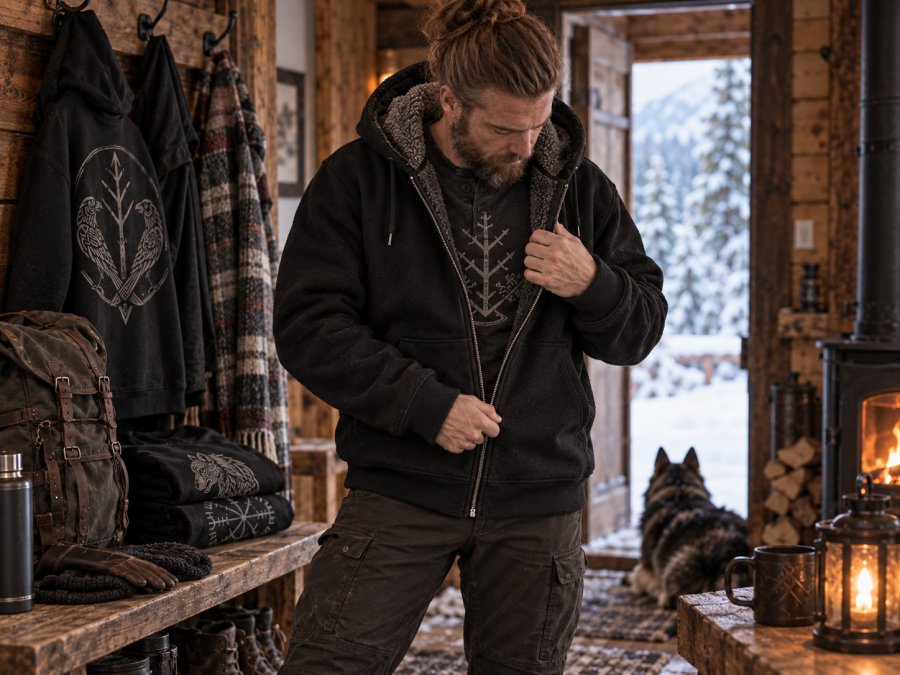
A Nordic-pattern shirt can work with plain black joggers. Aurora leggings can work with a simple black hoodie. A sherpa-lined hoodie can be paired with jeans without needing any other Norse-inspired element in the outfit. A Freyja shirt can be worn as an ordinary casual top while still carrying the collection’s meaning.
That is what makes a wardrobe usable.
The symbolic piece becomes one part of the outfit rather than the entire outfit.
Quality Matters More When the Design Matters
The more personal a garment becomes, the more frustrating it is when the garment fails.
A design tied to a value or personal identity is not the same as a disposable trend purchase. If the printing fades quickly, the seams fail, or the fabric loses its shape, the wearer loses something they may have chosen for more than appearance.
That makes quality and care more important.
Following the care instructions, avoiding unnecessary heat, washing printed garments thoughtfully, and treating detailed pieces carefully can extend the life of both the fabric and the artwork. A piece that is worn repeatedly should be expected to hold up to repeated use.
This is especially true for hoodies and leggings, which often receive more wear than occasional graphic shirts.
A meaningful garment should be treated like something worth keeping.
Choose Apparel You Will Still Want to Wear Next Year
The easiest test is to imagine the garment after the novelty is gone.
Would you still wear it when it is no longer new? Does it still work with your existing clothes? Does the symbolism still matter? Is the garment comfortable enough that you will actually reach for it?
If the answer is yes, that is a much stronger purchase than something chosen only because it looked dramatic for a moment.
Norse-inspired apparel has the most value when it becomes familiar.
The design does not become less meaningful because you see it often. In many cases, it becomes more meaningful because it is repeatedly connected to your actual life.
That is where the difference between fashion and identity begins to show.
Norse-Inspired Clothing Should Fit the Present
The best Norse-inspired apparel does not ask you to choose between modern clothing and meaningful symbolism.
A T-shirt can work with jeans and still carry a design rooted in discipline or resilience. A sherpa-lined hoodie can keep you warm while carrying Nordic knotwork or rune imagery. A pair of leggings can function during training while representing something personal. A Freyja-inspired garment can fit into ordinary life while still standing for independence and strength.
The important part is choosing with intention.
Start with clothing that fits your life. Choose designs that mean something to you. Pay attention to fit, comfort, construction, color, and how the garment works with what you already own.
When all of those pieces come together, Norse-inspired apparel stops feeling like themed merchandise.
It simply becomes part of how you dress.
And that is when the symbolism has the greatest chance to matter.
Frequently Asked Questions
Can Norse-inspired clothing be worn every day?
Yes. Modern Norse-inspired apparel can work exactly like other casual, athletic, and cold-weather clothing. The easiest pieces to wear regularly are shirts, hoodies, leggings, joggers, and similar garments that already fit naturally into everyday wardrobes.
How do I wear Norse-inspired clothing without looking like I am in costume?
Keep the garment modern and let the Norse influence come through the artwork. Pair detailed pieces with ordinary jeans, joggers, neutral tops, or simple footwear. You do not need to build an entire themed outfit around one symbolic garment.
Are large rune or knotwork designs too much for everyday wear?
Not necessarily. Large artwork can work very well when the rest of the garment and outfit are balanced. If one piece carries strong visual detail, simpler surrounding pieces usually keep the overall look grounded.
What is a good first Norse-inspired piece to buy?
A T-shirt or hoodie is usually the easiest starting point because both can be worn with clothing most people already own. From there, more distinctive pieces such as Nordic-pattern shirts, sherpa-lined hoodies, or patterned leggings can be added naturally.
Should I choose a rune because of its meaning?
If the meaning matters to you, yes. A symbol that connects to something you value will usually remain relevant longer than a design chosen only because it looks interesting.
Can Norse-inspired athletic apparel still be practical?
Yes, as long as the garment is designed for movement first. Leggings, shorts, and performance tops can carry detailed Norse artwork while remaining useful for workouts, travel, or everyday activity.
Why does Black Rune Works focus on modern apparel rather than historical clothing?
Black Rune Works is built around carrying Norse-inspired values and visual language into modern life. The purpose is not historical reenactment. The clothing is designed to function as contemporary apparel while using symbolism, runes, knotwork, and related imagery in a meaningful way.