

How to Buy Norse-Inspired Clothing More Thoughtfully
Buying Norse-inspired clothing thoughtfully does not require finding a garment marketed with the biggest collection of sustainability buzzwords. A better starting point is choosing apparel that suits your actual wardrobe, understanding what you are buying, caring for it properly, and selecting designs you are likely to keep wearing rather than treating them as short-lived novelty purchases.
Modern Norse apparel covers a wide range of products, from T-shirts and hoodies to leggings, athletic shorts, raglans, and seasonal pieces. The artwork may feature runes, Mjölnir, Yggdrasil, knotwork, Nordic patterns, or mythology-inspired designs, but the garment still has to function as clothing.
Black Rune Works approaches Norse-inspired apparel from that modern perspective. The strongest purchase is not necessarily the garment with the most elaborate design. It is the piece that fits the wearer, suits their lifestyle, and has enough visual staying power to remain in rotation long after the initial purchase.
Start With Clothing You Will Actually Wear
One of the simplest ways to make a more thoughtful clothing purchase is to begin with the garments already present in your wardrobe.
Someone who wears hoodies constantly is probably more likely to get long-term use from a Norse-inspired hoodie than from a product they rarely wear in another style. A person who lives in athletic clothing may get far more value from Nordic shorts or leggings than another graphic T-shirt.
This sounds obvious, but clothing is often purchased because the graphic looks exciting while the garment itself receives much less attention.
The design may create the first reaction, but the garment determines whether the product becomes part of everyday life.
Choosing the right product type first makes it easier to avoid buying apparel that spends most of its life folded in a drawer.
Choose Designs With Staying Power
Graphic apparel can age in two different ways. The physical garment changes through washing and wear, but the wearer’s opinion of the artwork can change too.
A design built entirely around a short-lived trend may feel dated much faster than artwork based on a symbol or visual style someone has appreciated for years.
Norse-inspired clothing has an advantage here because many of its visual foundations are not temporary fashion trends. Runes, Mjölnir, Yggdrasil, knotwork, and Nordic patterning have strong recognizable forms that can be interpreted in different contemporary ways.
That does not mean every garment must be historically serious or visually restrained.
It means choosing artwork because you genuinely like it rather than because it happens to be popular for a few weeks.
A shirt that remains visually interesting after dozens of wears provides more value than one that seemed exciting only at the moment of purchase.
Quality Begins With the Garment’s Intended Purpose
There is no single fabric or construction method that is best for every type of apparel.
A hoodie has different requirements from athletic shorts. Leggings need stretch. A casual T-shirt may prioritize comfort and breathability. A cold-weather layer needs additional warmth. Board shorts and performance apparel have yet another set of requirements.
That is why fabric weight alone does not determine quality.
A heavy garment can still be wrong for its intended use, while a lighter material may be exactly what an athletic product requires.
The better question is whether the garment makes sense for what it is supposed to do.
When evaluating Norse-inspired clothing, consider the product type first and the artwork second. A strong design placed on the wrong garment will not automatically create a good piece of clothing.
Look Closely at Product Images
Online apparel shopping removes the ability to inspect the product in person, so photography and mockups become especially important.
A good product page should show enough of the garment to understand where the artwork is placed.
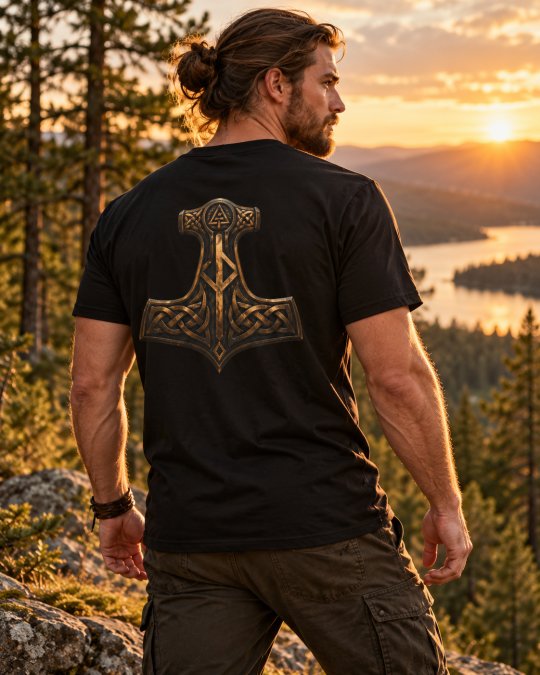
If the primary design appears on the back, the back should be visible. If a hoodie includes sleeve artwork, that detail should be shown. If shorts use different designs on the two legs, customers should be able to see both sides.
Lifestyle photography is useful because it shows how a garment can look when worn, but it should support accurate product views rather than replace them.
The customer should not have to guess what will arrive.
Clear images also make it easier to judge whether the artwork has been designed around the product instead of simply being dropped onto whatever blank garment was available.
Good Placement Makes Clothing More Wearable
Artwork placement has a major effect on how a garment looks in real life.
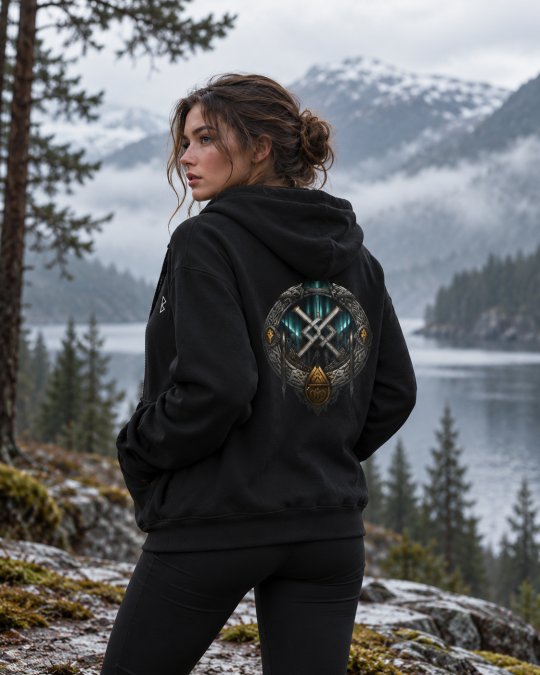
A large back graphic can work extremely well on a hoodie because the garment offers enough space for detail. A smaller chest emblem can balance that artwork without making the front feel overcrowded.
Leggings create long vertical surfaces that naturally suit knotwork and side-panel designs. Athletic shorts can use one leg for a stronger focal element while the rest of the garment remains more restrained.
The strongest placement works with the shape of the clothing.
This matters because people do not stand perfectly still like product mockups. Fabric bends, folds, stretches, and moves.
A design that remains readable during ordinary movement usually makes for a stronger long-term garment than one that only looks correct when perfectly flat.
Real Symbols Do Not Need Exaggerated Claims
Thoughtful shopping also means paying attention to how Norse symbols are presented.
Not every angular mark is a historical rune, and not every modern symbol has the ancient meaning sometimes attached to it online.
That does not mean modern artwork has no place in Norse-inspired apparel.
A contemporary bindrune or decorative Nordic graphic can still be visually strong. The important part is distinguishing modern interpretation from documented historical material.
Historical rune forms already provide an excellent design foundation. They can be rendered in bronze, silver, gold, teal, blue, or virtually any modern color without losing their underlying character.
A brand does not need to invent historical claims to create distinctive clothing.
Modern design can remain modern.
Avoid Buying Something Just Because It Has More Symbols
More Norse imagery does not automatically create a better garment.
A design containing Mjölnir, ravens, runes, knotwork, Yggdrasil, weapons, and multiple lines of text may sound impressive when each element is described separately, but the final composition can easily become overcrowded.
Often one strong focal element creates a more wearable result.
A bronze Mjölnir can carry an entire T-shirt.
A silver rune composition can define the back of a hoodie.
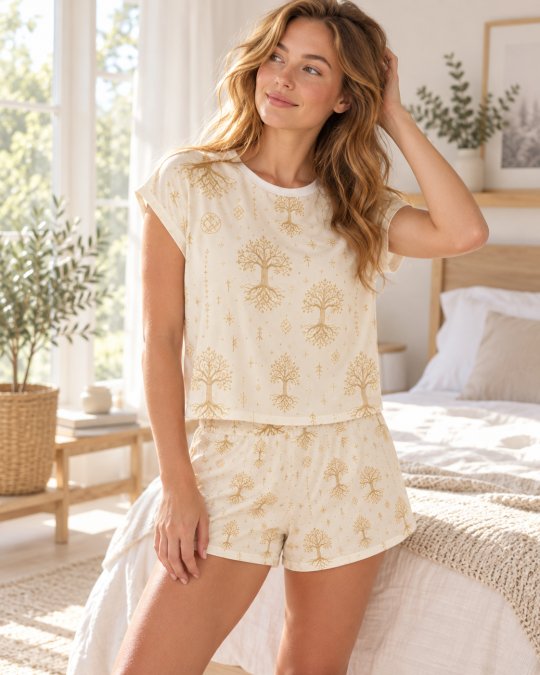
Gold knotwork can become the primary visual feature on leggings.
Restrained designs are also easier to combine with clothing already in the wardrobe.
This increases the number of situations in which the garment can be worn, which is far more useful than creating a piece that only works as part of a heavily themed outfit.
Versatility Adds Long-Term Value
Clothing that works in several different outfits tends to stay useful longer.
A black Norse T-shirt can be worn with jeans, cargo pants, shorts, or beneath a hoodie. A full-zip hoodie can be worn open during cool weather, closed as temperatures fall, or underneath heavier outerwear in winter.
Athletic shorts can work for training, warm-weather casual wear, or travel depending on their construction.
This is one reason Black Rune Works uses so many dark foundations.
Black provides a neutral base that allows bronze, silver, gold, teal, and other artwork to stand out while remaining easy to combine with ordinary clothing.
The Norse design gives the garment character.
The neutral foundation gives it flexibility.
Fit Is Part of Responsible Buying
Ordering a garment that does not fit increases the likelihood that it will be returned, exchanged, or simply never worn.
Size labels alone are not always enough because a medium from one garment manufacturer may fit differently from a medium from another.
Measurements provide a better reference.
One useful approach is to take a shirt, hoodie, pair of pants, or other comparable garment that already fits well and compare its measurements with the product sizing information.
This does not guarantee a perfect fit, but it gives the customer more information than relying on the size letter alone.
Fit also affects how the design appears.
A graphic may distort when stretched across a garment that is too tight, while excessively loose clothing can cause artwork to disappear into folds.
The right fit improves both comfort and appearance.
Proper Care Can Extend the Useful Life of Apparel
A thoughtful purchase does not stop when the package arrives.
How clothing is washed and dried can affect how long both the garment and artwork continue looking good.
The specific care instructions supplied with the product should always come first because materials and printing methods vary.
In many cases, reducing unnecessary heat and abrasion can be beneficial for graphic apparel. Turning a garment inside out before washing may reduce direct friction against exterior artwork, while excessive dryer heat can place additional stress on fabrics and printed surfaces.
There is no universal care routine for every product.
A hoodie, athletic short, performance shirt, and pair of leggings may all require different treatment.
Following the product’s actual instructions is more useful than applying one rule to everything.
Made-to-Order Production and Quality Are Different Questions
Some modern apparel is manufactured in large quantities before anyone purchases it. Other products are created after an order is placed through specialized production partners.
The production model alone does not determine quality.
A made-to-order garment can still have well-prepared artwork, thoughtful placement, appropriate materials, and strong construction. A mass-produced garment can be excellent or poor for the same reasons.
The better approach is evaluating the final product.
Does the garment suit its purpose?
Is the design clearly shown?
Does the artwork fit the product?
Is sizing information available?
Would you realistically wear the piece often?
Those questions tell a customer more than assuming one production model automatically guarantees a better garment.
A Smaller Number of Favorite Pieces Can Be Enough
Building a Norse-inspired wardrobe does not require replacing everything already in the closet.
A few distinctive pieces can create plenty of variety when combined with everyday basics.
One graphic T-shirt, one hoodie, a pair of Nordic shorts, and perhaps another seasonal or athletic piece can already create several outfits.
The surrounding clothing does not need Norse artwork.
Jeans, joggers, plain shirts, boots, sneakers, jackets, and other basics can provide the foundation while one Black Rune Works piece becomes the focal point.
This approach also prevents the symbolism from becoming repetitive.
The Norse-inspired garment stands out precisely because everything else does not compete with it.
Thoughtful Norse Apparel Should Feel Personal
A garment becomes more valuable when the person wearing it actually develops a relationship with it.
A hoodie might become associated with an entire winter.
A shirt may travel on a memorable trip.
Shorts may be worn throughout months of training.
A favorite garment may simply become the piece someone reaches for every weekend.
The manufacturer cannot create those associations in advance.
The design only provides the starting point.
That is why thoughtful clothing purchases are ultimately personal. A garment does not need an exaggerated claim about changing someone’s life. It simply needs to fit well enough, look good enough, and feel right enough that the wearer continues choosing it.
Black Rune Works and Thoughtful Norse-Inspired Apparel
Black Rune Works is built around modern clothing influenced by Norse imagery rather than historical reproduction.
Runes, Mjölnir, Yggdrasil, knotwork, metallic treatments, Nordic patterns, Freyja-inspired artwork, and seasonal designs provide different visual directions across contemporary garments.
The goal should not be convincing customers that every product is environmentally perfect.
A more credible standard is giving customers clear products, distinctive artwork, useful sizing information, modern garments, and designs intended to become part of an actual wardrobe.
Buying thoughtfully then becomes a partnership between the product and the person wearing it.
Choose something you will use.
Choose artwork you will still want to see months from now.
Choose the right size.
Take care of it.
Then wear it.
Frequently Asked Questions
Is made-to-order apparel automatically more sustainable?
No. Production method alone is not enough to make a broad sustainability claim. Materials, manufacturing, transportation, packaging, energy use, product lifespan, and many other factors can affect environmental impact.
Does heavier clothing last longer?
Not necessarily. Durability depends on the material, construction, intended purpose, use, and care of the garment. A lighter athletic material may be more appropriate than heavy cotton for some products.
How can I make a Norse-inspired clothing purchase more thoughtful?
Choose a garment type you already wear, verify sizing, look closely at product images and materials, choose artwork you genuinely like, and care for the garment according to its instructions.
Are Norse-inspired clothes sustainable if they use natural fibers?
Natural fibers alone do not establish that a garment is environmentally sustainable. Production, processing, transportation, durability, and other factors also matter.
Should I avoid made-to-order clothing?
No. Made-to-order is a production model rather than a quality rating. Judge the garment by its material, design, fit, product information, and finished quality.
Can buying fewer garments make a wardrobe more useful?
Yes. A smaller number of versatile pieces that coordinate with existing clothing can often create more practical outfits than many highly specialized garments.
Does proper washing really affect apparel lifespan?
Yes. Following the product’s specific care instructions can help protect both the garment and its artwork from unnecessary wear.
What should I look for in Norse-inspired apparel online?
Look for clear product photography, useful sizing information, appropriate materials for the garment type, thoughtful artwork placement, honest descriptions, and a design you are realistically likely to wear.