

Freyja in Norse Mythology: Strength, Choice, and Modern Meaning
Freyja remains one of the most compelling figures in Norse mythology because she refuses to fit neatly into a single role. She is strongly associated with love and desire, yet her surviving stories also connect her with magic, wealth, death, beauty, fertility, and personal authority. That complexity is one of the main reasons she continues to resonate with modern readers.
Modern culture often portrays strength as hardness, emotional distance, or constant aggression. Freyja offers a broader image. Her mythology allows beauty, desire, independence, grief, confidence, and power to exist together instead of forcing them into separate categories. She is therefore more interesting than a simplified “warrior woman” archetype because her strength is expressed through many different parts of her identity.
For people today, Freyja can become a symbol of confidence and resilience without pretending that modern interpretations are identical to ancient Norse beliefs. Historical context gives us the foundation, while personal interpretation determines what the figure means to someone living now.
Who Freyja Was in Norse Mythology
Freyja belongs to the Vanir, one of the major groups of gods described in Norse mythology. She is the daughter of Njörðr and the sister of Freyr, both of whom are important figures associated with prosperity, fertility, and the natural world. Freyja herself appears throughout surviving medieval sources with associations involving love, sexuality, wealth, seiðr magic, and the dead.
Many details about Norse mythology were written down centuries after the Viking Age, which means modern readers have to distinguish between what the surviving texts actually tell us and what later traditions added. That distinction does not make Freyja less meaningful. It simply allows us to understand her more accurately.
A historically grounded approach also gives modern symbolism more credibility. Freyja does not need invented stories or exaggerated claims to become relevant. The complexity already present in the surviving tradition is enough.
Freyja and a Broader Meaning of Strength
One of the most interesting qualities surrounding Freyja is that her strength does not depend on rejecting femininity. She can be associated with beauty and desire while still remaining powerful and independent. Those qualities coexist rather than canceling one another.
That idea can still matter today because people are often pressured into narrow definitions of strength. Someone may be expected to hide grief, suppress affection, avoid vulnerability, or treat emotional distance as proof of confidence. Freyja offers another way to think about it.
A person can care deeply and still maintain boundaries. They can value appearance without making appearance their entire identity. They can experience loss without losing their ability to move forward. They can want connection while still maintaining a clear sense of self.
Strength becomes more useful when it allows a full range of human experience rather than demanding that certain emotions disappear.
Independence Does Not Mean Isolation
Independence is often misunderstood as needing no one.
That is not a particularly useful standard because human beings naturally depend on relationships, cooperation, family, friendship, and community. A stronger form of independence is the ability to remain responsible for your own direction while still allowing other people to matter.
Freyja can be interpreted in this way because she remains a distinct mythological figure rather than existing only through her relationships with other gods. She has her own associations, possessions, desires, and authority.
For a modern person, that can translate into knowing where you stand even when other people have opinions about your choices. Independence does not require rejecting advice or refusing help. It means that someone else’s expectations do not automatically become your path.
That version of independence is far more sustainable than isolation.
Desire Can Be a Form of Direction
Freyja’s connection with love and desire is sometimes treated as though it exists separately from strength. In reality, desire can provide direction.
Wanting something exposes a person to risk because caring creates the possibility of disappointment. A goal can fail. A relationship can end. A project can collapse. Avoiding desire entirely may feel safer, but it also creates a life with very little direction.
A healthier approach is learning to recognize what genuinely matters and then acting deliberately around it.
Someone who wants to build a business has to accept the possibility of failure. Someone who values a relationship has to accept vulnerability. Someone pursuing creative work has to accept that not everything they make will succeed.
Strength does not require becoming indifferent to outcomes. It requires being able to care without allowing desire to destroy judgment.
Freyja’s mythology creates room for that interpretation.
Emotional Strength Includes Grief
Freyja is not a figure who has to be emotionally untouched in order to remain powerful. That makes her particularly useful when thinking about resilience.
Grief is often misinterpreted as weakness because it visibly affects someone. In reality, grief usually exists because something mattered. A person who never cares deeply may avoid some forms of pain, but they also avoid much of what gives life meaning.
Emotional strength therefore is not the absence of grief. It is the ability to continue living honestly after loss changes the shape of life.
That may mean adapting to circumstances that cannot be undone. It may mean allowing pain to exist without letting it control every future decision. It may mean learning from something difficult without turning bitterness into a permanent identity.
A modern connection with Freyja can therefore include the idea that feeling deeply and remaining strong are not opposites.
Beauty Does Not Cancel Substance
Freyja’s association with beauty also challenges another common assumption: that caring about appearance somehow makes a person less serious.
There is no real reason for those ideas to conflict.
Presentation can be intentional. Clothing can carry meaning. Artwork can be beautiful and still represent something important to the wearer.
Someone can value aesthetics while also valuing discipline, intelligence, responsibility, and resilience. One quality does not erase the others.
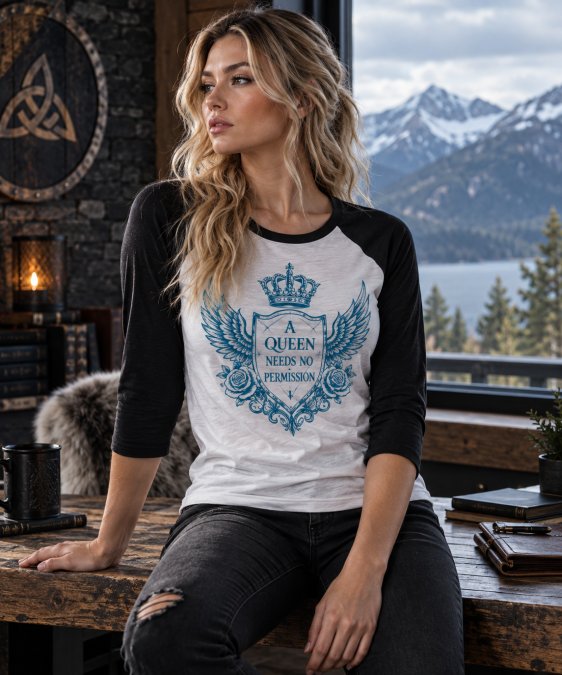
This is particularly relevant to modern Freyja-inspired apparel because the clothing does not need to look aggressive in order to communicate strength. A design can use flowing knotwork, restrained symbols, soft color, metallic accents, or feminine cuts while still being connected to confidence and independence.
Strength does not need to disguise itself.
Boundaries Are Part of Self-Respect
A useful modern interpretation of Freyja also involves boundaries.
People sometimes confuse kindness with constant availability. They agree to obligations they do not want, tolerate behavior they should address, or continue relationships long after respect has disappeared because they fear being seen as selfish.
Healthy boundaries are not about rejecting everyone around you. They are about deciding what you are responsible for and what you are not.
A boundary can protect time, energy, attention, values, or emotional health. It may involve refusing disrespect, stepping away from an unhealthy situation, or simply saying no when something does not fit your priorities.
The strongest boundaries usually do not require a dramatic confrontation. They become visible through consistency.
A Freyja-inspired symbol or garment can act as a personal reminder of that standard. The clothing does not create the boundary, but it can remind the wearer why the boundary matters.
Strength Sometimes Means Changing Direction
Persistence is valuable, but continuing forever is not automatically courageous.
There are situations where staying becomes more destructive than leaving. A business idea may no longer work. A relationship may become unhealthy. A goal may stop making sense. A project may consume resources without producing anything useful.
Walking away can feel like failure because people often confuse endurance with virtue.
Resilience requires a wider view.
Sometimes protecting what matters means adapting. A person may need to abandon one path so they can build another. The experience gained does not disappear simply because the original plan ended.
That makes change less like surrender and more like course correction.
Freyja’s modern symbolism can fit this idea because strength does not have to mean forcing the same answer into every situation.
Feminine Strength Does Not Need to Imitate Masculine Stereotypes
Powerful women are often written or represented as though strength requires adopting every stereotypically masculine trait.
That creates a narrow version of strength.
Feminine strength can be protective without becoming aggressive. It can be nurturing without becoming submissive. It can be emotionally aware without becoming controlled by emotion. It can be elegant, capable, confident, and resilient at the same time.
These qualities are not exclusive to women, but Freyja provides a distinctly feminine mythological figure through which they can be explored.
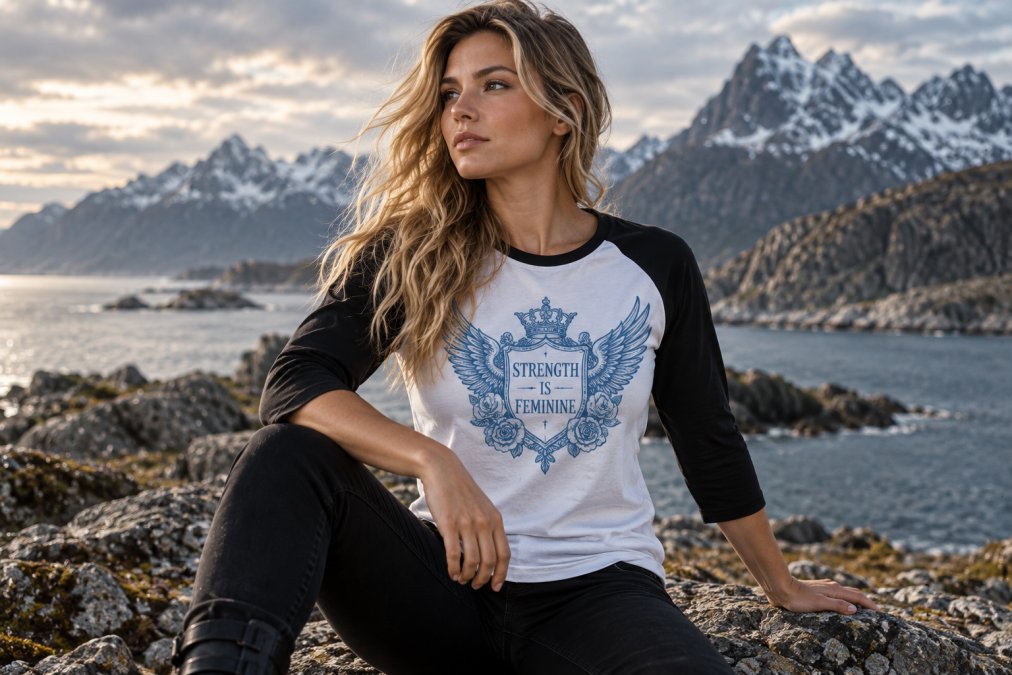
That creates more possibilities for modern design too. A Freyja collection does not need to rely entirely on weapons, armor, or battlefield imagery. It can communicate confidence through symbolism, composition, color, and message.
That approach fits Black Rune Works better because it allows the women’s collection to have its own identity instead of simply duplicating the men’s designs.
Modern Freyja Symbolism Should Remain Historically Honest
Freyja has accumulated a large amount of modern symbolism. Some interpretations are strongly connected to surviving Norse texts, while others come from later spiritual traditions, popular culture, or contemporary personal meaning.
These should not all be presented as though they came from the Viking Age.
A person can still see Freyja as representing independence, confidence, self-respect, resilience, or personal boundaries. Those ideas can be valuable without pretending they are direct translations of ancient beliefs.
Historical honesty does not weaken the symbolism.
It strengthens it.
Someone can understand the historical figure first and then decide what parts of that figure resonate with their own life.
That is more meaningful than simply repeating modern claims as ancient facts.
Freyja-Inspired Apparel Can Be Completely Modern
Norse-inspired clothing does not need to imitate historical garments.
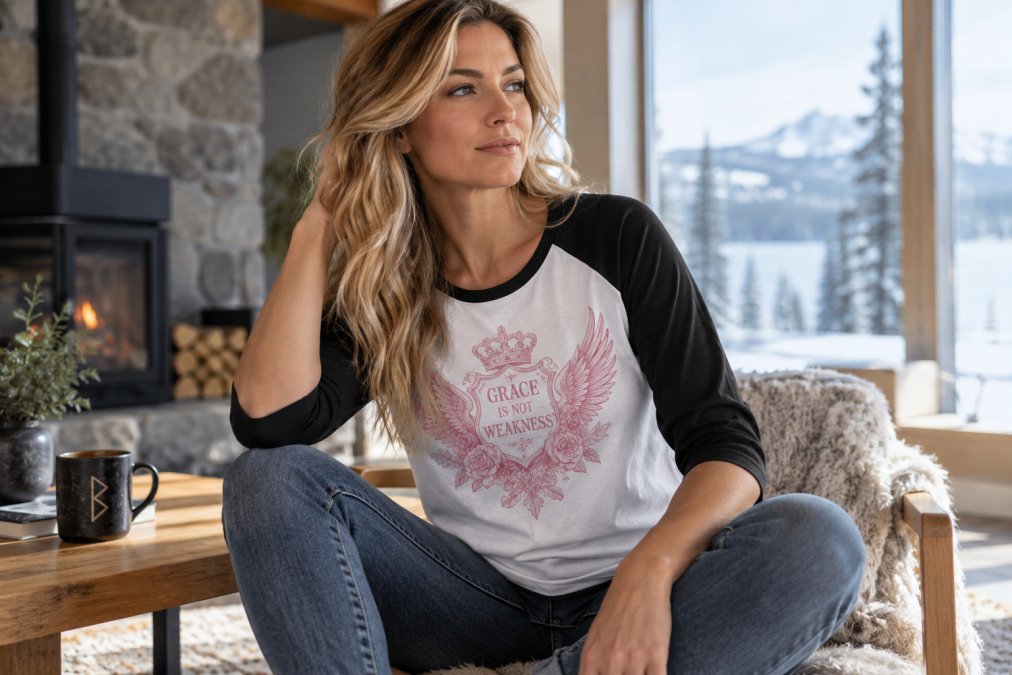
Black Rune Works is creating modern apparel for people living now, which means a Freyja design can appear on a raglan shirt, hoodie, joggers, or other contemporary clothing without pretending to be Viking Age fashion.
That separation is important.
The historical inspiration comes from the symbolism and mythology.
The garment itself belongs to modern life.
That allows someone to wear Freyja-inspired clothing with jeans, athletic clothing, casual layers, or everyday outfits without needing to create a themed costume.
The symbolism becomes easier to live with because it is part of clothing that already fits naturally into the wearer’s routine.
Clothing Can Become a Personal Reminder
Symbolic apparel does not always need to communicate its entire meaning to everyone who sees it.
Sometimes the wearer is the real audience.
A person may choose a Freyja-inspired garment because it reminds them to maintain their standards, protect their peace, remain confident under pressure, or hold onto their identity when other people push against it.
The meaning can stay private.
That privacy can actually make the garment more personal.
Over time, the clothing may become connected to experiences that have nothing to do with the original product description. It may be worn through a major life transition, during a difficult year, while building something new, or while making decisions that require courage.
The garment begins with symbolic meaning.
Life adds the rest.
Strength Changes With the Situation
One of the most useful lessons modern readers can take from a complex figure like Freyja is that strength does not look identical in every circumstance.
Sometimes strength means confronting a problem directly. Other times it means refusing to participate in unnecessary conflict. There are moments when persistence is necessary and moments when rest is the more disciplined choice.
Someone may need to defend a boundary one day and apologize for being wrong the next.
Both can require strength.
Adaptability matters because rigid people often mistake stubbornness for resilience.
A stronger person can recognize when circumstances have changed and adjust without abandoning their core values.
That is a much more realistic form of strength than always responding the same way.
Why Freyja Fits Black Rune Works
Freyja gives Black Rune Works a way to explore Nordic-inspired symbolism without repeating the same design language across every collection.
The brand can still use real runes, wide readable knotwork, metallic effects, and strong composition while giving the women’s collection a different emotional direction.
The designs can communicate independence, confidence, resilience, self-respect, and personal strength without turning every piece into a battle-themed garment.
This creates more range while keeping the overall brand recognizable.
Freyja does not weaken the rune-focused direction.
She expands what that direction can express.
Strength Is Knowing Who You Are
Confidence eventually becomes less about proving something to other people and more about knowing what you value.
That kind of strength is built through repeated choices.
A person learns what they will tolerate, what they will work for, what they will protect, and what they are willing to leave behind.
No symbol creates those qualities automatically.
A garment cannot manufacture confidence.
A rune cannot make someone resilient.
The object can only become a reminder.
The work still belongs to the wearer.
That is why Freyja remains so useful as modern symbolism. She can represent a version of strength that allows beauty, desire, independence, grief, confidence, and emotional depth to exist together.
Strength does not have to become one-dimensional.
Neither did Freyja.
Frequently Asked Questions
Who are the most powerful female figures in Norse mythology?
Freyja stands first among them as the goddess of love, war, and magic, choosing half of the slain for her hall. Frigg rules as Odin's wife and knows fate without speaking it. Skadi brings independence and resolve as the giantess who demanded justice for her father. Together they show feminine strength in Norse mythology as varied: desire, wisdom, endurance, and the will to act. Later sagas add shieldmaidens like Brynhild and Lagertha, women who took up arms by choice.
What does the term shieldmaiden represent in Norse culture?
A shieldmaiden was a woman who chose the path of the warrior, trained for battle, and stood with her people. The sagas name figures like Brynhild and Lagertha, though historians debate how common such women were. What matters is the idea behind the term: courage is not borrowed from anyone. Shieldmaiden values in modern life carry that same choice, whether you are defending your family, your work, or your standards. It is a decision, not a costume.
How can the values of Norse goddesses be applied to modern leadership?
Freyja teaches you to want what you want without apology. Frigg teaches restraint and reading a room before speaking. Skadi teaches you to negotiate from strength, not anger. Applied to leadership, these become habits: set clear standards, stay composed under pressure, and act when action is needed. Resilience like a Norse goddess is not about enduring silently. It is about recovering quickly, keeping your word, and leading without needing applause.
What is Freyja known for in Norse mythology?
Freyja is associated in surviving Norse sources with love, desire, fertility, wealth, magic, and death. Modern interpretations often connect those older associations with ideas such as independence, confidence, resilience, and feminine strength, but those modern meanings should be distinguished from what the historical sources directly establish.
Was Freyja a warrior goddess?
Freyja has connections with battle and the dead, but describing her simply as a warrior goddess reduces a much more complex mythological figure to one role. Her surviving stories and associations extend far beyond warfare and include love, magic, wealth, desire, and other aspects of Norse mythology.
Was Freyja the leader of the Valkyries?
The claim that Freyja was the queen or commander of the Valkyries is common in modern interpretations, but surviving Old Norse sources do not clearly establish that position. It is better to treat that idea as a later interpretation rather than settled historical fact.
What is Brísingamen?
Brísingamen is the famous necklace closely associated with Freyja in medieval Norse sources. It has become one of the objects most strongly connected with her identity and remains an important part of how Freyja is represented in both historical discussion and modern Norse-inspired imagery.
Can Freyja represent feminine strength and independence today?
Yes. Many people today connect Freyja with independence, confidence, resilience, self-respect, and personal choice. Those ideas are modern interpretations rather than single fixed ancient definitions, but they can still provide meaningful personal symbolism when the distinction is made clearly.
Do you have to follow Norse religion to connect with Freyja symbolism?
No. Someone may be interested in Freyja because of history, mythology, art, culture, spirituality, or personal symbolism. A person does not need to practice a particular religion in order to appreciate what Freyja represents to them.
Can Freyja-inspired clothing still be historically respectful?
Yes. Modern clothing does not need to reproduce Viking Age garments in order to respect Norse mythology. Contemporary apparel can use Freyja-inspired symbolism while remaining clear about what comes from historical sources and what is a modern artistic or personal interpretation.