

Durable Norse-Inspired Apparel for Men: What to Look For in 2026
Norse-inspired apparel can look impressive in a product photo, but the real test begins after the garment has been worn, washed, stretched, packed, and used as part of everyday life. A strong design matters, but durability also depends on the garment underneath it, the printing method, the placement of the artwork, and whether the product was designed with actual wear in mind.
Modern Norse clothing for men includes far more than basic graphic T-shirts. Hoodies, athletic shorts, board shorts, performance shirts, raglans, and other contemporary garments can all carry runes, knotwork, Mjölnir, Nordic patterns, and related artwork without becoming costume clothing.
Black Rune Works approaches these designs as modern apparel first. The symbolism gives each garment its identity, but the product still has to function as clothing someone wants to wear repeatedly.
Durability Starts With the Right Garment for the Job
There is no single fabric or garment construction that is automatically best for every type of Norse-inspired apparel. A T-shirt, hoodie, pair of athletic shorts, and board shorts all serve different purposes, so they should not be judged by exactly the same standard.
A soft everyday tee should be comfortable enough for regular wear while still holding its shape. A hoodie needs enough structure to function as a layer. Athletic shorts should move freely and handle repeated activity, while board shorts need to work in warmer weather and around water.
This is why durability begins before the artwork is even considered. A well-designed Mjölnir graphic cannot make the wrong garment suitable for the job.
The product should feel appropriate for how it will actually be used.
Graphic Placement Has a Major Effect on Long-Term Wear
Artwork placement is more important than it may seem when looking at a flat product mockup.
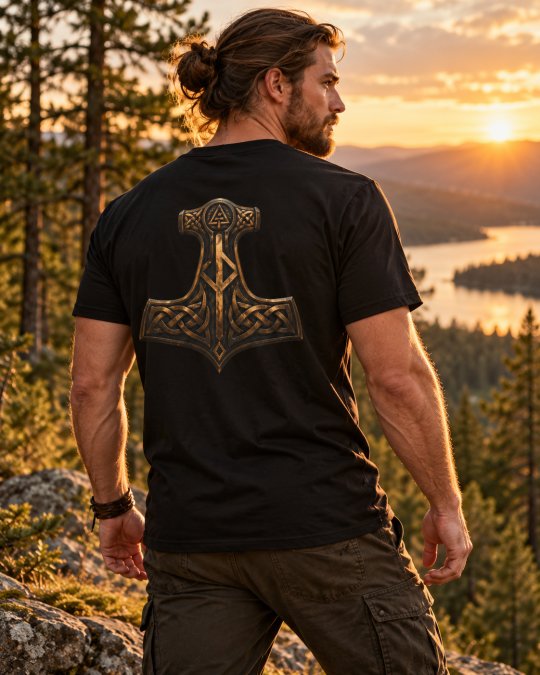
A large back design can work particularly well on a shirt or hoodie because the area provides enough room for the artwork without forcing important details around pockets, zippers, or seams. A smaller front mark can balance that larger graphic while keeping the front of the garment clean.
Shorts create different challenges. Artwork needs to account for movement through the hips and legs, while seams and pockets can interrupt a design if they are ignored during layout.
A successful garment feels as though the artwork was made for that specific product.
When the placement works with the clothing rather than fighting against it, the design tends to remain more visually effective during normal wear.
Large, Readable Artwork Usually Ages Better Visually
Extremely fine details can look impressive on a computer screen, but clothing is not viewed as a perfectly flat digital image.
Fabric folds. Shirts wrinkle. Hoodies bunch. Shorts move with every step.
That makes readability important.
Wide knotwork and clearly defined focal symbols usually remain easier to recognize when the garment is being worn. A large Mjölnir can keep its shape even when the shirt moves, while a strong rune can remain identifiable without requiring dozens of tiny surrounding details.
This does not mean designs need to be plain.
It means detail should support the main artwork instead of burying it.
A design that remains recognizable from several feet away will usually work better as apparel than one that only makes sense when viewed at full resolution.
Mjölnir Works Especially Well on Men’s Apparel
Mjölnir is one of the strongest visual symbols available for Norse-inspired clothing because its overall shape remains recognizable even when the design becomes more detailed.
The hammer can be rendered with knotwork, metallic textures, runes, or geometric elements while still retaining a strong silhouette.
This makes it particularly effective on T-shirts, hoodies, and shorts.
Bronze artwork can give the hammer a heavier forged appearance. Silver creates a colder, more restrained character. Gold can make the same symbol feel more ornamental.
The underlying form stays recognizable while the treatment changes the personality.
That balance between clear symbolism and creative variation makes Mjölnir one of the more versatile design elements in a men’s Norse apparel collection.
Runes Can Add Detail Without Overcrowding the Garment
Runes work differently from large central graphics because they can be used at many scales.
A single rune can become a focal point. A vertical sequence can follow a sleeve or leg. Dark tonal runes can cover a larger surface without making the entire garment appear busy from a distance.
This makes rune patterns particularly useful on athletic shorts and other products where a massive centered graphic may not be the best choice.
The design can remain subtle until viewed more closely.
That gives the clothing two different personalities. From a distance, the garment may look simple and dark. Up close, the rune pattern becomes part of the visual texture.
When real historical rune forms are used, that design also has a stronger foundation than generic angular symbols created only to look ancient.
Hoodies Need Artwork That Works With the Garment
Hoodies create some of the largest usable spaces in modern apparel, but they also introduce features that have to be considered during design.
The hood can cover part of the upper back. A zipper divides the front of a full-zip hoodie. Pockets take up valuable space lower on the garment.
That makes the back an especially useful area for larger artwork.
A strong back graphic can remain visually dominant while the front carries smaller branding or a restrained emblem.
Sleeves can provide another design surface, especially for vertical runes or knotwork. Because sleeves bend and twist, however, the artwork needs enough spacing and line weight to remain readable.
A hoodie should look intentional whether it is hanging flat or being worn.
Athletic Shorts Need a Different Design Strategy
Shorts are constantly moving, so they benefit from artwork that works with that movement.
A single strong symbol on one leg can create a better result than covering every available area with competing graphics.
Tonal rune patterns are also useful because they provide texture without overwhelming the garment.
A gold or bronze accent can then become the focal point.
This combination works particularly well for modern Nordic athletic wear because the product still reads as athletic clothing first.
The Norse influence becomes part of the design rather than making the shorts feel like novelty merchandise.
That distinction matters when the goal is creating clothing someone will actually wear during normal activity.
Black Makes Norse Apparel Easier to Maintain Visually
Black remains one of the most practical foundations for Norse-inspired men’s clothing.
It works naturally with metallic-looking artwork and hides minor visual wear better than many lighter garments.
Black also gives designers freedom to use stronger artwork without making the overall garment difficult to coordinate.
Bronze, silver, gold, teal, and gray can all stand out clearly against a dark base.
A black hoodie with a large back design can still be worn like an ordinary hoodie. A black shirt with bronze Mjölnir artwork can work with jeans or casual pants. Black shorts with rune detailing can still function as everyday athletic clothing.
That versatility makes dark apparel useful well beyond the initial visual impact of the design.
Durability Also Depends on How the Garment Is Washed
Even well-made apparel can wear prematurely when it is repeatedly exposed to unnecessary heat and abrasion.
Graphic clothing generally benefits from being washed with some consideration for the printed or decorated surface.
Turning a garment inside out before washing can reduce direct friction against the artwork. Cooler water is often easier on fabric and printed areas, while excessive dryer heat can shorten the life of many garments.
The exact care instructions for a specific product should always take priority.
A hoodie, performance shirt, and pair of shorts may use very different fabrics, so they should not automatically be treated the same way.
Good care does not make an indestructible garment.
It simply gives the product a better chance to keep looking the way it was intended.
A Durable Design Has to Remain Wearable
Physical durability is only part of the equation.
A garment can survive years and still fail if the owner stops wanting to wear it.
This is where design durability becomes important.
Extremely trendy graphics may feel dated quickly. Overly complicated artwork can lose its appeal. A design that depends entirely on shock value may be interesting once but difficult to work into a normal wardrobe.
Strong Norse symbols have an advantage because many of them are visually simple at their core.
Mjölnir remains recognizable.
Runes remain graphic.
Knotwork provides structure.
A restrained Nordic design can therefore stay relevant longer than a garment built around a short-lived visual trend.
The strongest pieces combine symbolism with modern clothing rather than relying entirely on novelty.
Quality Is More Than Fabric Weight
It is tempting to judge clothing entirely by how heavy the fabric feels.
That can be misleading.
A heavier shirt is not automatically better than a lighter one. A performance garment may intentionally use lighter synthetic material because movement and moisture management matter more than weight.
Athletic shorts need a different construction from a casual cotton tee.
A hoodie has different requirements again.
Quality means the garment makes sense for its intended purpose.
The material, construction, artwork, placement, and fit should all work together.
Comparing two completely different types of garments using one measurement does not tell the whole story.
Product Images Should Show Enough to Judge the Design
When buying Norse-inspired apparel online, product imagery becomes extremely important because the customer cannot inspect the garment in person.
A useful product page should make the artwork visible.
If the main design is on the back, the back should be shown clearly. If the front carries a smaller logo, the customer should be able to see that too.
Shorts should show where the artwork sits on the leg. Hoodies should make it clear how the design interacts with the hood and zipper.
Lifestyle photography can help a shopper imagine wearing the garment, but it should not replace accurate product views.
The customer should be able to understand what they are purchasing before placing the order.
Fit Has a Direct Effect on How the Artwork Looks
Even a good design can look wrong when the garment does not fit the wearer properly.
An oversized shirt changes the proportions of the graphic. A hoodie that is too tight can stretch artwork in ways that were not intended. Shorts that fit incorrectly can shift the placement of leg graphics.
That is why measurements matter.
Size labels are useful, but comparing actual garment measurements with clothing the customer already owns usually gives a better reference.
A well-fitting garment also gets worn more often.
That may sound obvious, but it is one of the most important parts of long-term value.
The strongest design cannot compensate for clothing that feels uncomfortable.
Norse Apparel Should Be Built for Modern Life
Norse-inspired clothing does not need to reproduce Viking Age garments in order to respect its influences.
Modern men need modern clothing.
They wear T-shirts, hoodies, shorts, athletic gear, jackets, and other familiar garments.
Runes, Mjölnir, knotwork, Nordic patterns, and related imagery can be incorporated into those products without pretending the clothing itself is historical.
This creates a much more practical connection with Norse-inspired design.
The wearer can appreciate the mythology or symbolism while still dressing normally.
That is the point of modern Norse apparel.
The artwork carries the influence.
The garment carries the person through everyday life.
Black Rune Works and Durable Men’s Norse Apparel
Black Rune Works approaches men’s Norse clothing as contemporary apparel built around distinctive artwork.
Bronze Mjölnir designs provide one direction. Silver rune artwork creates another. Nordic athletic shorts allow the visual language to move into activewear, while hoodies provide larger surfaces for more detailed back graphics.
The goal is not to make every garment look identical.
It is to create a recognizable design language across different products.
Readable symbols, wide knotwork, deliberate placement, dark foundations, metallic accents, and modern garment choices can connect a collection without repeating the same graphic everywhere.
Durability matters because these pieces are intended to be worn.
A Norse-inspired shirt or hoodie becomes far more meaningful when it survives beyond the product page and becomes part of someone’s actual wardrobe.
Frequently Asked Questions
What makes Norse-inspired apparel durable?
Durability depends on the garment material, construction, printing or decoration method, artwork placement, normal wear, and how the product is cared for. No single factor determines how long a garment will last.
Is heavier fabric always more durable?
No. Heavier material may be appropriate for some products, but lightweight performance apparel can still be well made. The fabric should match the intended use of the garment.
Does large artwork wear out faster?
Not necessarily. Large artwork can perform well when the design, printing method, placement, and care are appropriate. Extremely fine detail can sometimes become visually less readable sooner than broader shapes.
Are Norse hoodies good for everyday wear?
Yes. A Norse-inspired hoodie can be worn exactly like other modern casual outerwear. The artwork adds visual identity while the garment remains familiar and practical.
Are rune-pattern athletic shorts practical?
Yes. Rune patterns and Nordic details can work particularly well on athletic shorts when the artwork is designed around movement, seams, and garment construction.
Does Mjölnir artwork have to be historically reproduced?
No. Modern apparel can use a recognizable Mjölnir form while interpreting it through contemporary knotwork, metallic effects, colors, and layouts.
How can I help graphic apparel last longer?
Follow the specific care instructions supplied with the garment. Reasonable washing temperatures, reduced abrasion, and avoiding unnecessary high heat can help many types of graphic apparel maintain their appearance.
What should I look for when buying men’s Norse apparel online?
Look at the garment type, sizing information, material, artwork placement, multiple product views, and whether the design fits the way the product will actually be worn.
Frequently Asked Questions
How can you tell if Norse-inspired apparel is well made?
Check the stitching first. Even, tight seams with no loose threads signal care. Then look at fabric weight: heavier cotton or blends hold shape longer than thin polyester. Hardware like zippers and buttons should feel solid, not flimsy. For jewelry, stainless steel and genuine leather outlast plated metals. Ask whether the maker shares construction details, because transparency about materials is the clearest sign of quality.
What materials make Norse products durable for everyday wear?
Stainless steel resists tarnish and holds up to daily use. Genuine leather softens with age instead of cracking. Heavy cotton or cotton blends survive repeated washing better than thin synthetics. Sterling silver works for jewelry but needs occasional polishing. When you buy durable handcrafted Norse products for men, prioritize these materials over decorative finishes that wear off quickly.
How should you care for Norse-inspired shirts and apparel?
Wash shirts inside out in cold water and skip the dryer to prevent shrinkage and print cracking. Hang or lay flat to dry. For leather items, wipe with a damp cloth and apply a light conditioner every few months. Stainless steel jewelry needs only warm water and mild soap. Proper care keeps handcrafted Norse products looking sharp for years.