

Table of Contents
- Why Durable Norse Clothing Matters for Everyday Wear
- Natural Fiber Viking Clothing: Materials That Stand the Test of Time
- Essential Viking Age Pieces Built for Modern Daily Life
- Modern Viking Style Without Sacrificing Authenticity
- Authentic Norse Fashion: Balancing Historical Realism with Wearability
- Viking Inspired Clothing Brands Worth Your Investment
- Building a Durable Norse Wardrobe for Everyday Wear
- Ethical Sourcing and Sustainability in Norse Clothing
Durable Norse Clothing for Daily Wear: A Modern Guide
Last Updated: July 28, 2026
When you reach for clothes in the morning, durability matters more than most people realize. The average American replaces wardrobe pieces every 1-2 years due to wear and tear, yet durable Norse clothing has been engineered over centuries to withstand serious punishment. At Black Rune Works, we've studied how Viking Age garments maintain their integrity through constant use, and why modern alternatives often fail where authentic natural fibers succeed. This guide shows you how to build a wardrobe that lasts years, not seasons, and what separates genuine craftsmanship from cheap dropshipped alternatives.
Why Durable Norse Clothing Matters for Everyday Wear
Authentic Norse garments weren't designed for display, they were built for survival. Vikings worked in harsh conditions and needed clothing that could withstand repeated stress without failing. That engineering principle translates directly to modern daily wear.
The difference between a garment that lasts three years and one that lasts three months comes down to fiber choice and construction. Natural fibers like wool and linen have inherent properties that synthetic materials cannot replicate. Wool fibers contain lanolin, a natural oil that repels water and provides insulation even when damp. Linen becomes stronger when wet, making it ideal for garments that experience sweat or frequent washing. Cotton and polyester blends weaken over time and break down under repeated stress.
When a brand cuts costs by using 50% polyester instead of 100% wool, they're fundamentally changing how the garment performs. Synthetic fibers create weak points where stress concentrates, showing first in the shoulders, then seams, then overall shape deteriorates.
Building a durable Norse wardrobe means investing in pieces that will serve you for years, not seasons. This approach aligns with the Norse principle of craftsmanship and respect for materials, values that Black Rune Works embeds into every piece in their Odin's Rules collection.
Natural Fiber Viking Clothing: Materials That Stand the Test of Time
The material foundation determines everything about how a garment performs. Viking Age people worked with what nature provided, and that limitation became their greatest advantage.
Wool: The Foundation of Authentic Durability
Wool is the backbone of durable Norse clothing for daily wear. Each wool fiber contains overlapping scales that allow the fiber to compress and recover repeatedly without permanent deformation, which is why wool garments maintain their shape even after years of wear.
The durability advantage shows up in three specific ways. First, genuine Icelandic or Scandinavian wool develops a protective patina instead of pilling and deteriorating. Second, wool naturally resists odor because the fiber structure doesn't allow bacteria to establish easily. A wool tunic can be worn multiple times between washes without developing sour smells. Third, wool's insulation properties improve with age as the fiber develops natural oils.
For daily wear, a 400-600 gram per square meter wool tunic provides warmth without excessive bulk. Anything lighter tends to pill and wear thin.
Linen: Breathability Meets Longevity
Linen serves as the base layer that handles moisture and provides the foundation for layering. Linen fibers are stronger than wool fibers and become even stronger when wet, making linen ideal for undergarments and inner tunics.
The durability of linen shows up most clearly in how it handles repeated washing. While cotton weakens over time, linen actually improves. A linen garment worn daily and washed weekly will become softer and more comfortable as the fibers relax, while structural integrity increases. Antique linen over 100 years old remains wearable, while cotton of similar age often falls apart.
For daily wear, linen works best as a layering piece. A linen tunic under a wool outer tunic creates the moisture-wicking system Vikings used. The linen pulls sweat away from the skin, the wool insulates and protects, and the combination keeps you comfortable through temperature changes and physical activity.
Why Cotton and Silk Fall Short for Daily Wear
Cotton seems durable but lacks structural integrity. Cotton fibers are relatively short and weak compared to wool or linen. They break down under repeated stress, and washing weakens them further. A cotton garment worn daily will show visible wear, fading, and shape loss within 12-18 months.
Silk is even worse for everyday durability. It's fragile, breaking under UV exposure and sweat. Both cotton and silk lack the self-repairing properties of wool and linen. Once damaged, they continue to degrade.
Essential Viking Age Pieces Built for Modern Daily Life
Understanding individual garment types helps you build a cohesive wardrobe. Norse clothing wasn't about statement pieces, it was about functional layering that could be mixed and adjusted for different conditions.
Tunics and Layering for Utilitarian Comfort
The tunic is the foundation of Norse daily wear. A basic tunic is a rectangular piece of wool fabric with sleeves and a neckline, designed to be worn over a linen undertunic. The loose fit allows for movement and layering, and the construction is straightforward enough to repair easily.
For modern daily wear, a tunic should reach to mid-thigh with sleeves extending to the wrist. This length provides coverage and protection while remaining practical for movement. A crew neck is more authentic and practical than a wide neck that exposes the shoulders to cold.
The real durability advantage comes from the layering system. By wearing a linen tunic underneath, you reduce direct contact between your skin and the wool, extending the outer tunic's life significantly. Sweat and oils don't accumulate on the wool itself, so the garment needs less frequent washing.
Construction quality shows up in the seams first. Hand-stitched seams using natural thread are dramatically more durable than machine-sewn seams with synthetic thread. A hand-stitched seam can be repaired by hand if it separates.
Trousers and Cloaks: Cold Weather Gear That Works
Norse trousers were fitted to the leg, not loose. This fit reduces fabric bunching and allows better movement during physical activity. For daily wear, fitted wool trousers provide warmth without bulk and work with modern footwear better than loose alternatives.
The durability of trousers depends on the crotch seam construction and fabric weight. A 500+ gram wool provides enough structure to resist constant stress.
Cloaks function as the outer weather layer. A well-made wool cloak provides serious wind and rain protection while allowing freedom of movement and easy layering adjustment. The durability depends on weight and fastenings. A cloak using simple pin closures is far more durable than one with complex buttons or clasps that can break.
Modern Viking Style Without Sacrificing Authenticity
The tension between historical accuracy and modern practicality is real but not insurmountable. Authentic Norse clothing doesn't require abandoning modern footwear or completely rejecting contemporary styling. You can wear wool tunics and trousers with modern boots, and the combination works visually and functionally.
What matters is material composition and basic garment structure. A wool tunic is a wool tunic whether you pair it with modern jeans or historical trousers. The durability advantage comes from the wool itself, not from period-appropriate accessories.
Black Rune Works designs pieces that work in modern life while maintaining the durability principles that made Norse clothing legendary. The Odin's Rules collection focuses on everyday wearability without requiring you to adopt a persona or commit to a particular aesthetic beyond wanting clothes that don't fall apart.
Authentic Norse Fashion: Balancing Historical Realism with Wearability
Historical realism and everyday practicality don't conflict. The Vikings valued function over fashion. Garments were designed for repair, replacement of individual components, and adaptation. A tunic could be shortened if it wore through at the hem. Sleeves could be replaced without replacing the entire garment. This repairability is exactly what modern durability requires.
For authentic Norse fashion in daily wear, focus on these principles: natural fibers, simple construction, layering capability, and repairability. Those elements define historical authenticity and modern durability simultaneously. Wear what works for your life.
Viking Inspired Clothing Brands Worth Your Investment
Not all Viking-inspired apparel is created equal. The market includes everything from hand-stitched wool garments made by artisans to mass-produced polyester novelty items. The price difference reflects real differences in material quality and construction.
What Separates Quality from Dropshipped Alternatives
The easiest way to identify cheap alternatives is to check fiber content. If a garment is marketed as "Viking clothing" but the tag says "65% polyester, 35% wool," you're looking at a dropshipped item. Real quality requires 100% natural fiber commitment, or at minimum 90% natural fiber with a small percentage of reinforcement thread in high-stress areas.
Construction details reveal quality immediately. Hand-stitched seams are irregular and show visible thread. Machine-stitched seams are perfectly straight and uniform. For daily wear durability, hand-stitched is superior because stitches can be repaired individually. Quality pieces have finished hems that won't unravel.
Weight matters too. Quality wool tunics have substantial weight. Lightweight tunics marketed as "breathable" are often synthetic blends cut thin to reduce cost.
Evaluating Craftsmanship and Durability Claims
When a brand claims their garments are "handmade" or "artisan-crafted," verify the claim by looking at construction details. Handmade garments have visible variations in stitch length and spacing. Mass-produced items have identical stitching throughout.
Look for transparency about sourcing. Quality brands can tell you where their wool comes from, which mills process it, and which artisans construct the garments. Customer reviews reveal durability reality. Read reviews from people who have owned the garment for 12+ months. If you see reviews mentioning pilling, seam separation, or shape loss after a year, that's a durability red flag.
Black Rune Works distinguishes itself through transparent material sourcing and visible construction quality. Every piece in the Odin's Rules collection uses natural fibers selected specifically for durability. Hand-stitched construction means each garment shows individual character while maintaining structural integrity.
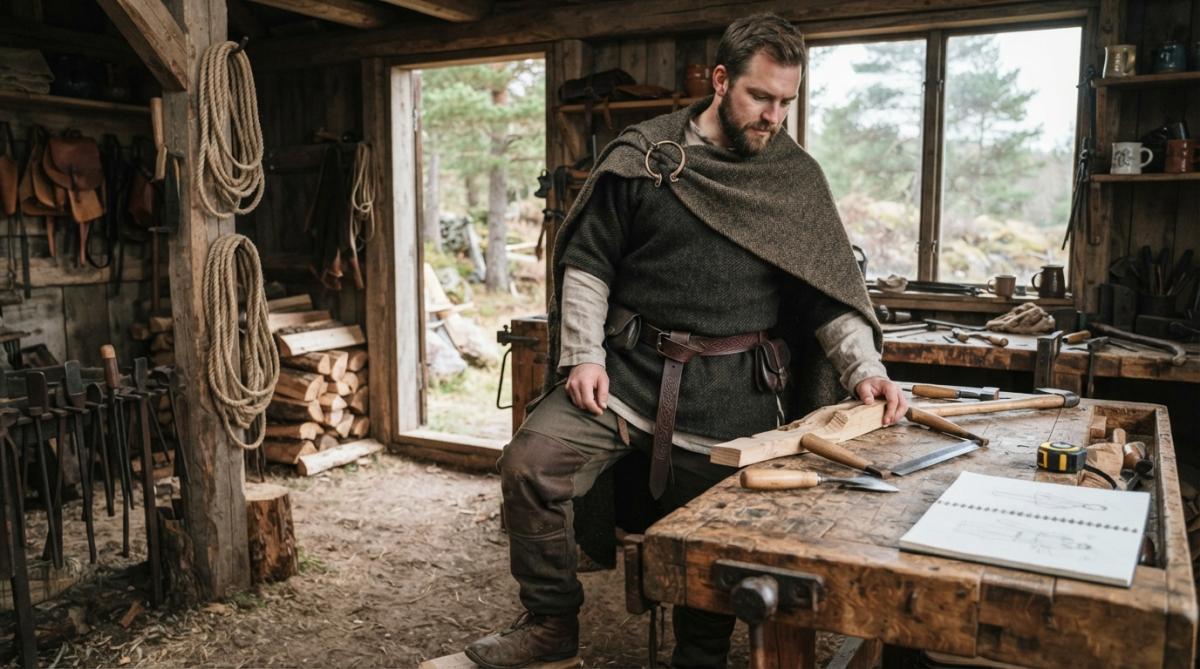
Building a Durable Norse Wardrobe for Everyday Wear
Creating a functional Norse-inspired wardrobe doesn't require buying everything at once. The key is building around core pieces that layer effectively and choosing materials that genuinely last.
Capsule Wardrobe Integration: Practicality Meets Tradition
A capsule wardrobe approach works perfectly with Norse clothing. Start with two wool tunics in neutral colors, charcoal and natural undyed wool are practical choices that work with almost everything. Add two pairs of fitted wool trousers and one good wool cloak. These six pieces form the foundation for dozens of combinations.
From this foundation, add linen undergarments in natural and light colors. Linen base layers extend the life of your wool outer garments by absorbing most body moisture and oils. Two or three linen tunics give you enough rotation to keep the system functioning without constant washing.
Every piece works with every other piece. You're not buying statement items or trend pieces. You're building a system where garments serve multiple purposes and create dozens of outfit combinations from a small number of pieces.
| Piece Type | Quantity | Material | Purpose |
|---|---|---|---|
| Wool Tunic | 2 | 100% Wool | Outer layer, primary garment |
| Linen Tunic | 2-3 | 100% Linen | Base layer, moisture management |
| Wool Trousers | 2 | 100% Wool | Leg coverage, warmth |
| Wool Cloak | 1 | 100% Wool | Weather protection, outer layer |
| Linen Undergarment | 3-4 | 100% Linen | Base layer rotation |
Sizing and Fit for Modern Body Types
Norse garments were designed with loose, forgiving fits that worked for a range of body types. This is one of the genuine advantages of historical clothing.
For tunics, measure from your shoulder to where you want the hem to fall (typically mid-thigh). Add 2-3 inches for comfortable movement. Sleeve length should reach your wrist when your arm is relaxed at your side.
For trousers, the fit should be snug through the thigh and taper slightly toward the ankle. The waist should sit at your natural waist, not your hips. This fit is more durable for daily wear because the garment doesn't shift and bunch with movement.
The loose tunic fit is genuinely inclusive. A tunic that fits a 120-pound person can also work for a 180-pound person because the fit is determined by tunic length and sleeve length, not body measurements.
Ethical Sourcing and Sustainability in Norse Clothing
Durability and sustainability are fundamentally connected. A garment that lasts 10 years has far less environmental impact than one that lasts 1 year, even if the longer-lasting garment required more resource-intensive production.
Wool production has environmental considerations worth understanding in context. Sheep farming maintains grasslands and prevents desertification. Wool is biodegradable and returns to the soil at the end of its life. Synthetic alternatives persist in landfills for centuries. From an environmental perspective, wool is dramatically superior to polyester.
The ethical question is whether animals are treated humanely and whether land is managed sustainably. Quality brands source wool from farms that prioritize animal welfare and use rotational grazing practices that improve soil health.
Linen production is similarly nuanced. Flax grows well in cool climates and requires fewer pesticides than cotton. Linen's durability means the environmental cost per wear is lower than cotton despite higher production impact.
When evaluating ethical sourcing, look for transparency about farming practices and processing methods. Brands that can tell you which farms supplied their materials are more likely to have verified ethical practices. Vague claims about "sustainable materials" without specific sourcing information are marketing language without substance.
Black Rune Works prioritizes sourcing from Scandinavian mills and artisans who maintain traditional production methods and ethical practices. This commitment increases cost but ensures that durability comes with ethical integrity. The pieces are made to last in your wardrobe and in your conscience.
Building a wardrobe of durable Norse clothing requires upfront investment in quality materials and craftsmanship, but the payoff is genuine. Pieces that last years instead of months ultimately cost less per wear and reduce the constant cycle of replacement that characterizes modern fast fashion. Black Rune Works specializes in exactly this approach: hand-stitched wool tunics and trousers designed for daily wear, natural fiber materials sourced from ethical producers, and construction quality that means your garments improve with age rather than deteriorate. With free U.S. shipping on all apparel, starting your durable Norse wardrobe is as practical as the clothing itself. Explore the Odin's Rules collection and experience what clothing built on principles of craftsmanship and durability actually feels like.
Frequently Asked Questions
What materials were Viking Age clothing made from for daily wear?
Authentic Viking Age clothing relied on natural fibers: wool was the primary material for outer garments and cold weather gear due to its durability and insulating properties, while linen served as the foundation for undergarments and tunics. These materials were chosen for their longevity and practical performance in harsh climates. Modern durable Norse clothing that mimics this historical authenticity uses the same natural fibers, avoiding synthetic alternatives that lack the rugged durability of handmade, traditional pieces.
What makes natural fiber Viking clothing more durable than synthetic alternatives for daily wear?
Natural fibers like wool and linen develop character and strength with wear, actually improving over time when cared for properly. Wool resists pilling better than many synthetics, maintains insulation even when damp, and lasts decades with basic maintenance. Linen becomes softer and stronger with washing. Synthetic fabrics, by contrast, degrade faster under repeated wear and washing, often showing signs of wear within months. For durable Norse clothing intended for genuine daily wear, natural fibers provide superior longevity, breathability, and the authentic historical realism that reenactment enthusiasts and history-minded wearers value.
How do I evaluate whether a Viking inspired clothing brand offers genuine quality or is just another dropshipper?
Look for transparency: quality brands provide detailed material composition, manufacturing origin, and customer reviews showing long-term wear. Request photos of the actual product, not just lifestyle images. Check if the brand discusses craftsmanship, fabric sourcing, or handmade elements. Dropshippers typically use thin polyester, avoid specific material details, and lack customer testimonials about durability. Compare pricing, authentic handmade or carefully produced pieces cost more than mass-produced alternatives. Real brands stand behind their products with guarantees and engage with customer feedback about durability. Ask directly about their production process and material sourcing before purchasing.
This article was written using GrandRanker