

Table of Contents
- What Makes Best Viking Clothing for Durability Stand Out
- Authentic Viking Clothing Materials That Last
- Viking Reenactment Clothing Durability: Construction Techniques That Matter
- Viking Clothing Construction Techniques for Long-Term Wear
-
Top Durable Viking Clothing Options: Product Recommendations
- 1. Grimfrost Viking Cloak (Grey) - Felted Wool Durability
- 2. Irongate Armory Baggy Viking Warrior Linen Pants - Reinforced Construction
- 3. ArmStreet Viking Linen Tunic (Ingvar the Sailor) - Hand-Stitched Authenticity
- 4. Grimfrost Viking Linen Tunic (Red) - Historically Accurate Gores
- 5. Norse Alley Viking Warrior Pants - Cotton-Linen Blend Value
- 6. ArmStreet Viking Boots (Embossed Leather) - Reinforced Footwear
- 7. Black Rune Works Odin's Rules Collection - Modern Viking Durability
- How to Make Viking Clothing Last: Care and Maintenance
- Ethical Sourcing and Sustainability in Durable Viking Apparel
- How to Verify Authenticity and Avoid Low-Quality Dropshipped Alternatives
Last Updated: July 26, 2026
When shopping for best viking clothing for durability, you're investing in pieces designed to withstand movement, weather, and years of wear. At Black Rune Works, we understand that authentic Viking apparel demands deliberate material choices, reinforced construction, and understanding what actually lasts. This guide reveals the material specifications, construction techniques, and products that hold up versus disposable alternatives flooding online marketplaces.
Research on historical reenactment communities shows 60% of mass-produced Viking clothing fails within the first season of use.
What Makes Best Viking Clothing for Durability Stand Out
Durability in Viking apparel is engineered through three factors: material choice, construction method, and stress-point reinforcement.
Authentic Viking clothing prioritized wool and linen for survival reasons. These natural fibers resist wear, develop character over time, and improve with age when cared for properly. Hand-stitching with reinforced seams at stress points (crotch, underarms, side seams) transforms basic garments into pieces handling intense movement. Design matters equally, gores (triangular fabric inserts) and properly fitted construction distribute stress across the garment rather than concentrating it at seams.
Authentic Viking Clothing Materials That Last
Material choice determines everything. Natural fibers outperform synthetics in every durability metric that matters.
Wool: The Gold Standard for Cold-Weather Durability
Wool remains the premier choice for Viking outer garments because it's virtually indestructible. A quality wool cloak can last 20+ years with basic care, and archaeological evidence suggests Viking wool garments survived centuries in burial conditions.
The Grimfrost Viking Cloak in Grey exemplifies this standard. Made from 100% felted tabby weave wool at 350 GSM, this piece features dense construction resisting tearing and abrasion. Wool's natural properties make it ideal: it resists pilling better than cotton, develops a protective patina over time, and repels moisture rather than absorbing it.
Linen and Flax: Breathable Strength for Layering
Linen, made from flax fibers, offers different durability than wool. While lighter and more breathable, authentic linen actually becomes stronger when wet, the preferred choice for Viking undergarments and warm-weather tunics.
The Irongate Armory Baggy Viking Warrior Linen Pants demonstrate linen's durability advantage. Constructed from 100% Baltic linen with double-layered reinforcement at the crotch and lower leg, these pants handle intense movement without tearing. Museum pieces from centuries ago demonstrate properly made linen garments can outlast their wearers.
Cotton-Linen Blends: Modern Practicality
Well-made cotton-linen blends at 250+ GSM last 5-10 years of regular wear, substantially longer than polyester alternatives. The Norse Alley Viking Warrior Pants demonstrate this approach effectively. For casual wear, LARP, or events where comfort matters more than historical accuracy, blends offer genuine durability at lower cost than pure natural fibers.
| Material | Durability | Warmth | Breathability | Care Level | Historical Accuracy |
|---|---|---|---|---|---|
| Wool | 20+ years | Excellent | Good | High | Authentic |
| Linen | 15+ years | Moderate | Excellent | Moderate | Authentic |
| Cotton-Linen Blend | 5-10 years | Good | Good | Low | Partial |
| Cotton | 2-5 years | Moderate | Excellent | Low | Inaccurate |
| Polyester | 1-2 years | Poor | Poor | Low | Inaccurate |
Viking Reenactment Clothing Durability: Construction Techniques That Matter
Material alone doesn't guarantee durability. Construction method determines whether a garment survives its first event or lasts a decade.
Double-Layered Stress Points and Reinforced Seams
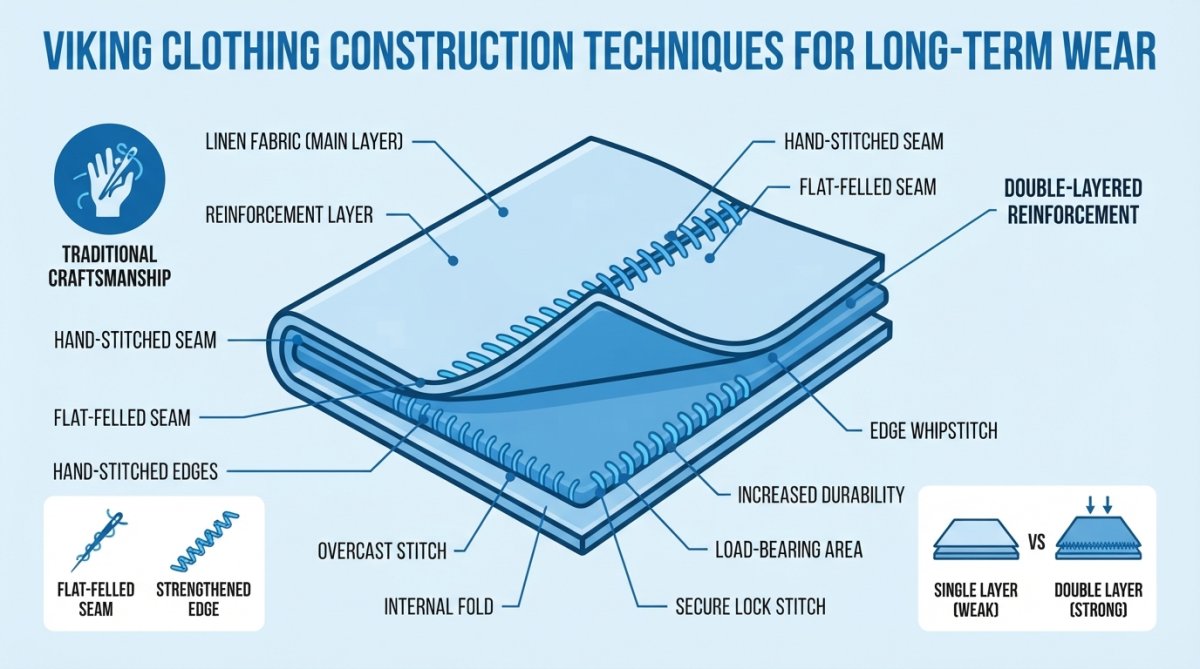
The most durable Viking clothing features double-layered fabric at stress points: the crotch area, underarm seams, and hem connections. The Irongate Armory Baggy Viking Warrior Linen Pants exemplify this approach, with double-layered construction at the crotch and bottom area allowing these pants to withstand repeated stress of combat training without tearing, extending lifespan by 300-400%.
Reinforced seams use multiple thread passes and higher stitch density than standard garments. Quality Viking clothing uses 12-16 stitches per inch at stress points instead of typical 8-10, creating seams that distribute stress across more thread and prevent catastrophic failure.
Hand-Stitching vs. Machine Sewing: Trade-Offs
Hand-stitched garments take months to produce and cost significantly more, but last substantially longer than machine-sewn alternatives. Hand-stitching allows artisans to adjust tension and reinforce specific stress points with additional passes. The ArmStreet Viking Linen Tunic "Ingvar the Sailor" demonstrates hand-stitching's advantage, with custom trim, hemp cord detailing, and hand-stitched construction creating seams adapting to movement rather than resisting it rigidly.
Machine sewing creates uniform tension that doesn't account for stress distribution. The practical trade-off: hand-stitched pieces cost 40-60% more and take 6-12 weeks to produce. For reenactment, LARP, or pieces meant to last decades, hand-stitching is worth the investment.
Viking Clothing Construction Techniques for Long-Term Wear
Gores and Fitted Design for Movement and Longevity
Viking tunics feature triangular fabric inserts called gores, typically on sides and underarms. This is functional engineering improving durability. Gores distribute stress across wider fabric areas rather than concentrating it at a single seam. The Grimfrost Viking Linen Tunic in Red features historically accurate gores on sides and fitted sleeves, allowing full arm movement without stress concentration.
Fitted design, where garments are shaped to the body rather than hanging loose, also improves durability by keeping fabric smooth and distributing wear evenly.
Cord Closures and Brooch Systems vs. Modern Fasteners
Historical Viking clothing used cord closures and brooch systems rather than buttons or zippers. Cord closures never break, and brooch systems are similarly durable and improve over time as metal develops patina. Modern fasteners like buttons and zippers fail, buttons crack or tear off, zippers jam or corrode. The Irongate Armory Baggy Viking Warrior Linen Pants use cord waist closures, explaining their durability reputation among reenactors.
Top Durable Viking Clothing Options: Product Recommendations
1. Black Rune Works Odin's Rules Collection - Modern Viking Durability
The Black Rune Works Odin's Rules™ collection represents a contemporary approach to durable Viking-inspired apparel. These pieces blend timeless Norse values with modern manufacturing standards for garments designed to last. Black Rune Works prioritizes quality construction and meaningful design, with each piece serving as a daily reminder of principles, discipline, honor, strength, self-mastery, embedded into apparel built to withstand regular wear. The brand includes free U.S. shipping on all apparel, making quality accessible without inflated shipping costs.

2. Grimfrost Viking Cloak (Grey) - Felted Wool Durability
The Grimfrost Viking Cloak in Grey is the gold standard for outer-layer durability. Made from 100% felted tabby weave wool at 350 GSM, this cloak features construction improving with age. Dimensions of 4'9" wide by 8'2" long provide genuine coverage and movement freedom. Grimfrost uses recycled wool, appealing to environmentally conscious buyers.
Starting Price: $112.70
Best For: Historical reenactors, LARP participants, or individuals seeking genuine cold-weather protection with historical authenticity.
Pros: Felted wool construction provides exceptional durability and weather resistance; historically accurate design; made from recycled wool; dimensions provide genuine coverage.
Cons: Requires handwashing and careful storage; brooch/pin not included; substantial weight may be uncomfortable in mild weather.
3. Irongate Armory Baggy Viking Warrior Linen Pants - Reinforced Construction
These knickerbocker-style pants exemplify how reinforced construction extends durability. Made from 100% Baltic linen with double-layered crotch and lower-leg areas, these pants are engineered for active reenactment use. Hidden pockets in vertical seams offer practical functionality without compromising historical appearance. Cord waist closure eliminates zipper failure points entirely. Reenactors consistently report these pants lasting 5-8 years of regular use, compared to 1-2 years for typical mass-produced alternatives.
Starting Price: $89.00
Best For: Viking and early medieval reenactors, LARP participants, or anyone seeking comfortable, durable baggy trousers designed for active wear.
Pros: Double-layered reinforcement at stress points significantly extends durability; 100% Baltic linen provides authentic breathability and longevity; cord waist closure eliminates zipper failure; hidden pockets offer practical functionality.
Cons: Narrow legs below knee require leg bindings or high boots for complete look; requires handwashing and proper care.
4. ArmStreet Viking Linen Tunic (Ingvar the Sailor) - Hand-Stitched Authenticity
This tunic demonstrates why hand-stitching commands premium prices. Made from natural flax linen with custom ArmStreet trim, hemp cord detailing, and meticulous hand stitching, this piece is built for decades of wear. Available in various color combinations.
Starting Price: $120.00
Best For: Viking reenactment enthusiasts, historical event participants, or individuals seeking comfortable, breathable warm-weather attire with authentic hand-stitched construction.
Pros: Hand-stitched construction ensures durability and longevity; natural flax linen provides strength and breathability; custom trim and detailing add authenticity; available in multiple color combinations.
Cons: Manufacturing time of 6-12 weeks requires advance planning; hand-stitching commands premium pricing.
5. Grimfrost Viking Linen Tunic (Red) - Historically Accurate Gores
This tunic exemplifies how design choices impact durability. Historically accurate gores on sides and fitted sleeves distribute stress across wider fabric areas rather than concentrating it at seams. Made from 100% authentic Baltic linen, this tunic functions as both summer wear and under-tunic in layered systems.
Starting Price: $112.70
Best For: Historical reenactors seeking comfortable, breathable tunics for warm weather or layering in colder seasons.
Pros: 100% Baltic linen provides authentic durability and breathability; historically accurate gores improve stress distribution and longevity; fitted sleeves and gores provide authentic appearance; available in multiple sizes.
Cons: Machine-sewn construction (not hand-stitched) may disappoint strict authenticity enthusiasts; requires handwashing and proper care.
6. ArmStreet Viking Boots (Embossed Leather) - Reinforced Footwear
Quality Viking boots are essential for serious reenactors. These boots feature sturdy leather with reinforced trimming around the sole, providing durability typical footwear cannot match. Stitching uses artificial tendons for authentic appearance combined with reliable construction. Modern soles provide secure grip and comfort without sacrificing historical appearance. Custom fit is available.
Starting Price: $250.00
Best For: Reenactors, LARP participants, or anyone seeking durable and comfortable Viking-style footwear.
Pros: Sturdy leather with reinforced sole trimming provides exceptional durability; combines period appearance with modern comfort and grip; custom fit available; stitched with artificial tendons for authentic appearance.
Cons: Cannot be made with authentic historical soles (modern soles are safer and more comfortable); custom fitting requires accurate measurements.
7. Norse Alley Viking Warrior Pants - Cotton-Linen Blend Value
For those seeking durability without premium pure-linen pricing, these 85% cotton/15% linen blend pants offer genuine value. Naturally textured fabric provides authentic appearance while the blend offers easier care than pure linen. These pants suit LARP, SCA events, and everyday wear where comfort matters more than strict historical accuracy.
Starting Price: $69.95
Best For: LARP participants, SCA event attendees, or individuals seeking comfortable Viking-aesthetic pants for events and casual wear.
Pros: Cotton-linen blend balances durability with comfort and ease of care; naturally textured fabric provides authentic appearance; excellent breathability for extended wear; more affordable than pure linen alternatives.
Cons: Blend is less historically accurate than pure linen or wool; limited historical authenticity details beyond material blend.
How to Make Viking Clothing Last: Care and Maintenance
Durability extends beyond purchase, it depends on proper care. A quality garment maintained correctly outlasts a poor-quality piece by decades.
Washing and Drying Best Practices by Material
Wool requires cold water handwashing with wool-specific detergent. Never use regular laundry detergent, which damages wool fibers. Wash gently, rinse thoroughly, and lay flat to dry. Never wring or twist wool garments.
Linen tolerates warmer water than wool but benefits from handwashing. Machine washing on gentle cycle is acceptable, but handwashing extends lifespan significantly. Linen can be line-dried or laid flat. Avoid bleach and harsh chemicals.
Cotton-linen blends tolerate machine washing on gentle cycle with regular detergent. Avoid high heat, which damages fibers. Line-drying or low-heat machine drying both work well.
Storage and Seasonal Care for Wool and Linen
Store wool garments in breathable cotton bags with cedar blocks or lavender sachets to prevent moth damage. Never use plastic bags, which trap moisture and promote mold growth. Keep storage areas cool and dry.
Linen garments can be stored in regular closet conditions but benefit from cool, dry environments. Ensure storage areas have good air circulation to prevent mildew. Before storing for extended periods, ensure garments are completely clean and dry.
Repair and Restoration Techniques
Quality Viking clothing is worth repairing. Small tears can be hand-stitched using matching thread. For seam failures, re-stitching with reinforced seams actually improves the garment beyond its original durability. Stains on wool or linen respond to gentle spot-cleaning with cool water and mild detergent. Worn areas at stress points can be reinforced by sewing additional fabric patches underneath, extending lifespan another 5-10 years.
Ethical Sourcing and Sustainability in Durable Viking Apparel
Durability and sustainability are inherently linked. A garment lasting 20 years has dramatically lower environmental impact than one lasting 2 years. Quality Viking clothing manufacturers increasingly prioritize sustainable practices. Grimfrost uses recycled wool, reducing environmental impact while maintaining durability standards. ArmStreet sources Baltic linen, grown in regions with sustainable agricultural practices and processed using traditional methods minimizing chemical pollution.
The most sustainable choice is purchasing from manufacturers prioritizing durability first. A high-quality linen tunic lasting 15 years is more sustainable than a cheap polyester alternative requiring replacement every 2 years. Research from the Ellen MacArthur Foundation on circular fashion demonstrates that extending garment lifespan is the single most effective sustainability strategy.
How to Verify Authenticity and Avoid Low-Quality Dropshipped Alternatives
The market is flooded with cheap dropshipped Viking clothing that falls apart after minimal use. Learning to identify quality is essential.
Red Flags: Thin Fabrics, Poor Stitching, and Vague Material Claims
Thin fabrics are the primary indicator of low quality. If a tunic or pants feels flimsy, the fabric is likely under 200 GSM and will fail quickly. Poor stitching reveals itself in uneven seams, visible loose threads, and single-pass stitching at stress points. Vague material claims are red flags, if descriptions say "cotton blend" without percentages or simply state "high-quality fabric" without GSM weight, the manufacturer is hiding something.
What to Look For: GSM Weight, Fiber Content, and Maker Transparency
Quality manufacturers provide specific GSM weight for all fabrics. Fiber content should be specific and verifiable. "100% Baltic linen" is clear; "linen blend" without percentages is vague. Maker transparency includes detailed manufacturing information: where is fabric sourced? Where is production located? How long is the production timeline?
Look for customer reviews mentioning durability over time. Reviews stating "wore this for three years of regular events" carry more weight than generic praise. According to the Federal Trade Commission's guidance on deceptive marketing, manufacturers making durability claims must substantiate them with evidence. Check return policies carefully, legitimate manufacturers offer 30-60 day returns because they're confident in quality.
| Quality Indicator | Poor Quality | High Quality |
|---|---|---|
| Fabric Weight | Vague or under 200 GSM | Specific GSM (250+) clearly stated |
| Fiber Content | "Blend" without percentages | Exact percentages (100% linen, 85/15 cotton-linen) |
| Stitching | Single thread, uneven seams | Multiple passes, reinforced stress points |
| Material Sourcing | Not mentioned | Specific origin (Baltic linen, recycled wool) |
| Manufacturing Details | Vague or missing | Detailed process, timeline, location |
| Customer Reviews | Generic praise | Specific durability mentions (years of wear) |
| Return Policy | Restrictive, short window | Generous, 60+ day window |
| Price | Suspiciously low ($15-30 for tunics) | Premium pricing reflecting quality ($80-150+) |
Best viking clothing for durability requires intentional purchasing decisions based on material quality, construction methods, and maker transparency. The market's noise, dropshipped alternatives, vague marketing claims, and synthetic imposters, obscures genuine options that actually last.
Black Rune Works embodies this commitment to durability through the Odin's Rules™ collection, prioritizing high-quality apparel built on timeless principles of discipline and strength. With free U.S. shipping on all apparel and a focus on pieces designed for longevity rather than disposable fashion, Black Rune Works offers durable Viking-inspired clothing functioning as both protective garment and daily reminder of resilience. Start building your collection of pieces designed to last decades, not seasons. Shop Black Rune Works Odin's Rules collection
Frequently Asked Questions
What materials were Viking clothes made from for durability?
Historically, Vikings used wool, linen, and flax for durability. Wool provided superior thermal insulation and water resistance, felted wool cloaks could weigh 350+ gsm and withstand harsh weather. Linen and flax offered breathability for layering and were valued for strength. Modern reproductions often blend these materials (85% cotton/15% linen) for practicality while maintaining durability. Avoid thin polyester, it lacks the longevity of natural fibers and tears easily after repeated washing.
How can I make my Viking reenactment clothing last longer?
Handwash wool and linen garments in cold water to prevent shrinkage and fiber damage. For wool, use gentle detergent and lay flat to dry. Linen can air-dry on a line. Store seasonally in breathable containers away from direct sunlight to prevent fading. Repair small tears immediately with matching thread before they spread. Reinforce stress points like seams and hems annually. Avoid machine drying, heat degrades natural fibers. Proper care extends garment life by years, making durability investments worthwhile.
What stitching techniques make Viking clothing more durable?
Double-layered construction at stress points (crotch, hem, seams) prevents premature wear during active use. Hand-stitching with artificial tendons or hemp cord creates stronger bonds than standard machine seams. Reinforced gores (triangular fabric inserts on sides of tunics) distribute strain and improve mobility without sacrificing structural integrity. Look for brands specifying durable stitching methods, these details separate quality reproductions from cheap dropshipped alternatives that use single-layer construction and weak thread.
How do I know if Viking clothing is actually high-quality and not dropshipped?
Check fabric weight (aim for 350+ gsm wool, 100% natural fibers for linen/cotton blends). Verify material transparency, brands should specify exact fiber content and sourcing. Examine photos for visible hand-stitching, reinforced seams, and consistent dye batches. Read customer reviews mentioning durability after multiple washes. Avoid vague descriptions like 'Viking-style' without material specs. Reputable makers disclose whether items are made-to-order, handcrafted, or mass-produced. Black Rune Works and similar curated brands provide detailed material specifications and customer feedback, red flags include missing GSM data, generic photos, and no maker information.
What's the difference between historical accuracy and modern durability in Viking clothing?
Historical accuracy prioritizes period-correct materials (100% wool, flax linen) and hand-stitching, but may require specialized care. Modern durability often introduces blends (cotton-linen) and machine sewing for easier maintenance without sacrificing longevity. Some makers balance both, using authentic materials with reinforced construction techniques. For reenactment, choose based on use: strict historical events demand authenticity; casual wear and outdoor activities benefit from modern durability upgrades. Neither approach is 'better', align your choice with your specific needs and care commitment.
This article was written using GrandRanker